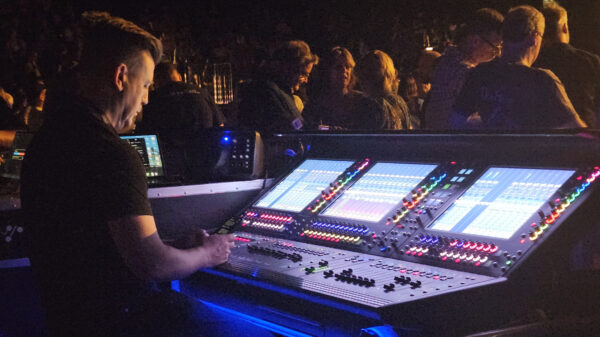
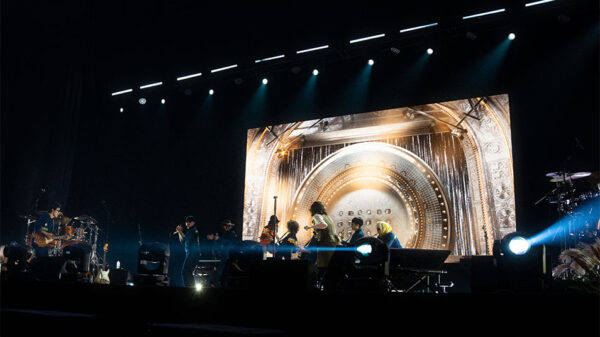
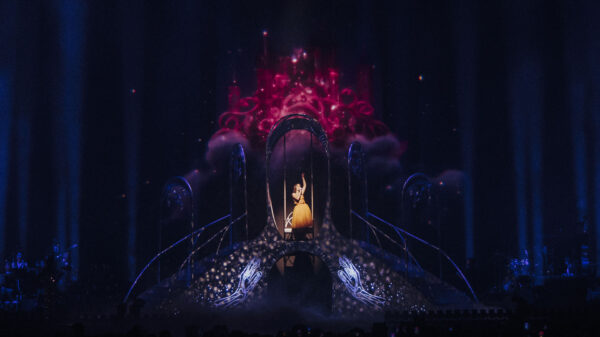
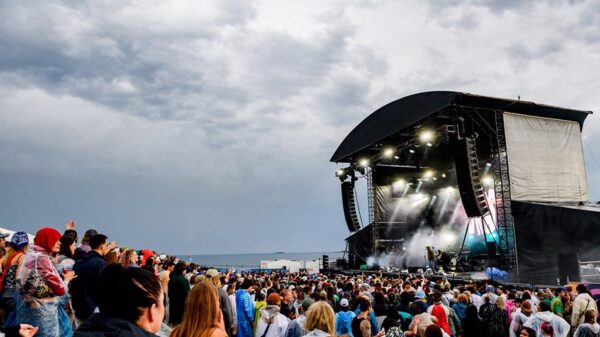


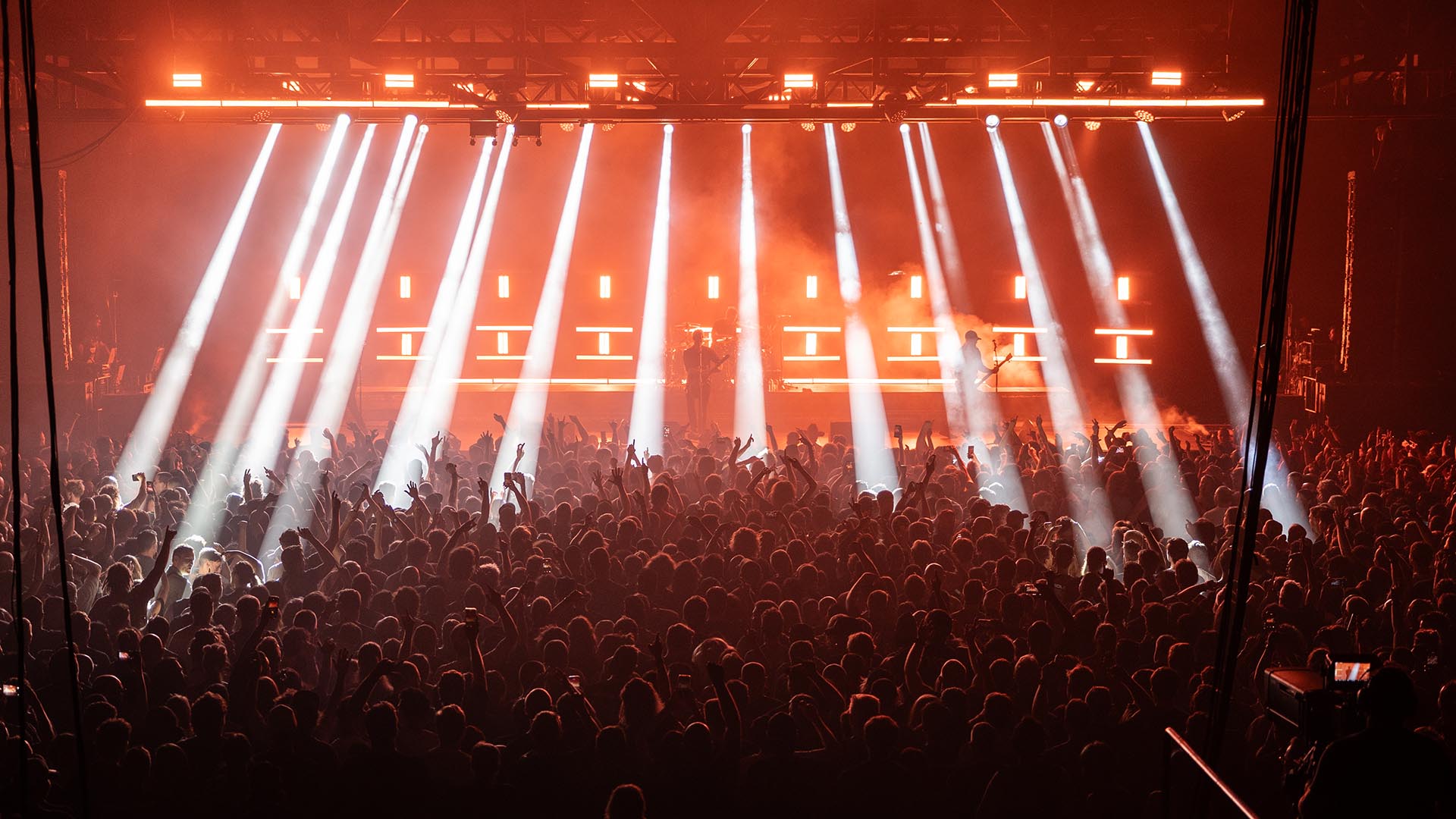
Alastair Swanson sits down with Lighting Designer Ben Inskip of ARTDPT to discuss his work with Perth band Pendulum, undoubtedly one of the biggest electronic bands of all time. Ben shares his story … with no mention of gear!
‘In the heart of darkness where the shadows whisper… we are the architects of chaos, the masters of mayhem, the harbingers of havoc.’ How does that intro speak to you – do you feel like the master of mayhem or the harbinger of havoc?
Ooh, good question! I’ve never really thought about where I’d sit in that read out of roles, but it’s certainly a good hype up for the show, even for me. I watch it every night, and I’m like, right, it’s gonna go off. You can tell it really sets the vibe; it’s a cool way to start the show. Now you’ve said it, though, I’ll be thinking about it when it plays tonight!
How did that intro come to be?
The previous management was working with Rob to really put his touch on the show, and the intro was all Rob; he came up with the idea, inspired by his favourite classic video game. He scripted it all and came up with what it would look like. When he came to us with it, we thought, “This is a really cool way to start the show”. Pete Thornton, our video guy, put it together and had some fun with it, and then we went full throttle into Napalm.
Were you a Pendulum fan before all this?
It’s funny you should ask that, the first job I got was with a Student Union and at the time I was on sound and I was pretty bad at it! I was the king of feedback, but my friend would come into work and just flash lights, and I thought to myself, ” That looks way more fun!” This was quite a long time ago now. Pendulum had just released their Voodoo People remix, and, with how popular they were at the time, it was played every night, and everyone would just lose their minds to it. Before this, I didn’t even know lighting was a job, really. Then, fast-forward 20 years, and they’re a client.
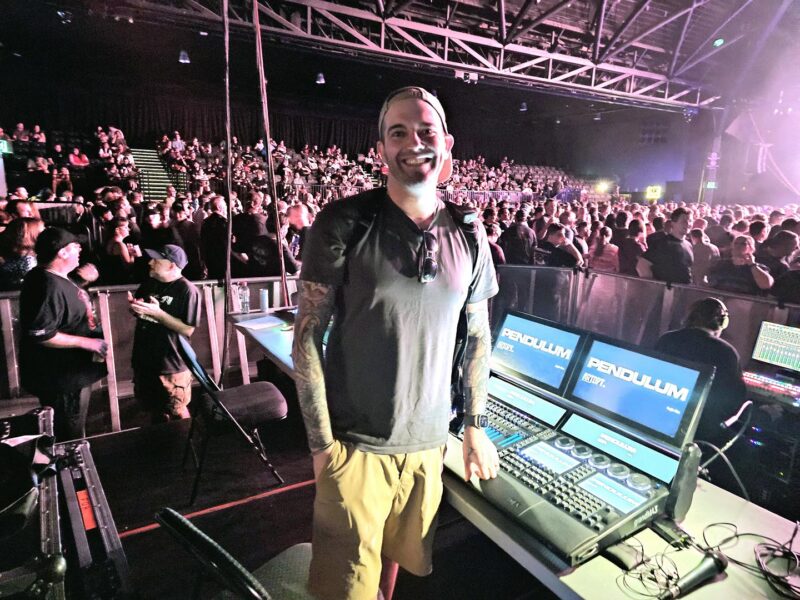
How did you get on board?
It came through their manager at the time, Jo, who had seen my work with some other artists, but we had never had the chance to work together. We got talking, and I remember the pitch to be something like “just come on board and put your take on it, it will be fun”. She was right, everybody in the camp is the best.
Now that you are on board, how has the journey looked so far?
The first show for us was Miami Ultra Music Festival, and we couldn’t get Visas in time, so we programmed the first show, had someone operate it for us, and we never saw it, but when Ally Pally (Alexandra Palace 2022) came in, that’s when it started to feel like we were building something new.
How did that go with such a big venue?
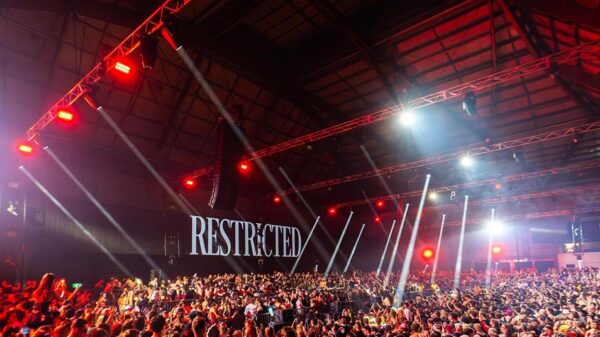
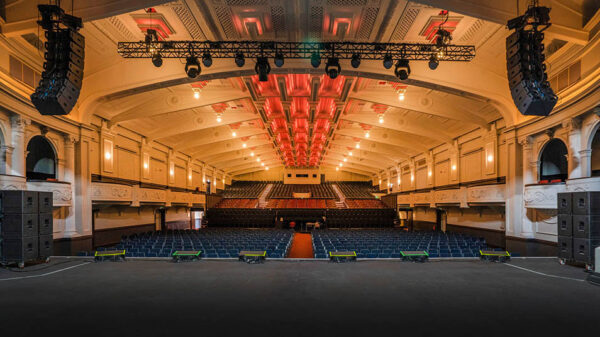
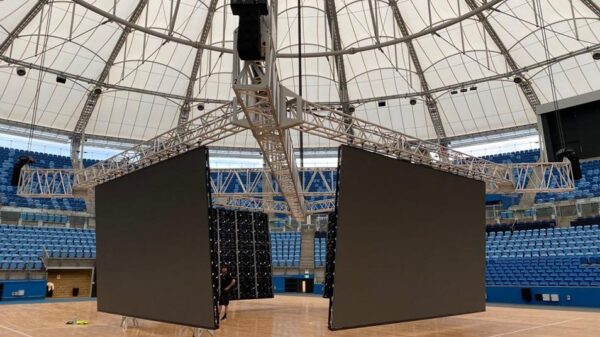
I would say we were confident; we spent a lot of time preparing that show, and it was originally scheduled for 2 nights in a smaller venue, so we had to scale it up once the venue changed. I wanted to fill that roof void because of the way the venue is shaped; it’s basically a big greenhouse with a tube running down the top. A lot of shows you see in there, people fly a straight truss, and you lose all of that lovely trim height, but we wanted to try and make it look as massive as possible. I sat down with Rob, and we’re like – let’s just try something a bit sort of dystopian and asymmetrical. He was super on board with that vision.
With that amazing success basically proving that Pendulum could sell huge shows again, where did it go from there?
After that run, they came and said, “We’re going to do an arena tour, what should we do?” We considered a new build, but given the huge success of Ally Pally, we all decided to run the same thing again, asymmetric but just polished with those little interludes filled with new bits that Rob built, and we built more video and lighting content. It’s very rare to have that opportunity where you put a project out there, write it off and then have a second chance at it.
It seems like Rob is very central to how production is planned. How has that been?
I don’t know many people who work as hard as Rob. He’s super invested, not just in the music but in how it looks and sounds live. From this end of the multicore, I feel like as long as we’ve got the right vibe and it’s got the energy, the band trusts us to deliver the best show we can.
Does the band come into the Previs suite during programming?
We tend to flick the band videos and things to look at as we progress through design and programming, the only few comments that I’ve really had from the band are “can it be brighter, can it strobe more, can we push it even harder”. Sometimes we get thrown something new at the last minute. –like “I’ve been working on this new interlude to drop into the set, can we try it out?” – we might be working to doors to get it done, but they’re always incredible additions to the show, like the Come Alive bit at the end, it’s probably my favourite part of the show. When it came in at the last minute, and I said to Rob, “This is the coolest metal beatdown ever”. It’s an all-white strobing beast. I love it, and it’s those sorts of moments in the show that have popped out of nowhere, and they’re really fun to deal with.
Do you have any favourite moments with the band that you can share with me?
Yeah, so many! It’s such a great group of people to travel the world with. Madrid was a particularly good day off last year. We went to this amazing food market. Perry and KJ came down, and we just ended up eating and drinking for like eight hours and just shooting the shit. It was just one of those days, the weather’s great, and everyone’s enjoying life.
Rob and Gareth started out in a Perth metal band called Xygen back in the day. The Inertia Album pushes that side harder than ever. Are you consciously trying to fuse those two visual languages?
I definitely come from a metal background, and doing metal shows was always my wheelhouse. Most of our clients are rock bands, so the more metal stuff Pendulum produces, the more I’m in my absolute element!
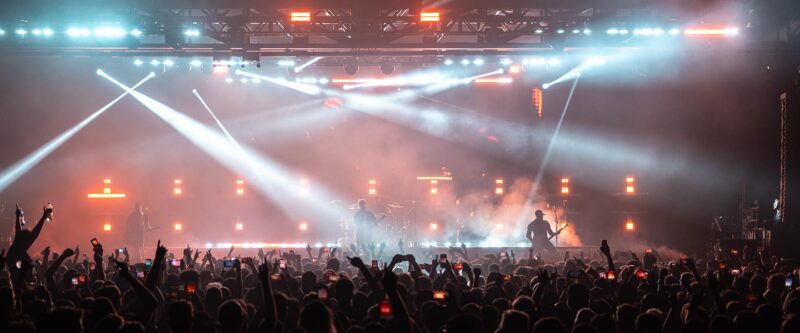
This job has put me in situations like the Ultra Music Festival and other big EDM shows, which I would never have had the chance to experience. Now we’re dealing with different rigs with a different design ethos. There are a lot of festivals that are designed for a DJ, not a full band setup. That has been a learning curve, with a show and programming that can adapt to a wide range of rig designs while maintaining the look and energy we want. And that makes me fuse creative elements because it’s not dance music, is it? It still goes hard, and it’s very similar in look and feel (to metal). It’s fun to use high-tech looking fixtures in a metal environment, you can pick out all those little glitches and interludes that I was saying earlier, how Rob works really hard putting them into the tracks. It’s important to give those parts a visual element regardless of how subtle they are. It’s not something you normally get to do in a metal show, and it’s quite satisfying.
The show has a theatrical arc to it — aggression, then darkness, then release. Is that conscious or instinctive?
Would I sound like a show off if I said it was instinctive to me? Haha, but I think just being a fan of that kind of music and probably more of the heavy rock side of things is just how my brain computes. I think it’s important to show some restraint and hold off on crazy lighting and visuals, so you have something left to add energy when it’s most effective. There must be enough range to slow things down and build a base from which you can elevate the crowd when the time comes. It’s just about matching how I feel in that part of the song to something visual, you know? The darker, moodier and static you can make an intro, or a verse, the more impact you can have on a chorus or a heavy section. In that song space, scaling between those is kind of my style. Otherwise, you’re just going to wear everybody out. They’re all going to be blind and knackered, haha.
With that intro at the top of the show and that sense of entering a world with its own lore and mythology, is that something you’re consciously programming into the show?
I think maybe just more feeling it out and really making it feel cohesive, certainly between the video and the lights. That first intro, for example, sets us up for a dark, sinister show with a technical undertone. Something a little futuristic but gritty. Creatively, we have tried to keep that feeling throughout the show with the visuals we use, MoreEyes created, and the general stage design and fixture choices.
We have tried to home in on the finer details musically. Accenting nice glitching that happens in the audio. Pete (Video) and I have worked together to tighten up the lights and video so they work together. We are always tweaking colours and adding little elements. A lot of those elements in the show are things we are just experimenting with, and they make it into the show. Lots of great things come from us just playing around with parts of the show and constantly trying to improve it.
In the EDM show scene, there seems to be a gravitational pull towards what we hear in the industry as ‘flash and trash’; how do you resist that?
I think because I have to watch it every night, and if it’s going to blow my head off, and I know what’s coming, then it’s probably unpleasant for everyone else to watch as well. There are still some moments that make me wince a little bit. Every night, I debate whether I should keep them. It’s a flashy show, but it’s not just grotesque strobing in your face for 90 minutes. It’s fun to change it up a bit and get that frantic effect by not just winding the shutter channel all the way to 100%.
The show is time-coded, which gives us the freedom to move away from “flash and trash” We can really drill down into elements of the show and make them way more thought-out and complex. It also gives me the freedom to really watch the show every night. Every night I have notes and tweaks that I add the next day. It’s never finished.
The show opens with those old gaming style graphics. Are you a gamer yourself?
I sure am. The last tour we did was 6 weeks in Europe in November, so I got myself a handheld console because it was really cold and raining. I’d sit in my bunk with a coat on, keeping warm, playing anything. Unlike here in Australia, where there’s sunshine and pools! Weirdly, I’m a very late adopter of Fallout, but I have been watching the TV show recently, so I gave the Fallout game a go, and it’s been ace!
When you came on board in 2022, Rob said publicly that even he didn’t know what Pendulum sounded like yet. So how did it evolve creatively?
It’s quite refreshing because there wasn’t really a brief. My first show with Pendulum, as I mentioned earlier, was in Miami. We needed to come up with something cost-effective, easy to source and simple to roll out in a changeover without us being there. We were flexible with fixture types, knowing we would get more for our budget if we took what the festival vendor had available.
The programming is where you put the creative flair in, isn’t it? That’s where you kind of make it your own. We just time-coded from a fresh start, and it just sort of evolved; it felt like good energy.
Since then, the show has evolved a lot. We are designing with specific fixtures in mind. We have had a few opportunities now to be the first to show new fixture types, which is pretty cool. And we can spend time fine-tuning the programming to maximise the capabilities of those specific fixtures.
We have had all new visuals, too. The show is in a great place now to a point where we can tinker and tweak and keep making micro improvements.
Their new song Halo declares ‘this ain’t a fucking game and there’s a price to pay’ – What does it cost to do this job at this level?
I’m fortunate my other half is in the industry too; she’s a promoter. We met on a tour we were both working on. So, she gets it, and that’s great. Currently, we’re both away working on shows. Obviously, that doesn’t happen for everyone and being away from home can take its toll.
With our company, ARTDPT, we are trying to spend a little more time in the office and working on designs while putting dedicated operators on the road. But of course, we still love touring and doing shows, and you know I’m not going to turn down a trip to Australia for a few weeks with such a great bunch of people to stay in my office!
I’m fortunate it hasn’t taken a toll personally and socially. It’s great because everyone on this crew are great friends, we’ll go for a beer together, it’s never awkward, and you never feel like you’re alone.
I’m in the mentality that we still do this job because it’s fun, right? We’re travelling the world, flashing lights. Let’s not take it TOO seriously; let’s make sure the show looks as good as it can, be professional, but have some fun and enjoy your job. Every day, I get to do something interesting and creative. If something’s bothering me, I can change it, make things a little bit better every day, the artist just knows that they’re looked after – it’s a good feeling.
Western Australia’s premier performing arts conservatory has produced Hugh Jackman and Tim Minchin, and its new Edith Cowan University campus sits in the heart of Perth – the city that also gave us Pendulum. What do you say to students considering this way of life?
I’ve been asked that question recently. I did a panel a couple of weeks ago for industry students in the UK. Hilariously, it turned out none of them was really interested in lighting specifically, maybe because, like me, they didn’t know it was a job.
My advice to them was that there are so many different roles in this world. Even jobs you probably haven’t thought of. Go to shows, go to the theatre, talk to as many people as you can. Find what it is that fascinates you about those environments. You might have a passion for a particular instrument, a love for computers and programming, an interest in the organisational side of things and the crazy logistics involved in moving a show around the world, a love for photography and filmmaking, or even accounting.
You don’t have to sell your soul to the road, never being home. You can carve out your own path. All you need is a passion for this world, and you will find your place in it.
Like in any walk of life, of course, there are challenges, stresses, bad work environments or the occasional toxic person, but by and large, it’s a pretty cool way to spend your life. When it’s something you’re passionate about, then it doesn’t feel like work. This industry thrives on its diversity, and the more people from all walks of life that jump in, the more creative, inclusive and nurturing our workplace will become.
For the second and third years, looking toward the industry for employment, what do you wish someone had told you when you were starting out?”
I started out working shows and club nights at my student union, where I was offered a casual summer job doing odd jobs at a local lighting supplier, and that was literally 20 years ago this year. I’ve done the whole thing, from spray-painting trusses, fixture prep, and servicing to crew chiefing and travelling the world designing shows for awesome artists. I don’t think there are any jobs you shouldn’t do; it’s healthy to dip your toe in all the different areas, get a feel for it all and see what you like. When you do find your feet, then a broad knowledge of the wider industry is so useful.
Be prepared to start at the bottom. If you’re passionate and engaged in the work, then you won’t be there long.
Education is a great foundation, but hands-on experience is vital, so get as much as you can.
Go to shows, tradeshows, find local companies, chat to people at front of house at the end of a show and say hi and introduce yourself, you’ll learn something and meet someone interesting. Then keep in touch with them.
What do you think is the hardest to teach in a classroom but most valuable on the job?
I think the human interaction side is probably the hardest thing to teach. You can give everybody a console and the latest CAD or pre-vis, but there is no excuse for a lack of hands-on experience with people; you’ve got to navigate different people all the time. Part of what makes this a great work life is how diverse we all are, so you’ve got to be accepting.I think if you are set in your ways or if there’s friction, it’s going to give you a hard time. The best thing is to be open-minded, kind to everybody, look after yourself and others and don’t be a slob. Just remember, you are going to spend a lot of time with other people. Sometimes your personality is as important as your skill set.
Find the balance. Be good at your job. Be a nice person. You’ll fly.
When you step back from following the show cue to cue on a really good night – what’s happening for you in that room?”
There’s like… a weird thing. It doesn’t happen that often, but sometimes in the middle of the show, and I’ll just stare up at the roof and be thinking “Holy shit, what am I doing here, this is wild, just look how tall that roof is and listen to all those people”. It’ll be a massive arena in some faraway country I’d never have the chance to visit without this job. Those are the times when I’m like, “As if this is really my job!” It is a nice feeling when everything’s just running smoothly after Cue 1 of the show. You get to watch a good band, and all your hard work pays off. You can tweak it; you can make it your own. If you didn’t like that tonight, you can change that tomorrow.
What do you want people to feel when the lights go down tonight?”
Pure hype. Excitement. We’ve not been here for a couple of years, so it’s not like something you get to see every weekend. I just want people to have the best time, and if I can contribute to that through the medium of lights, then that’s pretty cool. I’d like everyone to walk out of here at the end, maybe a bit bleary-eyed, exhausted, sweaty and say, ” That was fucking ace!”
Photos: Steve Fry