


Furnace and the Fundamentals, the popular Australian party band known for high-energy covers of hits spanning various genres and decades, have been on the road again. Their interactive live shows, themed costumes, and mashups make them a fixture at corporate events, festivals, and headline tours.
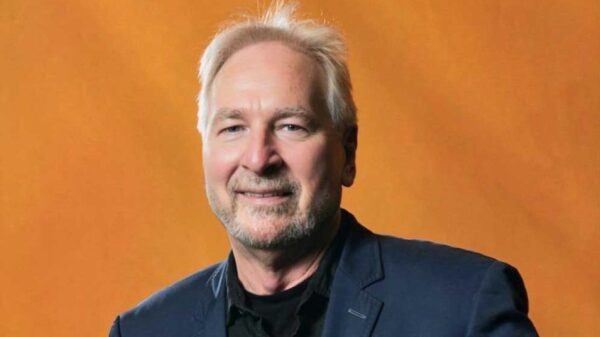
FOH Engineer Brett Tollis has worked with Furnace for around 10 years and has been part of their growth, which he says has been really rewarding.
“I’m so proud of what they have achieved,” said Brett. “It’s been a huge journey from playing 100 capacity rooms to selling out 2000+ theatres and taking the show around the world.”
Brett comments that mixing for the band is a bit of an unusual situation as they are switching genres every 30 seconds or so, ranging from Taylor Swift to Depeche Mode and System of a Down, so it’s a matter of switching the importance of each instrument, while maintaining a live feel.
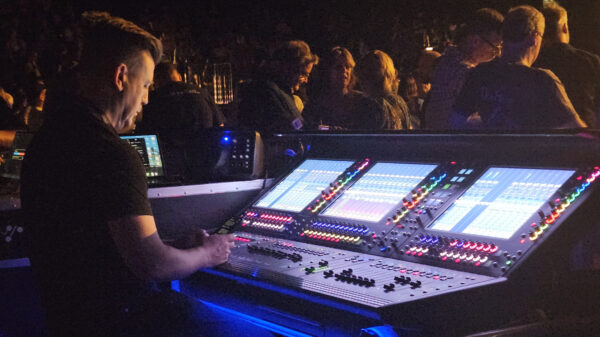
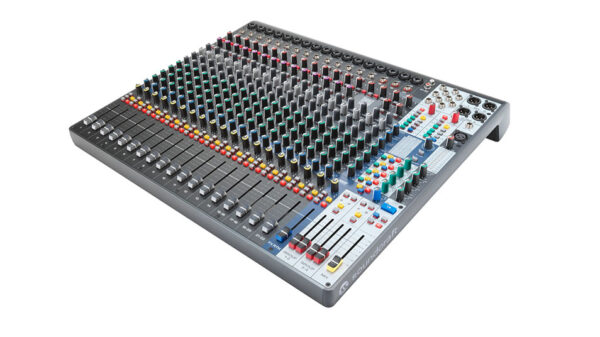
On this tour, Brett was running an Allen & Heath dLive C3500, adding that he is a big fan of A&H for their ease of use, sound quality, FX quality and stability.
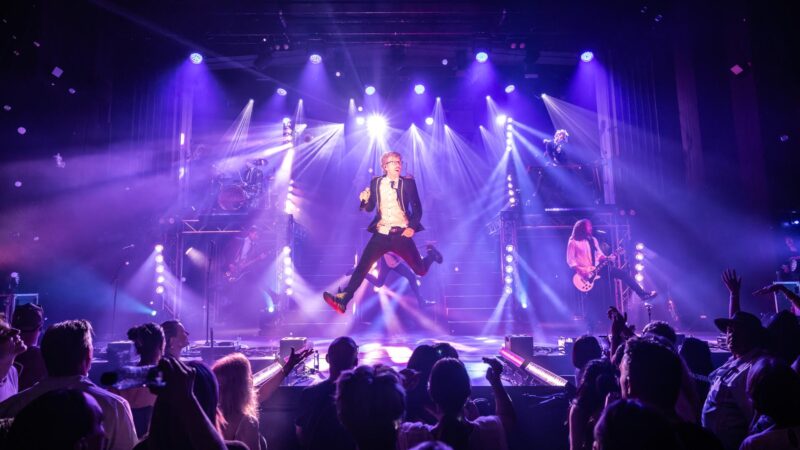
“The C3500 is physically big enough to give me enough physical faders without being too cumbersome, so it’s perfect,” he remarked. “Mixing Furnace is fun chaos. There is so much going on with song changes and the challenges of all the musicians singing while constantly running around the stage and playing their instruments. Each song needs its own signature sound that the audience would expect from the track, but the band have really spent the time dialling in the tones, especially in regards to keyboard tones. There are so many patches that need to be almost perfectly replicating the original sounds for it to work, e.g., A-Ha, Depeche Mode, Van Halen. It really sets the band apart from other acts.
“It’s mainly about knowing the set, knowing the band’s musical transitions between songs and then being ready for them. Always being 15-30 seconds ahead of the change. You can never really take a moment, as the setlist is usually 3 pages long.”
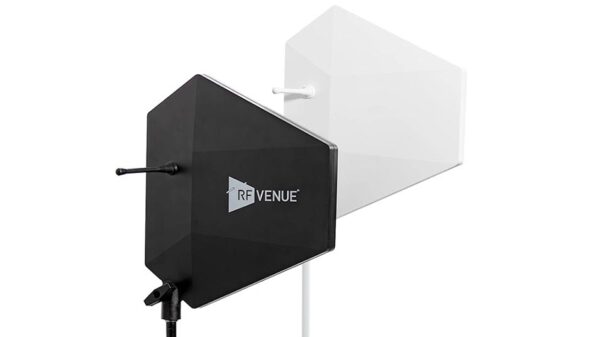
The band spends a fair bit of time ‘in the crowd’, so Brett has to make sure wireless units are up to scratch, and have backup systems in place in case anything drops out.
The microphone setup is fairly simple: both guitars and bass are direct outs from pedalboards, and all the vocals are wireless, so it’s just the drums that are mic’d.
“I try to keep it pretty basic, so it’s just a Shure Beta 91 and 52 on kick, a SM57 on snare top, and Sennheiser e604s on snare bottom and floor,” he added.
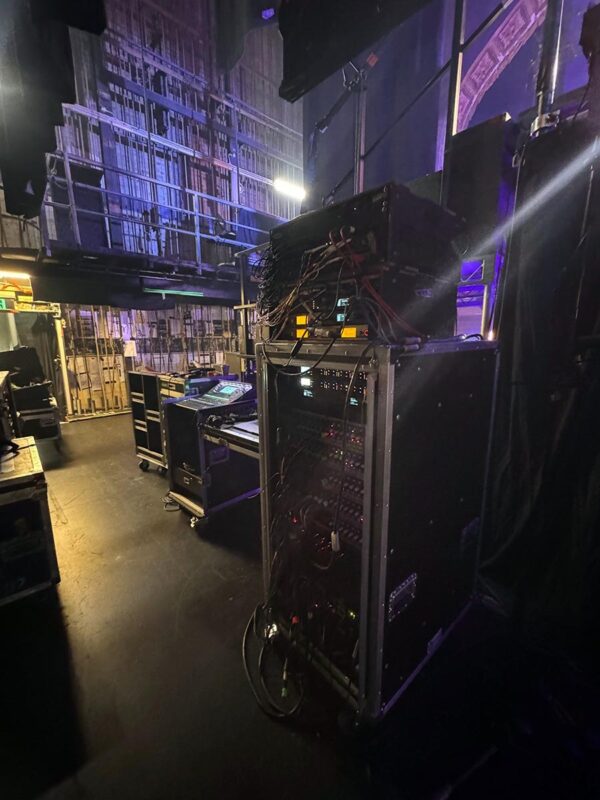
As far as FOH audio goes, Brett is just touring the console through Crystal Productions. Dave at Crystal is the brains behind bringing the band’s wishes to life, from staging and pyro to lighting and audio; he’s a one-stop shop and on the ground to make it all happen on the day.
Brett says that the show is a pretty well-oiled machine, so there aren’t too many major challenges for him, other than pushing for enough soundcheck time.
“There is so much more going on in the production that needs to be in line first, then there are choreography rehearsals etc, so just grabbing a solid hour of making noise is the only thing I really ever have to push for. Having said that, if all hell broke loose, I could make it a pretty good show in no time at all.”
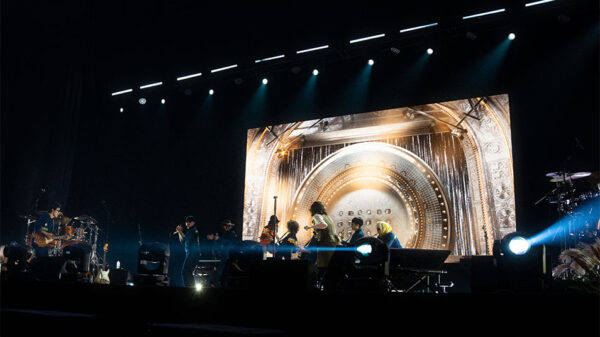
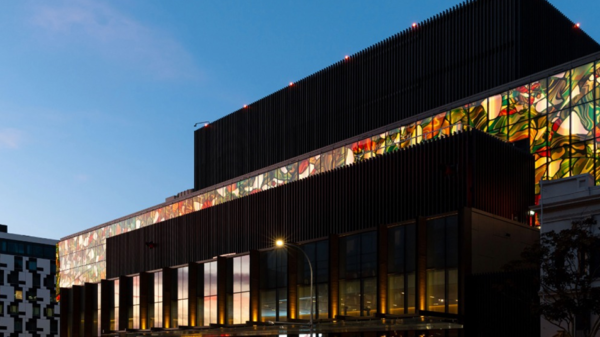
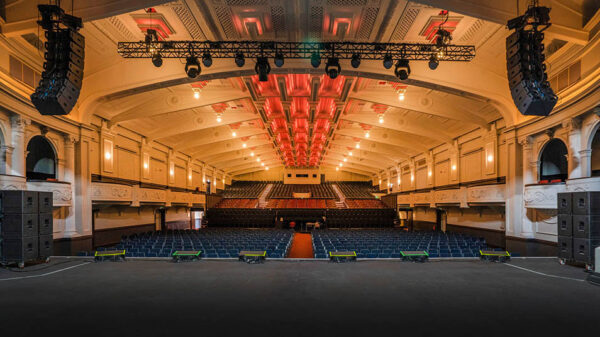
Brett commented that the Enmore show was great, as usual, with calm, knowledgeable in-house staff, a great room, and a great crowd who are up for a party.
“The Enmore PA is great,” he added. “It has everything I need. The mix position can be a little tricky, being under an awning, but we set up in front of the house console, which gave me a better feeling for the room.”
Monitors
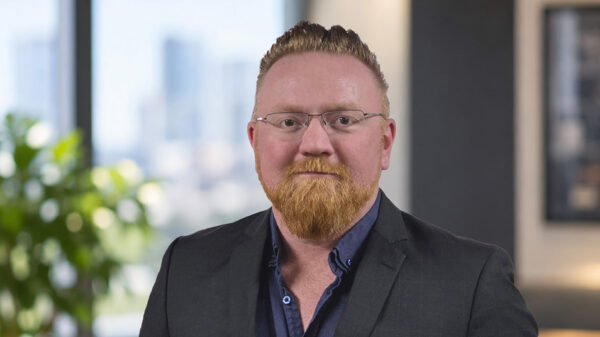
Matt Allcock’s official role with this show is monitor tech; however, he sees it as more of a systems tech role, as it’s his job to make everything audio-related work.
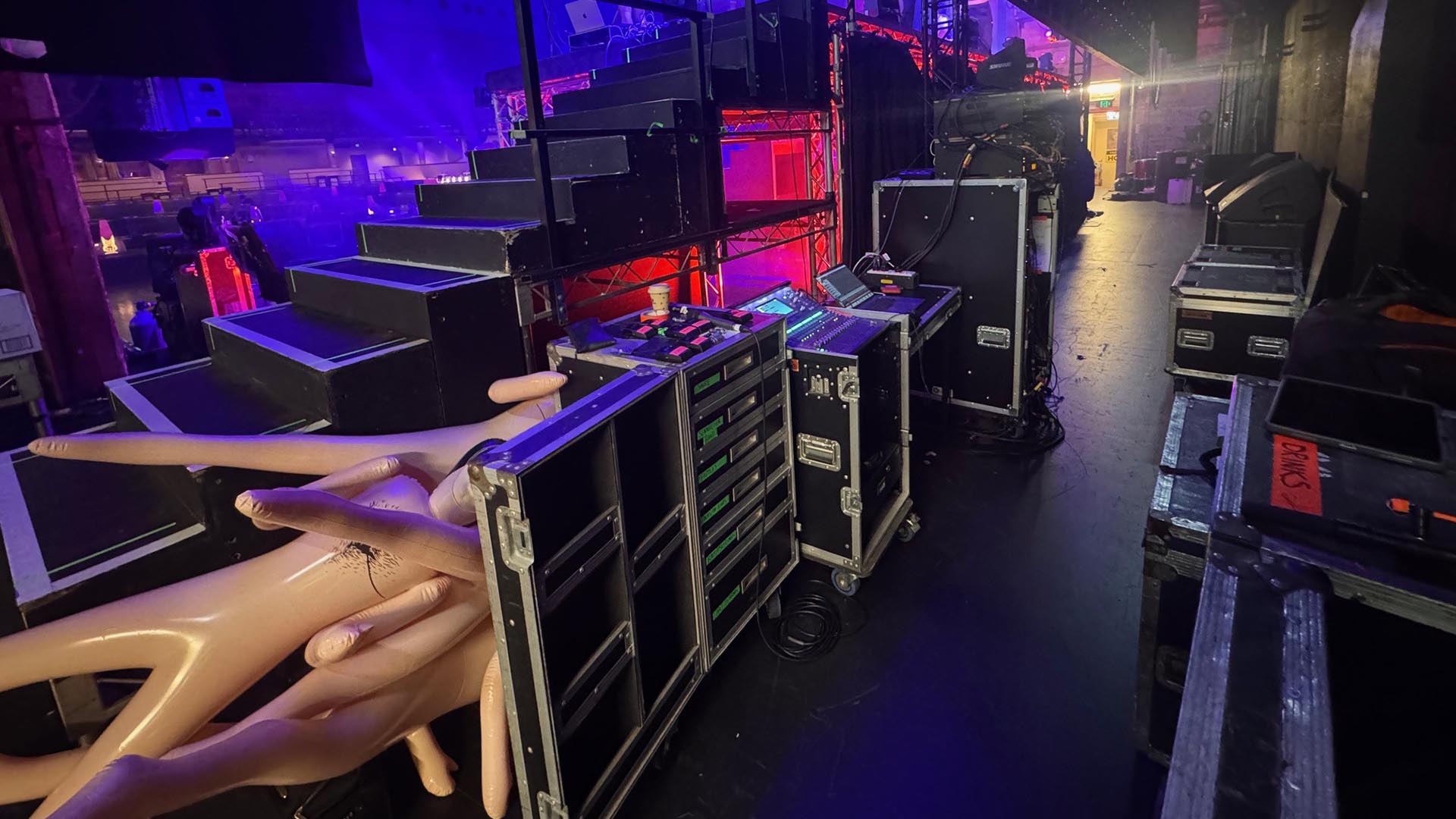
“I actually do very little in regard to mixing monitors!” he stated. “The band owns their own fly rack with a Mackie DL32R, and they mix their own in-ears sends using iPads. There is a Waves WRC-1 rack-mounted Wi-Fi router built into that rack, which provides strong wifi coverage for the stage. The Mackie DL32R is a bit old now, but they use this mixer as it ticks a lot of boxes that aren’t offered on many faderless, flyable consoles – 32 XLR inputs and 14 XLR outputs, with 14 available auxiliary sends. Alongside this, they can also record multitrack directly to a USB hard drive. This kit is built into a Pelican Air case with a 4RU sleeve built by Naut Cases, and travels with the band around the world.”
Alongside this, they have another Naut Cases made, Pelican based fly rack with Sennheiser EW IEM G4 and a combiner, with a mixture of focus mode mono and some stereo sends. There is a transmitter dedicated for a crew channel and a followspot channel. This is explained in more detail later. Matt also uses his own iPad to make changes to their IEM mixes during the show as required, with a dedicated stereo transmitter patched into the Mackie’s PFL bus.
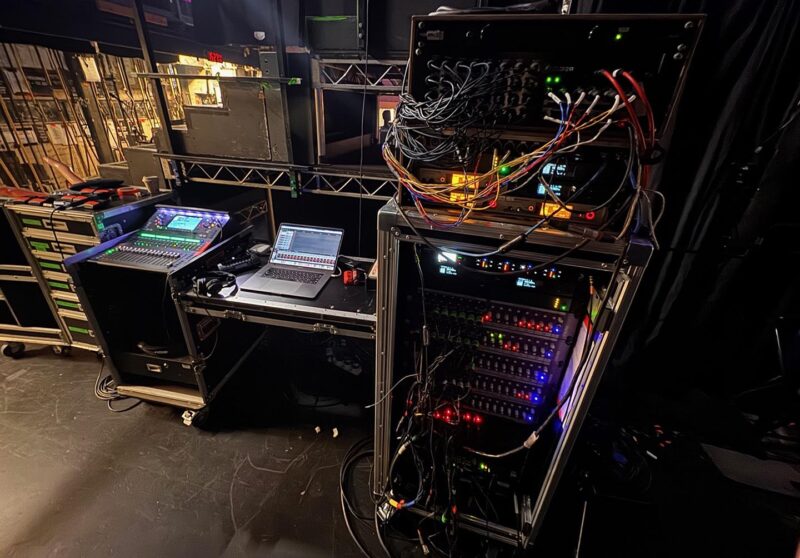
An Allen & Heath dLive C3500 at FOH also sends a GigaAce feed to an SQ5 at BOH, which is used mainly for a backup recording mixer to a DAW (Reaper), but is also used as a side fill mixer and to combine a handful of crew shout mics side of stage to be able to present on a single fader to the Mackie to save channels.
“Our analogue split system is touring with us, which is five 8-way Klark Teknik Square One active splits,” continued Matt. “This not only gives independent preamp control to FOH and the IEM consoles but also provides the necessary phantom power to stage lines. In this rack, there arefor this to happen, but it’s important to have a also 8 channels of ULXD for band vocals, saxophone and a wireless mic for the choreographer (Mashum) to use in rehearsals to talk to the stage and IEMs. The only live wedges on the stage are basic side fill only for the dancers to hear. The musicians rely solely on their IEMs and are very good at it. We do have a backup hardline XLR headphone amp with the click channel only, which goes directly to the drummer in case of IEM failure, so at least the drummer can keep everyone in time. This sits next to him so he can change over to this backup at any time, should he need to. It’s very rare this happens but it’s important to have contingency; the show must go on!”
The keyboard player, Pluto, has most of the control of the show, running Ableton for audio tracks and Resolume for their video feed to the LED wall. This all comes from the same laptop to provide an all important click track for the musicians to play in sync with the video, some playback tracks, and also three separate pre-recorded show call tracks with timed verbal cues for firing off CO2 shots, confetti moments, instructions for stage changes between sets, one channels dedicated for follow spot cues, and a channel for lighting show calls for corporate events where there’s no touring LD. The stage crew and followspot operators get a basic mix of the band, with their respective show-call cues in their ears, using the additional Sennheiser transmitter, with many packs tuned to the same frequency.
“During every show, there’s a lot of work to get up and running before sound check and rehearsals to maximise their time to refine the performance,” remarked Matt. “This includes patching all stage lines, console inputs and IEMs, coordinating the local RF environment around any interference locally, getting all peripheral lines up and running like shout mics and talk to stage/ears working well, then ensuring records are clean and gained well. I have always said that during the performance, if I end up doing nothing, then it means everything is working as it should, and therefore I have done a good job!”