

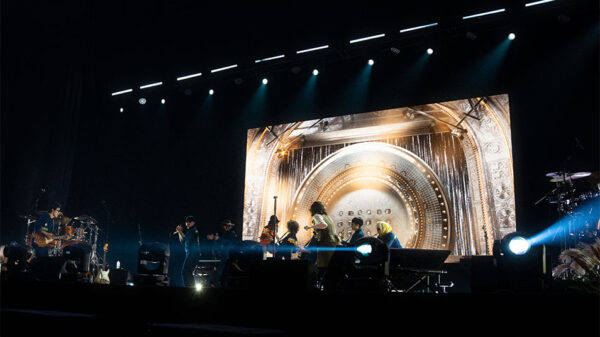
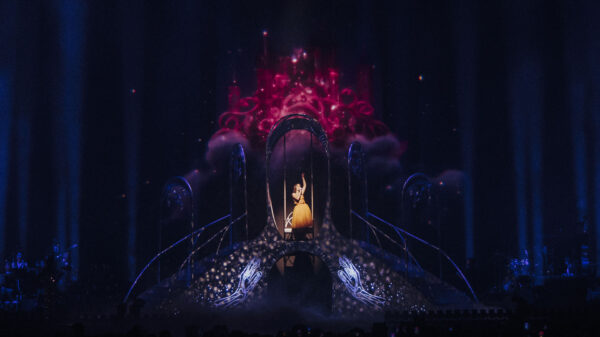
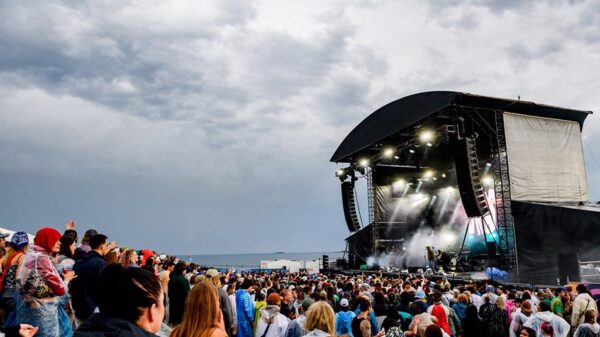
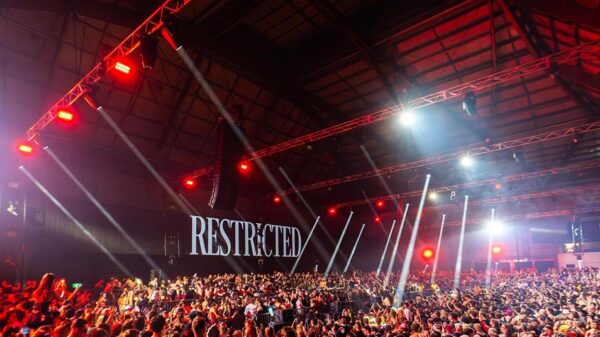






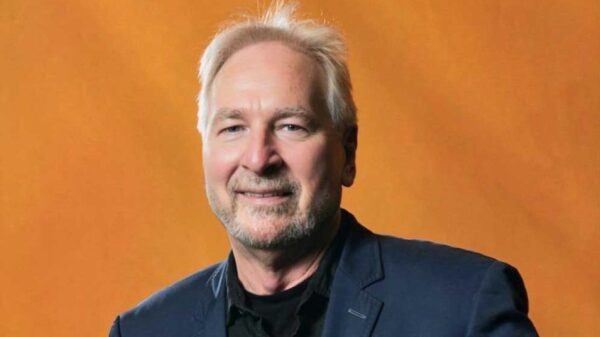


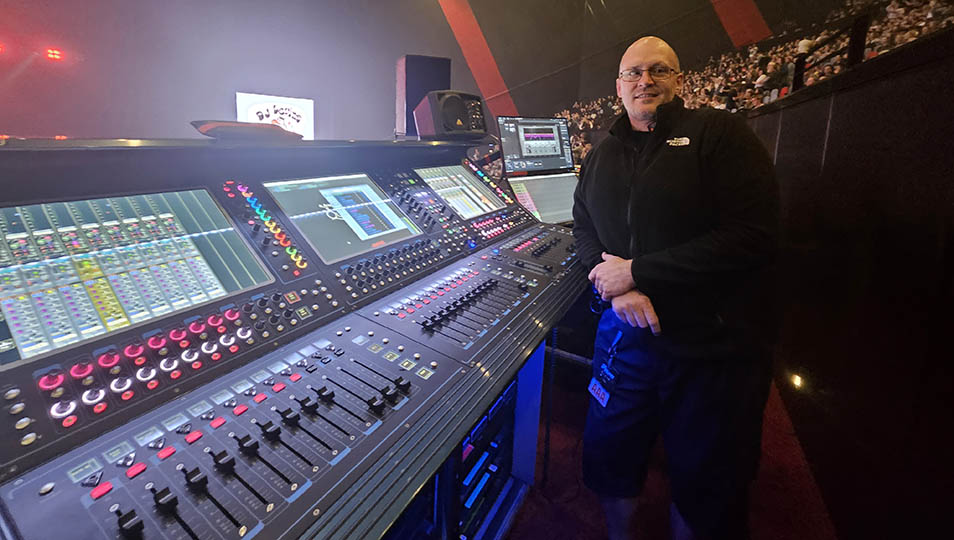
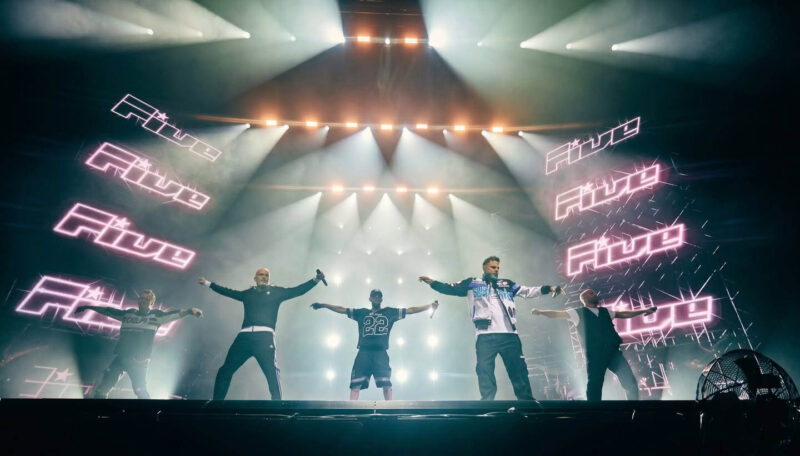
Sound engineer Mike Osman mixed Five on their Australian tour, covering the gig for a few months while their regular engineer is on another tour.
He wasn’t given a specific brief on how they wanted their mix, but he was sent some multitracks so he could do some pre-production work and build a rough mix before starting the tour.
“At the first show in Australia, management came and listened to what I was doing, and they were happy,” he commented. “Really, it’s just a loud, punchy pop mix.”
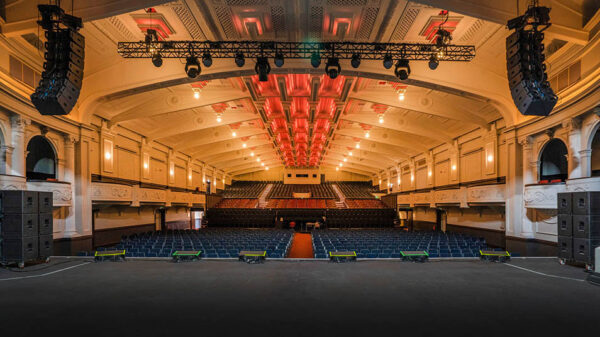
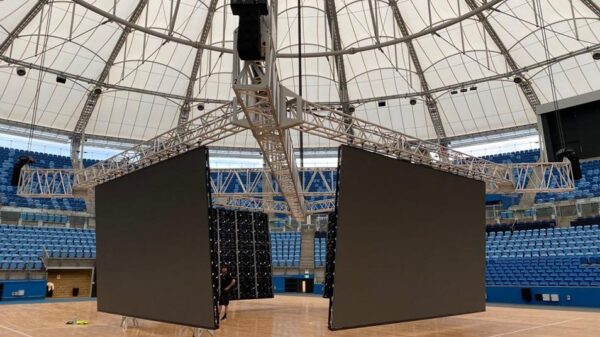
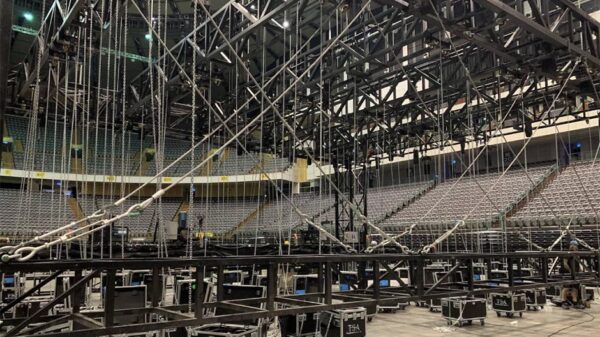
Perth, Brisbane, and Melbourne had d&b KSL, with varying numbers of boxes to suit each room. In Sydney, L-Acoustics K1/K2 with the main hangs 12 x K1 + 6 x K2, with 6 x K1SB per side. Out-hangs were 12 x K2 per side, then there were a few A15 as ground stacked out fills, and some Kara II as front fill. There were 16 KS28 subs.
“I like the d&b system because it tends to be a bit more polite in the high-mids than the L-Acoustics, although the L-Acoustics is usually a bit more open and sparkly on the top end, which is good,” Mike elaborated. “I work pretty closely with the Systems Engineers when advancing tours, and also at the gig when the systems are being deployed and tuned. Usually, no matter which system I’m using, I will know what to expect from it and will have had some input into how I would like it to be, in terms of coverage and tonality. Both systems sound great, and I’ll happily use either.”
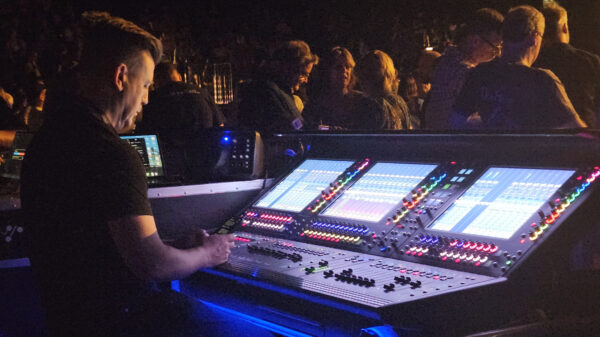
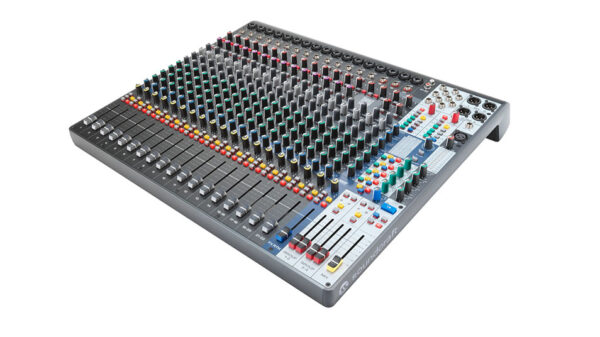
Mike is a dedicated DiGiCo user, and on this run, he asked for a Quantum 7, which is generally his first choice, whether at FOH or monitors. Unfortunately, he couldn’t have a Quantum 7, so for this and all the summer shows in the UK and Europe, he has a Quantum 338 Pulse.
“I have been a DiGiCo user since the early 2000s, back in the days of the D5 and D1,” he added. “They make sense to me, having come from an analogue background, and they sound great. I’m using the Mustard dynamics for various inputs – mostly the VCA compressors, which I think are excellent. I use the Mustard Levelling Amplifier on the acoustic guitar and the Mustard Source Enhancers, as well as VCA compressors, on all the vocals.
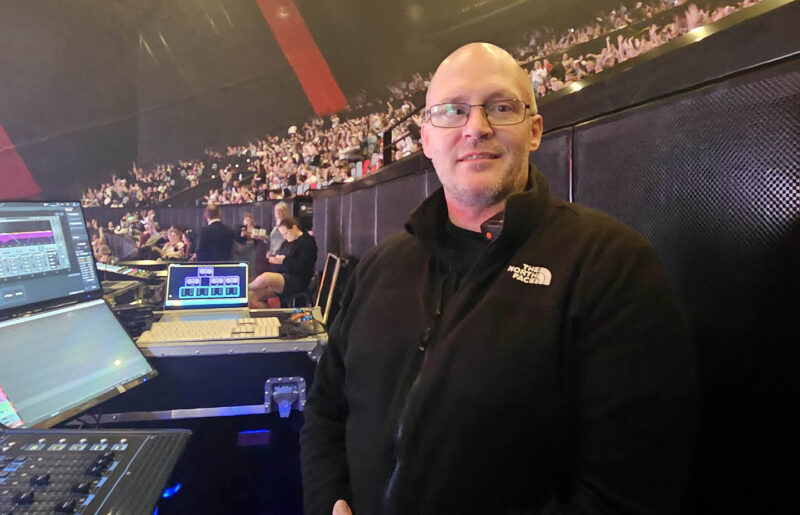
“For this tour, I also have a Fourier Transform Engine, which just runs a few plugins – SSL G Compressors on my drum and drum crush groups, a Waves F6 on my band group, which I only use one band of, in mid/side mode, just taking a touch of 1kHz out of the band mix, side chained from the vocal group. I have a Waves C6 on the vocal group, just to grab the 2 to 4kHz area, which sometimes gets a bit harsh when all five singers are singing hard. Then there’s an SSL G Compressor and a C6 on the master buss, just for a bit of glue, and a little bit of subtle shaping, if I feel I need it, which mostly, I don’t. Other than that, I just have two Bricasti M7 reverbs for the vocals – one is a short room, the other a large hall. The Bricastis are amazing.”
Mike describes it as a fun mix, adding that the band are so tight and right in the pocket. It’s a pleasure to mix them. It’s just a matter of keeping the vocal blends on point, which can be a challenge, as the arrangements are pretty hectic vocally, with each of the five singers taking various lead lines per song.
“The most unique thing with mixing Five is never taking my fingers off the five vocal control group faders,” he continued. “ It can feel a bit like theatre line by line mixing sometimes, trying to catch all the changing lead lines, so every word stays on top of the mix.”
Mike decided to stick with the mics that were already in use, as he didn’t want to change anything unnecessarily. Drum mics on this are mainly Sennheiser, with a few exceptions. The Kick has a Sennheiser 901 and a Shure Beta 52. Snare 1 top is a Beyer M201; the other snares (there are no fewer than three snare drums!!) have Sennheiser 904 tops and bottoms. Toms are all 904. Hats, ride, and overheads are Neumann KM184, and there’s an Audix D6 for the gong drum.
Bass and guitars are DI’d, as are the three keyboards.
“Vocal mics were previously Shure KSM11, but I asked to change them to KSM9s, which I’ve used for a long time, and really like,” added Mike. “The monitor engineer agreed that they sounded good, so now that’s what we are using.”
Lucinda Potter took over from the previous engineer last year and has been mixing monitors since. She has a DiGiCo Quantum 338 Pulse, with some Neve 5045 Primary Source Enhancers, a Waves server, and a Bricasti M7.
“We each have a full DiGiCo SD Rack, with an analogue split between them, then we also have a DiGiCo SD Mini Rack shared between us, which takes all the shout mics, and ambient mics,” explained Mike. “Both consoles and all the racks live on the same Optocore loop, so, whilst we each keep separate gain control for our respective SD Racks, we can also make use of the Optocore features like text chat, and Con Send/Rcv connections to send various audio sources between both consoles.”
The four band members, all the artists, and all the techs (including lighting and video) are on IEMs using 16 ways of Shure PSM1000 IEM transmitters. Two Shure P9HW hard-wired IEM packs are at FOH, which supply a mix to the lighting and video operators. This mix is sent from the monitors to Mike’s console via the Optocore Con Send channels. The only speakers in the monitor world are four subs, which are for the drummer, bass player, and keyboard player.
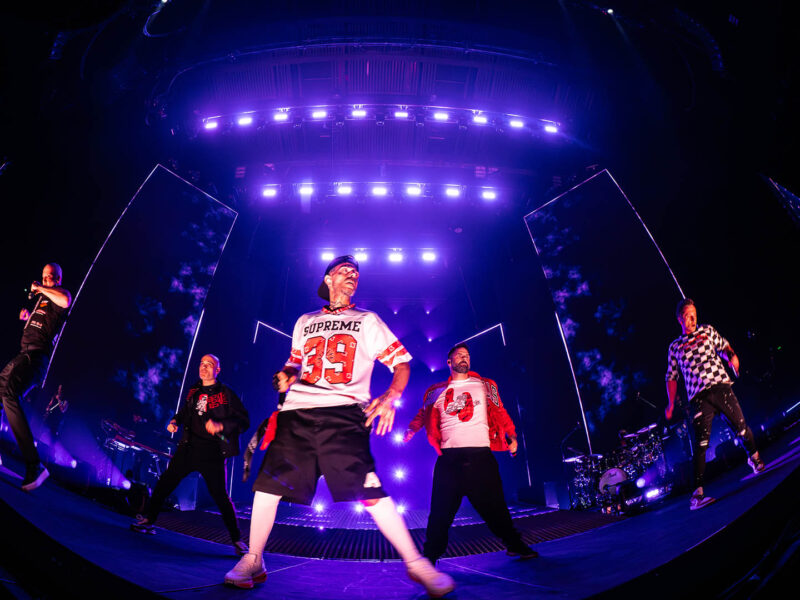
In Australia, local production was picked up from Audio Teknik in Perth, and then they toured a control package from JPJ for the East Coast shows, where they just picked up local racks and stacks (again supplied by JPJ). For Auckland, they again had local production, supplied by Oceania. For the UK and Europe shows, they are touring a full control package from Solotech UK.
Mike says that the two biggest challenges for him are keeping the vocals where they need to be and getting the entire mix over the level of the crowd, who are very loud. It can be difficult in arenas because going loud on the PA tends to excite the room too much, and clarity and definition can suffer. It’s a delicate balancing game for him.
“The Aus/NZ run was great,” remarked Mike. “The artists enjoyed it, the crowds enjoyed it, I enjoyed it (most importantly!), and I’d be happy to come back and do it all again.”