




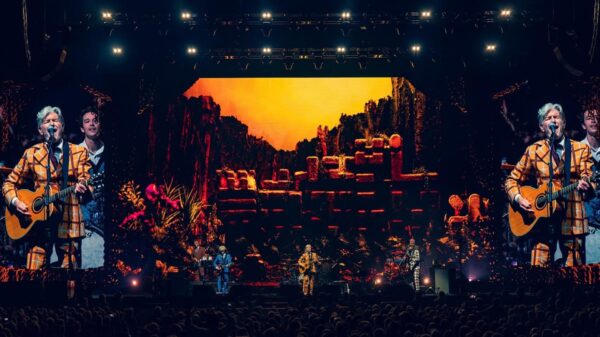



















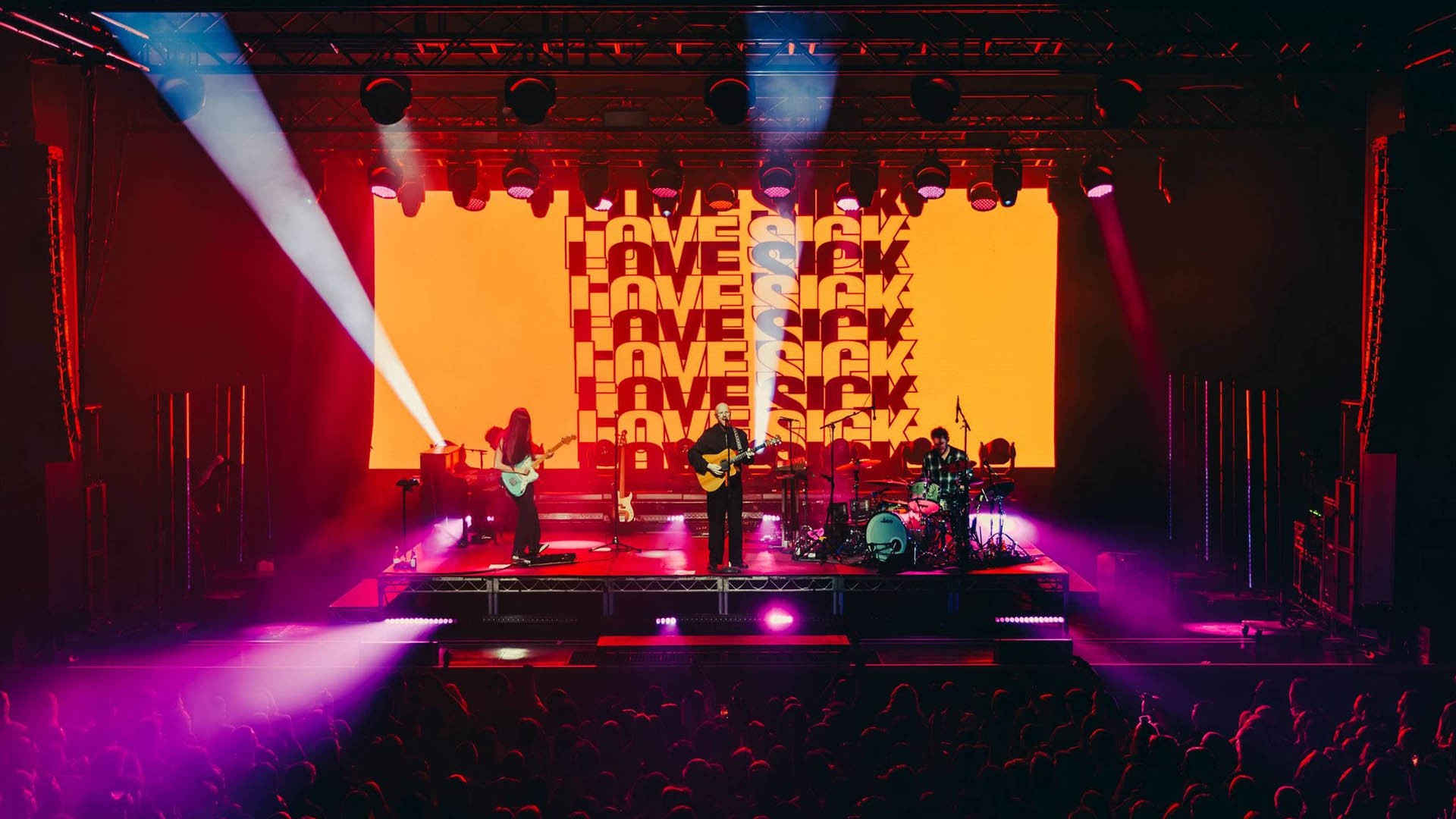
After touring the world for the past five years, Australian indie rock band The Jungle Giants return to stages with their 5th studio album, ‘Experiencing Feelings of Joy’. With close to half a billion streams under their belt and a reputation for lighting up festival stages, this tour unveils a bold new evolution of The Jungle Giants’ signature sound.
Lighting designer Matt Jones of Atlas Studios says that the band were very keen to explore the idea of creating a stage look that was physically and structurally simplistic, visually, but had the ability to deliver visually interesting, intricate and detailed lighting visuals.
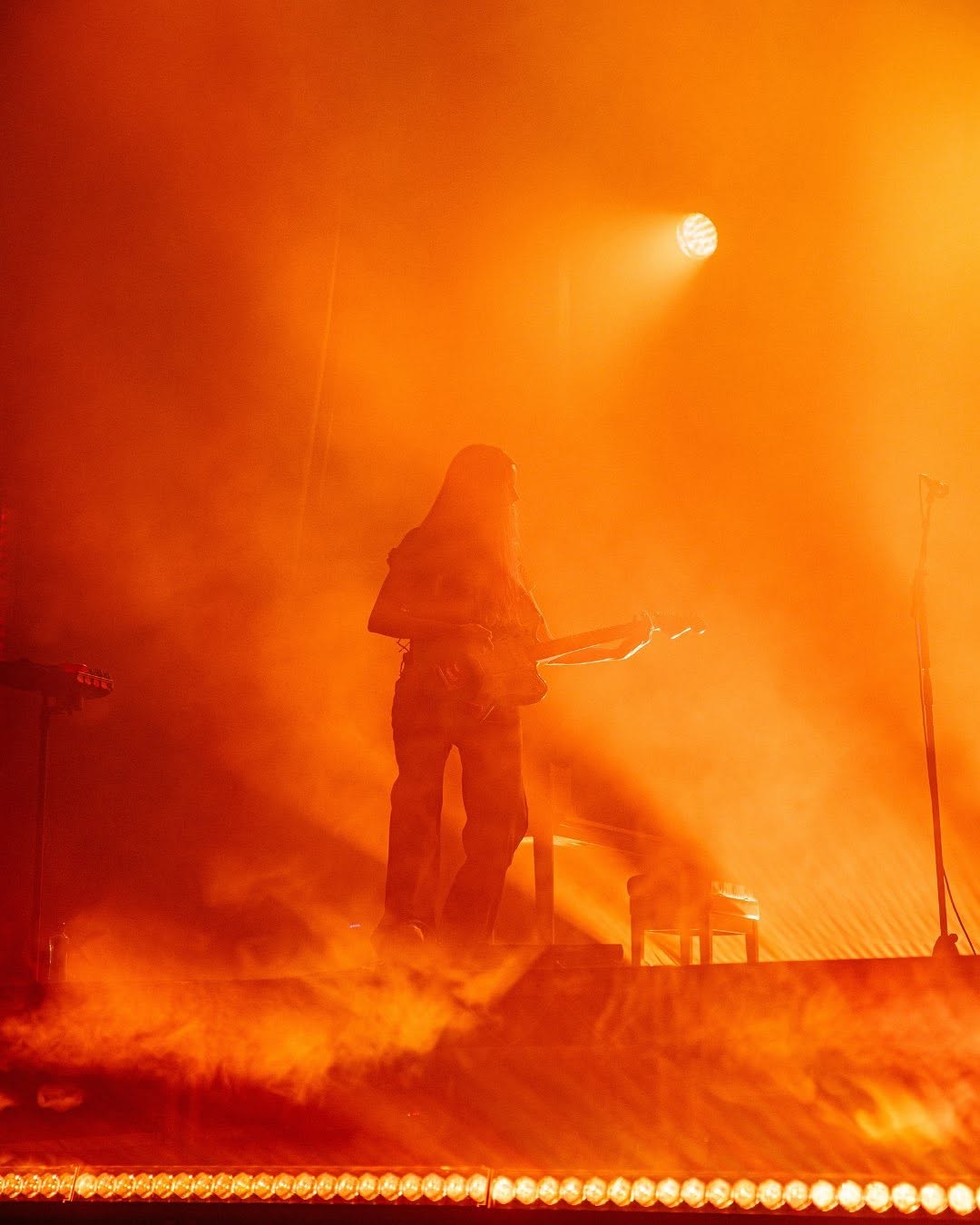
The Band wanted to deliver their new tour in a different stage format that gave the visual illusion of them seemingly floating on the stage.
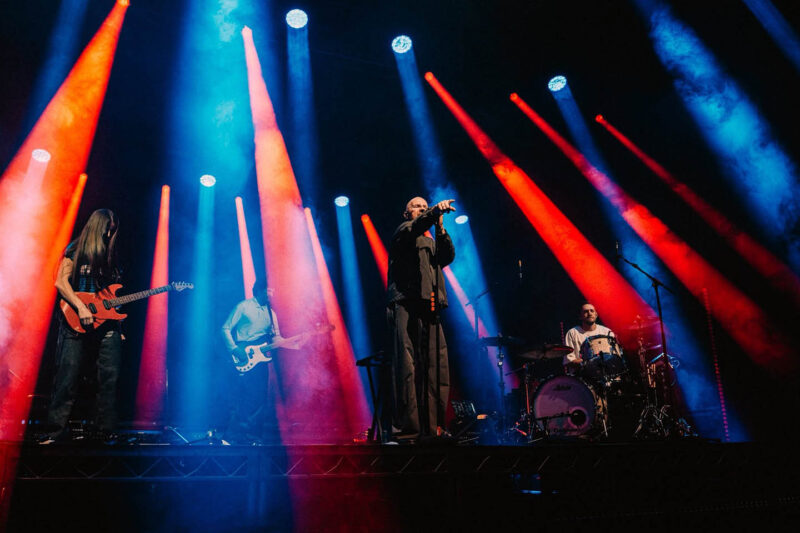
This was delivered by situating the Band on a simple, but large riser layout on the stage. They wanted the stage to be fairly one dimensional – one large riser layout without any variation in high – where all four members would be positioned.
The desire was to step back from the commonly used format of “Drum riser upstage centre, keys and guitars left and right of drums on stage”.
They decided to place drums on the downstage edge of the riser on stage left and have keys, bass, and guitars occupy the centre and stage right of the riser area. The lead vocal, Sam, was primarily downstage centre of the riser, but he and Dooris (bass) frequently jumped down from the riser and performed in front of it on the stage, allowing them to interact more closely with the audience.
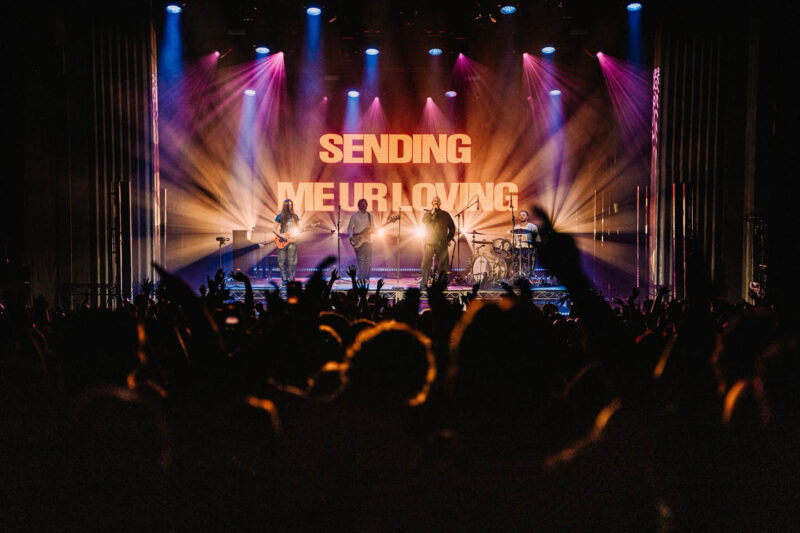
The Band were also intent on incorporating a video element to the show, which they wanted to act as an imposing visual backdrop to their performance space, and add to the illusion of floating.
“Our primary goal was to deliver a design that ticked the boxes for the Band’s vision of their tour,” commented Matt. “We needed to ensure that we also met the logistical needs of touring in Australia, budget requirements and physical venue limitations.”
Matt landed on a floor package design that would be easy to roll in and out of most venues, and utilised fixtures that could be easily and quickly placed out during load-in and packed away at the end. He also wanted to incorporate fixtures that offered maximum creative dynamism and flexibility. Using fixtures that had multiple cells and fixture parts in a single unit meant he could achieve more visually, with fewer fixtures around the stage.
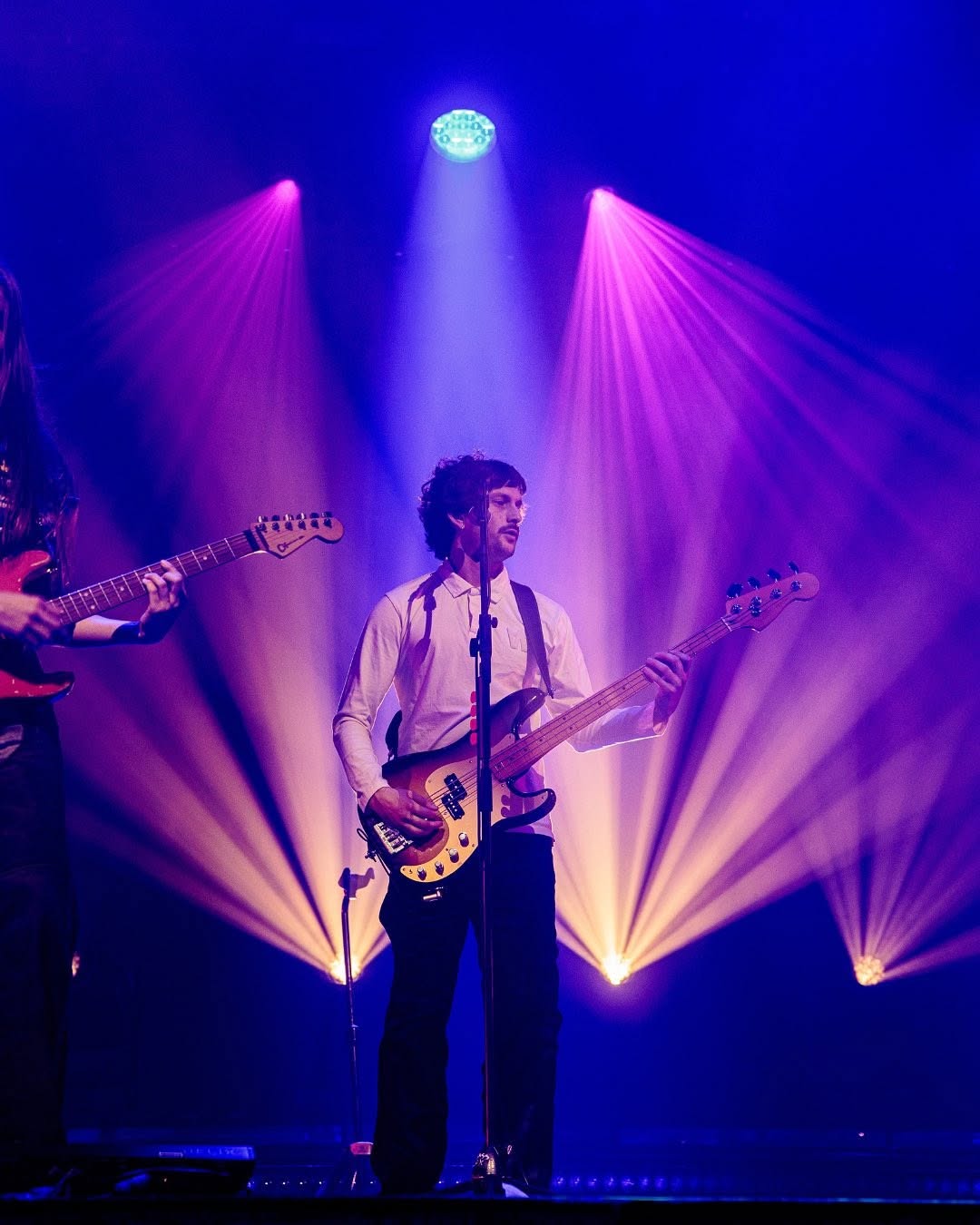
“Visually, we also wanted to try to limit the visibility of fixtures around the stage, so we worked with the desired stage layout the band wanted and worked to situate units outside of the band’s performance space as much as possible and ensured that any placement of fixtures would not encroach on the screen space too,” he said. “Creatively, we wanted to use side lighting as a predominant means of lighting the Band to create more linear shadowing on the Band members’ features.”
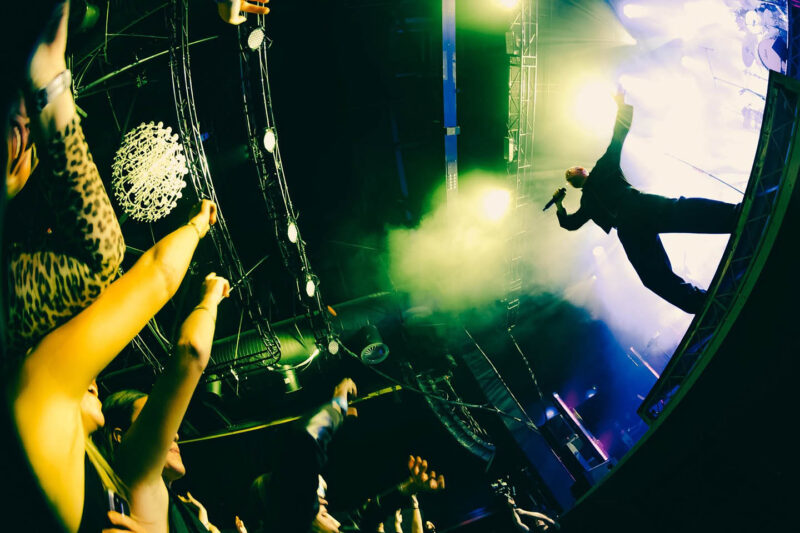
Matt also wanted to add to the Band’s wish to appear floating on stage by using linear wash lights that had a decent, tight zoom to create a light curtain that would pick up the haze and disguise some of the staging hardware.
The lighting floor package consisted of 26 GLP X4 Bar 20s (2 x linear rows of 7 units, one row on the far upstage edge of the riser and one row on the floor in front of the riser, and 3 verticals, each side of the stage, with 2 units on each vertical.
Behind the riser, on one rolling pre-rig, there were 8 Martin MAC Viper XIPs and 10 Acme Pixel Lines in one linear line.
On the downstage edge, there was one MAC Viper XIP on either side of the stage to provide clean side light that covered both the performance space in front of the riser and the riser space itself.
“I programmed the show on grandMA3 in the new version 2.4 software,” said Matt. “The ease of programming with multi-cell fixtures on grandMA3 is such a breeze when fully utilising Selection Grids and Recipes!
“I was very keen to jump onto the new software release from the outset, as we were programming this tour from scratch, which meant we implemented the new Phaser Recipes workflow into our existing workflow easily.
“For the tour, I have found that our workflow and cloning of fixtures has been working seemingly!”
There was an upstage screen behind the band. The media was controlled using a Resolume Media server. The video media was also Timecoded, with grandMA3 controlling the media selection and layer intensity control. Each city had a specific intro clip that included the city name.
“In addition, Sam would wear one of two outfits on stage, which we had two specific clips for, as the first song starts with Sam singing off stage, with a media clip showing Sam appearing to walk backstage as if about to walk out onto stage,” explained Matt. “Sam would inform me what he was planning to wear, and I would be able to simply enable or disable the necessary Recipe line as needed.”
Matt says that the biggest hurdle on the tour was, as usual, time. They didn’t receive the audio references until about 10 days before the first shows.
“Combined with our other commitments, we had to push very hard to program 22 songs completely to Timecode,” he added. Between my business partner Thomas Herterich (who is currently living in London) and me, we were able to program around the clock. We comfortably achieved this in time to present the show in previz to the Band in rehearsals before the first show!”
Suppliers for the tour were ei Productions for Melbourne, Sydney, Brisbane, Adelaide and Canberra. PLSM supplied Forth Pub and Hobart.