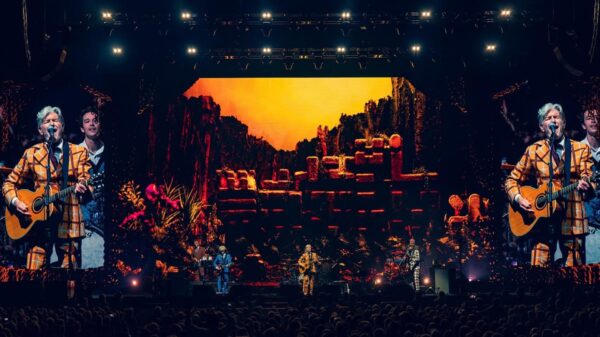







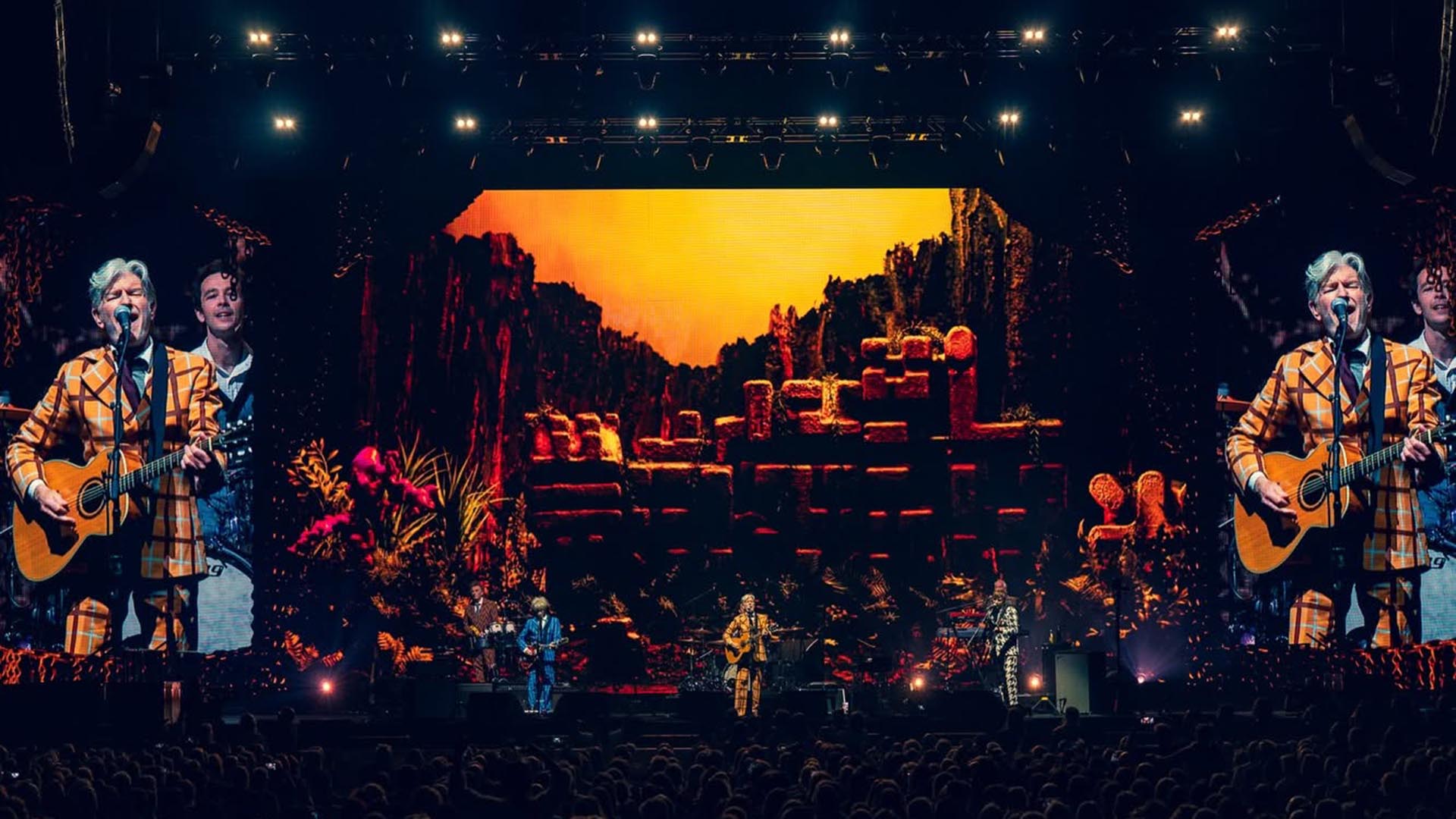
Split Enz completed their “Forever Enz Tour” across Australia in May 2026, marking their first national tour in nearly 20 years. The reunion tour featured core members Tim Finn, Neil Finn, Eddie Rayner, and Noel Crombie.
FOH Engineer Kerry Furlong has been mixing Crowded House for many years, but this was his first time mixing Split Enz, saying, “It was definitely one of the bigger bucket-list shows for me. Like all New Zealanders, I’ve grown up with these songs, so the material was as familiar as it could be.”
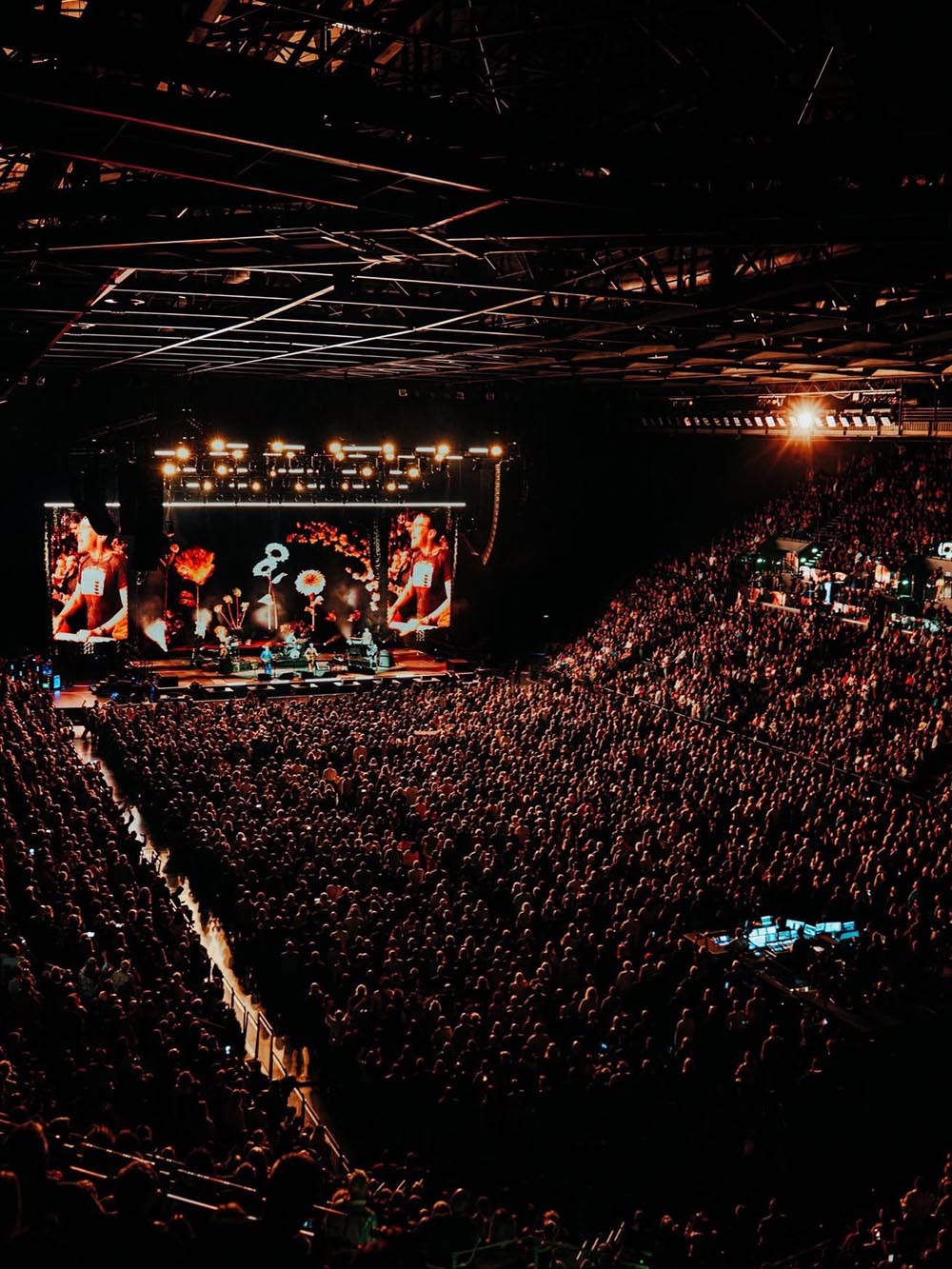
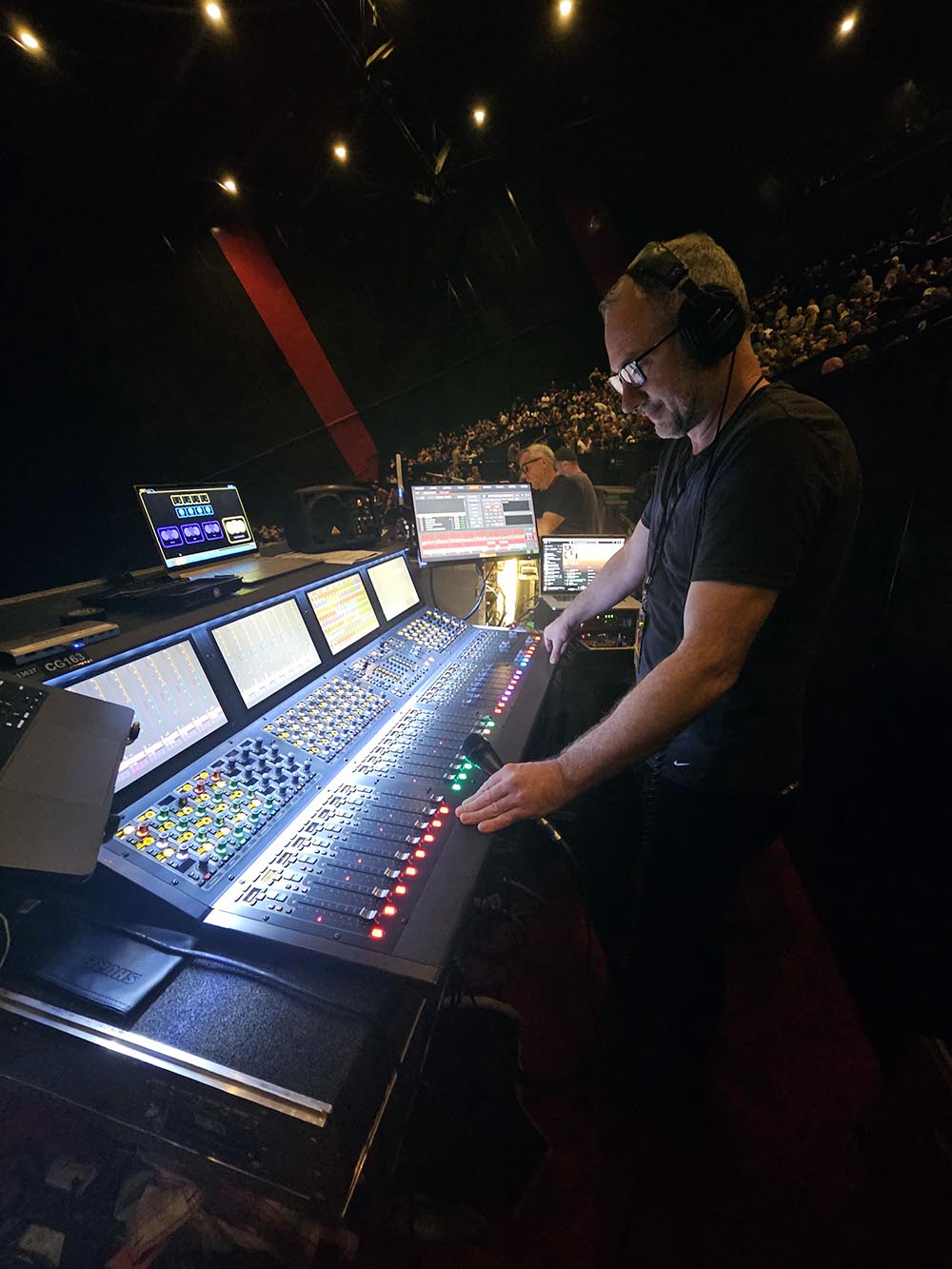
When it came to interpreting Split Enz’s sound, Kerry was, for the most part, left to do what he does best. He adds that, if anything, there was an emphasis on the keyboards, and rightly so as Eddie’s parts are incredibly tasteful and iconic.
“I do tend to mix guitars quite loudly at times, as a lot of the energy in a mix comes from the guitars,” he said. “I probably ride those faders more than any others.”
In Australia, everything was toured — PA, lighting and screens. In New Zealand, they used PAs supplied locally, with The Sound People handling the South Island shows and Western Audio supplying the North Island dates.
In New Zealand, it was a combination of d&b audiotechnik J-Series and GSL/KSL systems. According to Kerry, the ArrayProcessing and the rear rejection of the GSL system in particular made the arenas much more manageable.
In Australia, they used L-Acoustics K1 and K2 systems supplied by JPJ Audio in Melbourne.
“The choice of PA was largely out of my hands, to be honest, but I love working on both systems,” commented Kerry. “Personally, for indoor shows — particularly in acoustically challenging rooms — I’d probably lean towards d&b. For outdoor shows, or in a great-sounding room, L-Acoustics has a warm character that’s very hard to beat.”
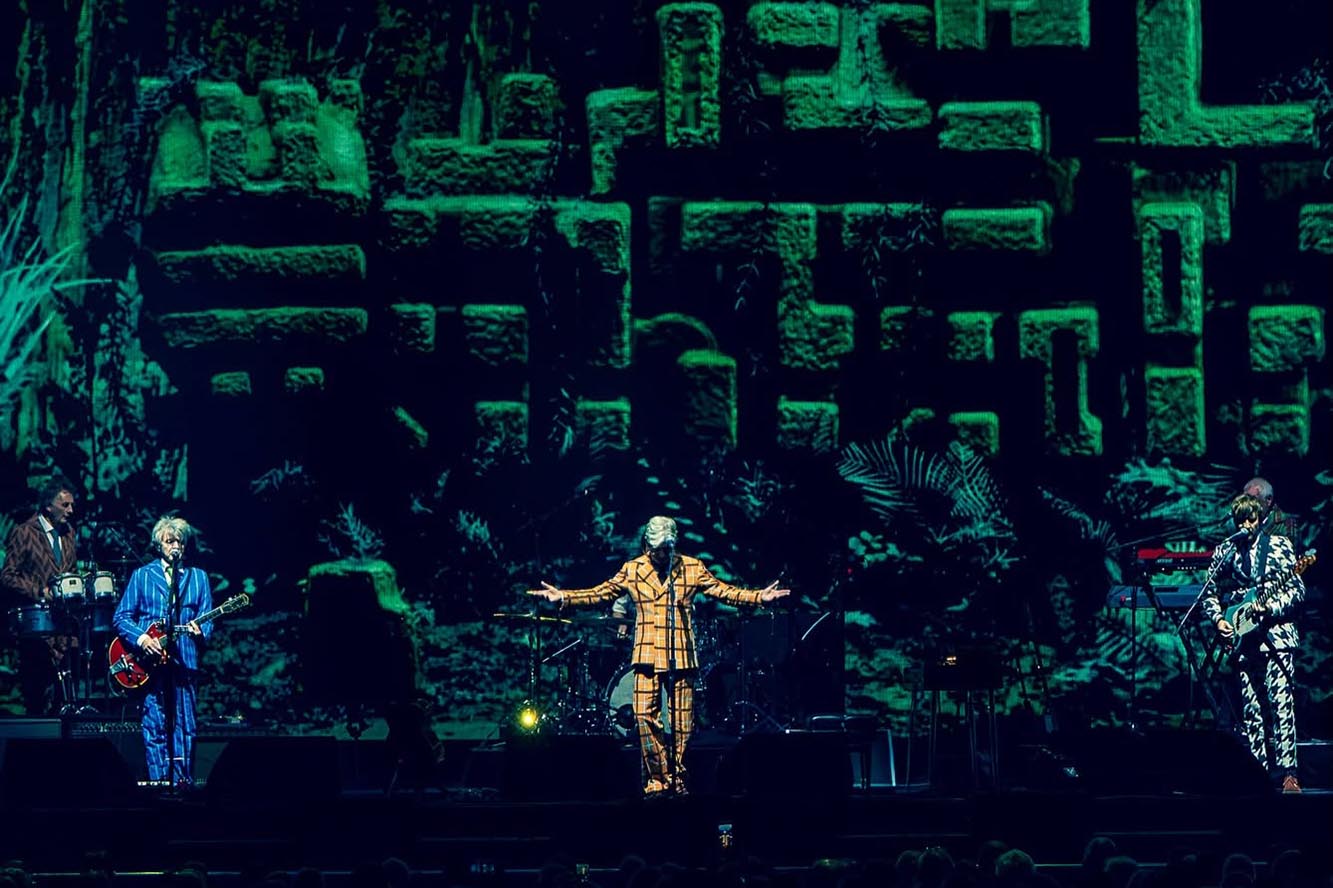
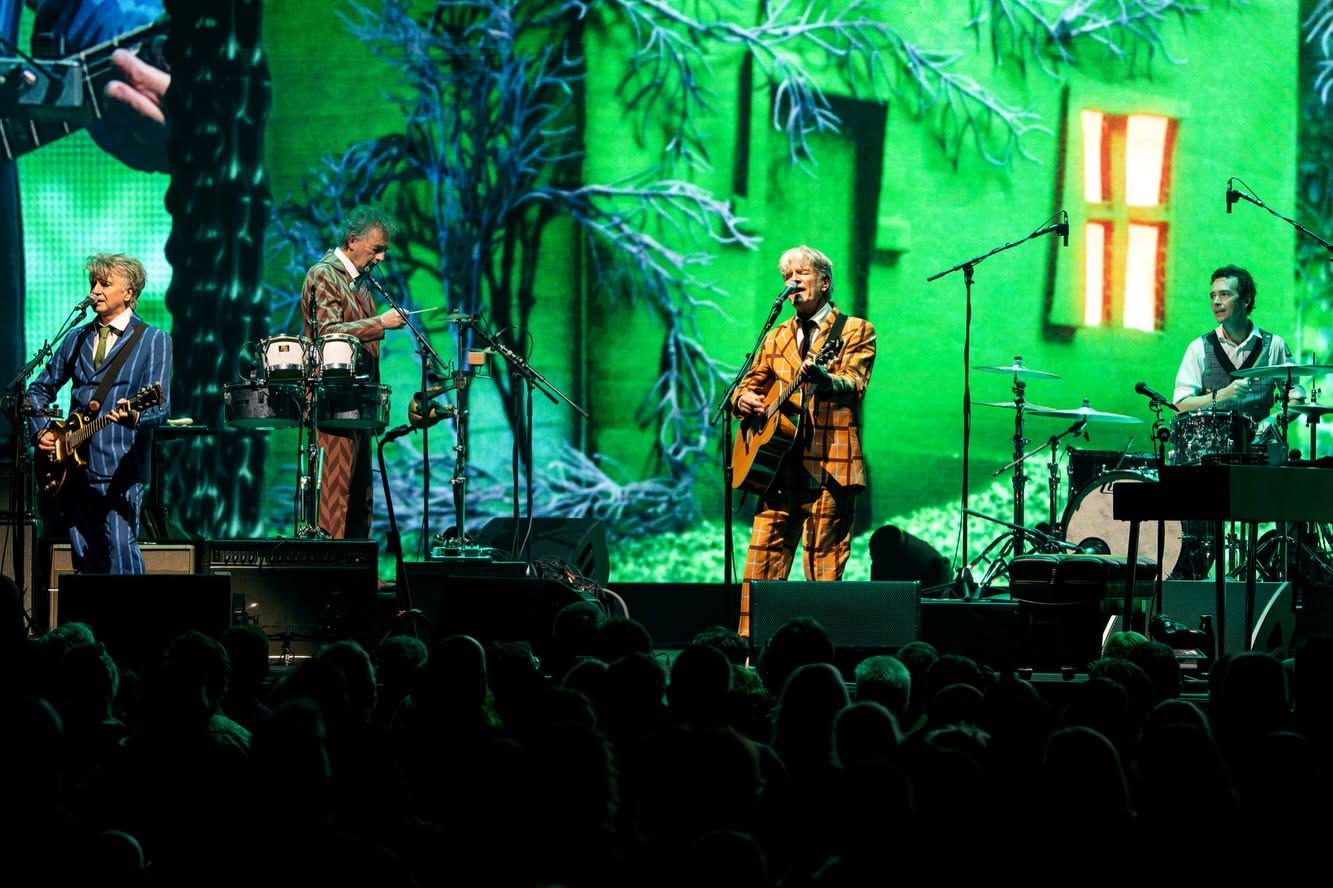
Kerry mixed the show on an Avid S6L with a Waves Titan-R server. Each output feeding the PA was routed through a Lake LM44 for system EQ and processing.
“Mixing Split Enz is exciting and occasionally chaotic,” he revealed. “There’s a lot to juggle, both instrumentally and dynamically.
“Matt Eccles is an incredible drummer, and having that consistent, solid foundation makes the job much easier. The biggest focus is ensuring the vocals remain clear, present and sitting above a very busy arrangement without losing the energy of the band.”
James plays bass using both his thumb and a pick, and a significant amount of his level comes from his amplifiers — not only the amp behind him, but another even louder one on the opposite side of the stage for Neil. The level and tonal differences between songs could be quite dramatic, so Kerry had to approach the bass differently from how he normally would.
“More stages of compression and limiting, along with some saturation, proved very helpful,” he elaborated. “I used three bass inputs — DI, amp DI and microphone — and Waves InPhase was invaluable for aligning all three sources. Once they were working together, it gave me a much more consistent and controllable bass sound throughout the show.”
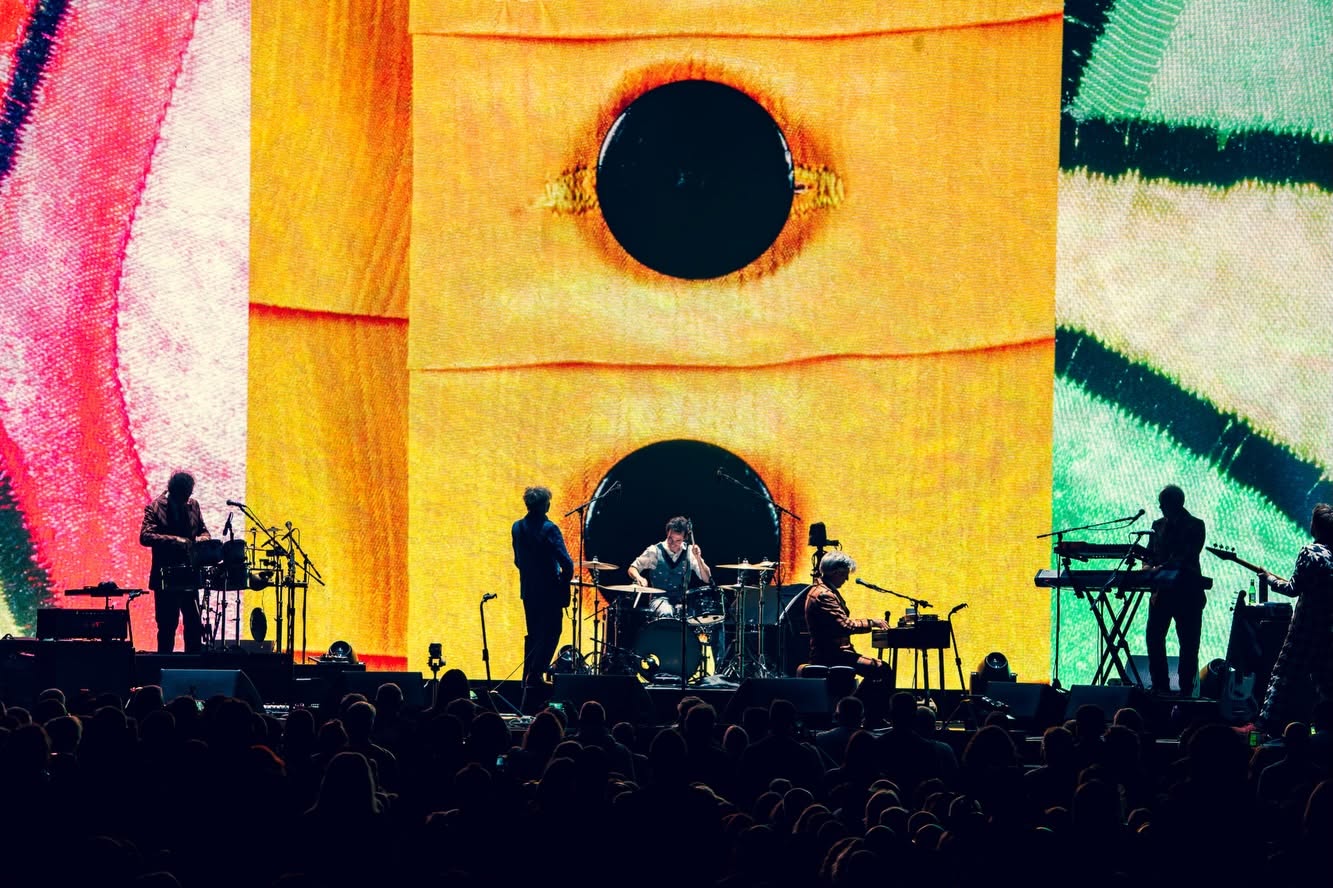
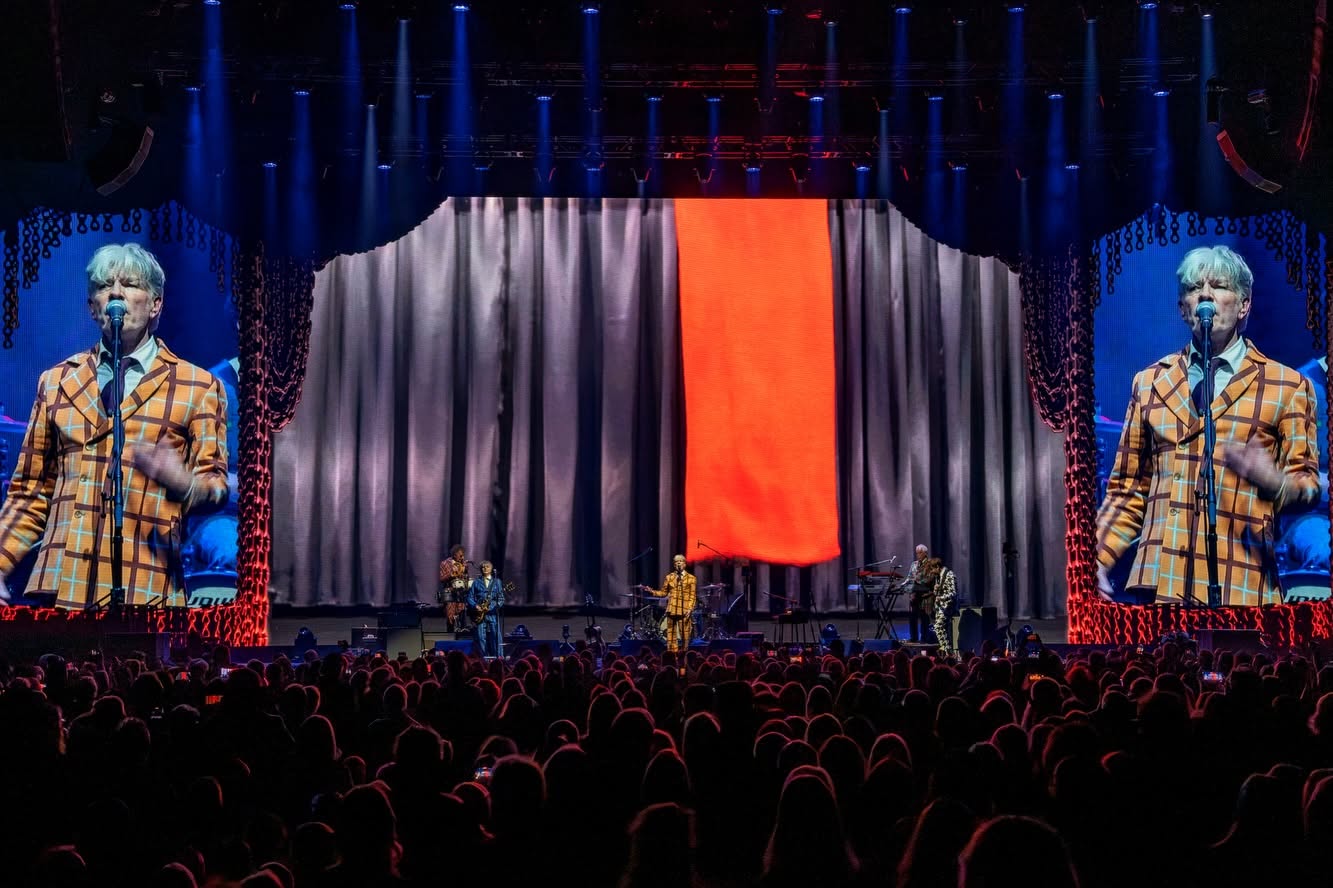
Kerry says that the stage dynamic is quite different between Crowded House and Split Enz. Overall, a Crowded House set tends to be far more dynamic in terms of volume and intensity. It’s more of a journey.
“With Split Enz, I wanted the mix to be energetic and upfront to match the energy coming from the stage,” remarked Kerry. “Crowded House also has a tendency to head off on tangents and throw the setlist out the window at times. Perhaps because it had been so long since Split Enz had toured together, they largely stuck to the script. Another couple of tours and I’m sure that might change.”
For microphones, Kerry largely stayed with Shure across kick, snare, and hi-hats drums. For toms, he used DPA 4099s, while overheads were handled by a pair of Josephson C42s, which quickly became his favourite overhead microphone of everything he’s tried.
“They have a lovely silky top end, and I found I didn’t need to ride the faders nearly as much to bring out the cymbals,” said Kerry. “Percussion was a major part of the show, and we used a pair of DPA 2015s with a wide pickup pattern to cover most of it. They’re incredibly discreet, natural-sounding pencil microphones.”
For guitars, Neil’s Matchless was captured with a Royer ribbon and Shure SM57 combination, while his JCM was miked with a pair of Warm Audio WA-14s. The Royer/SM57 combination is a tried-and-true setup that really captures the character and grunt of the Matchless.
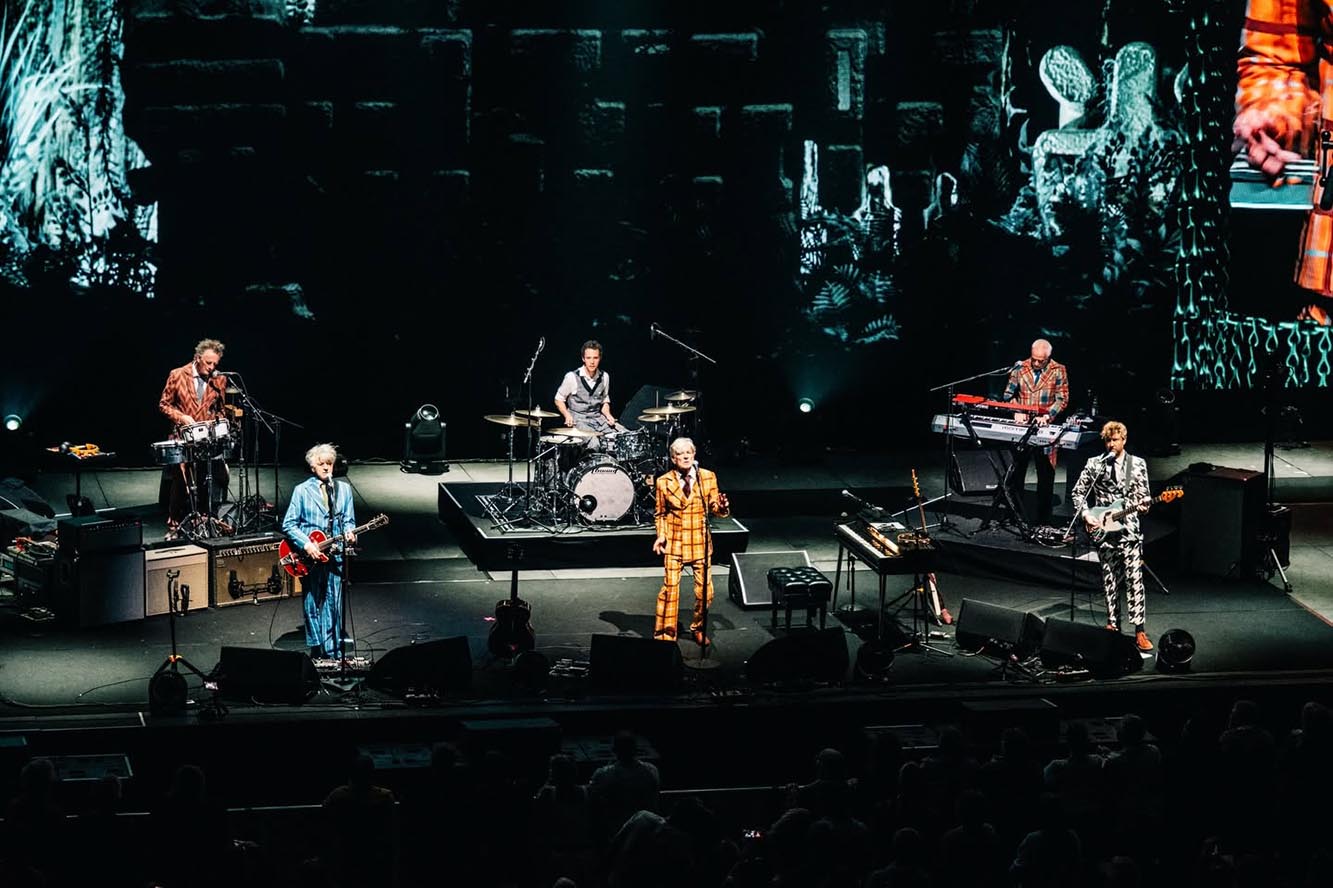
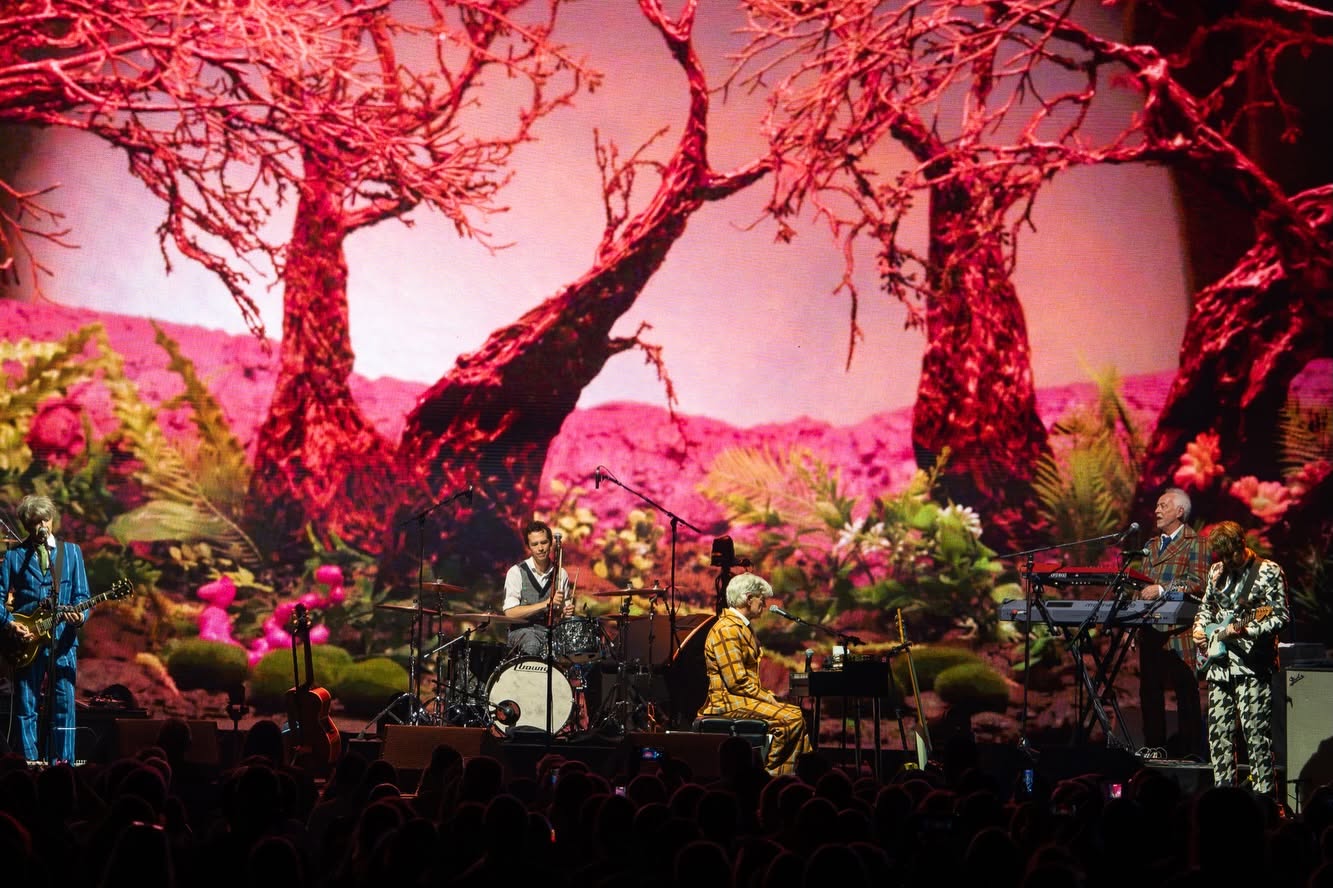
“I needed to capture the bright ’80s character of the JCM without it becoming harsh, and the WA-14s did a great job of that,” continued Kerry. “I think Warm Audio do a fantastic job of drawing inspiration from classic mics while creating something unique in their own right.
“I have to thank Nigel at Oceania Audio Sales, Simon at Direct Imports and Carl at NSL for their generosity and support.”
Anthony Mathews, who also works with Crowded House, handled monitors on an Avid S6L.
“Antho is a great friend and an incredibly talented engineer,” states Kerry. “The most important thing for me is making sure the vocals remain lush and sit above everything else. The band refuse to use IEMs and prefers their wedges loud, so we’re fortunate to have someone we trust keeping things under control on stage. The entire band used d&b M2 stereo wedges across the stage.”
One of the biggest challenges of the gigs for Kerry was managing the low end. In large arenas with both flown and ground-stacked subwoofers, it’s never going to be perfectly aligned everywhere.
“You have to make a decision: do you make it sound right where you’re standing, knowing it’s going to be uneven somewhere or maybe everywhere else?” he said. “You have to be careful not to become fixated on problems you can’t solve and lose sight of mixing the songs the way you want them mixed.
“I was fortunate to work with some excellent system engineers, so it was as good as it could be. That said, it certainly made me appreciate the outdoor shows.”
Lighting
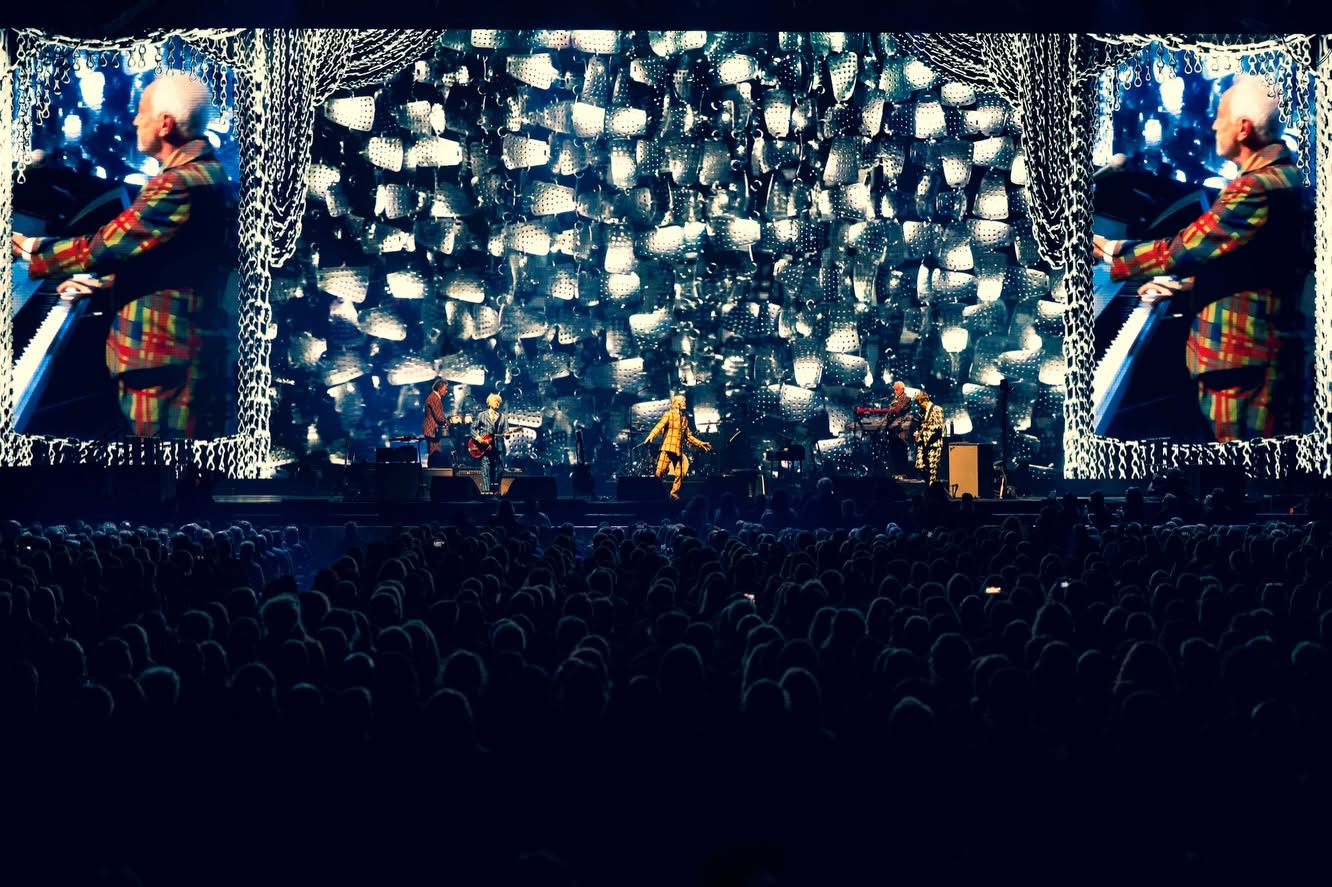
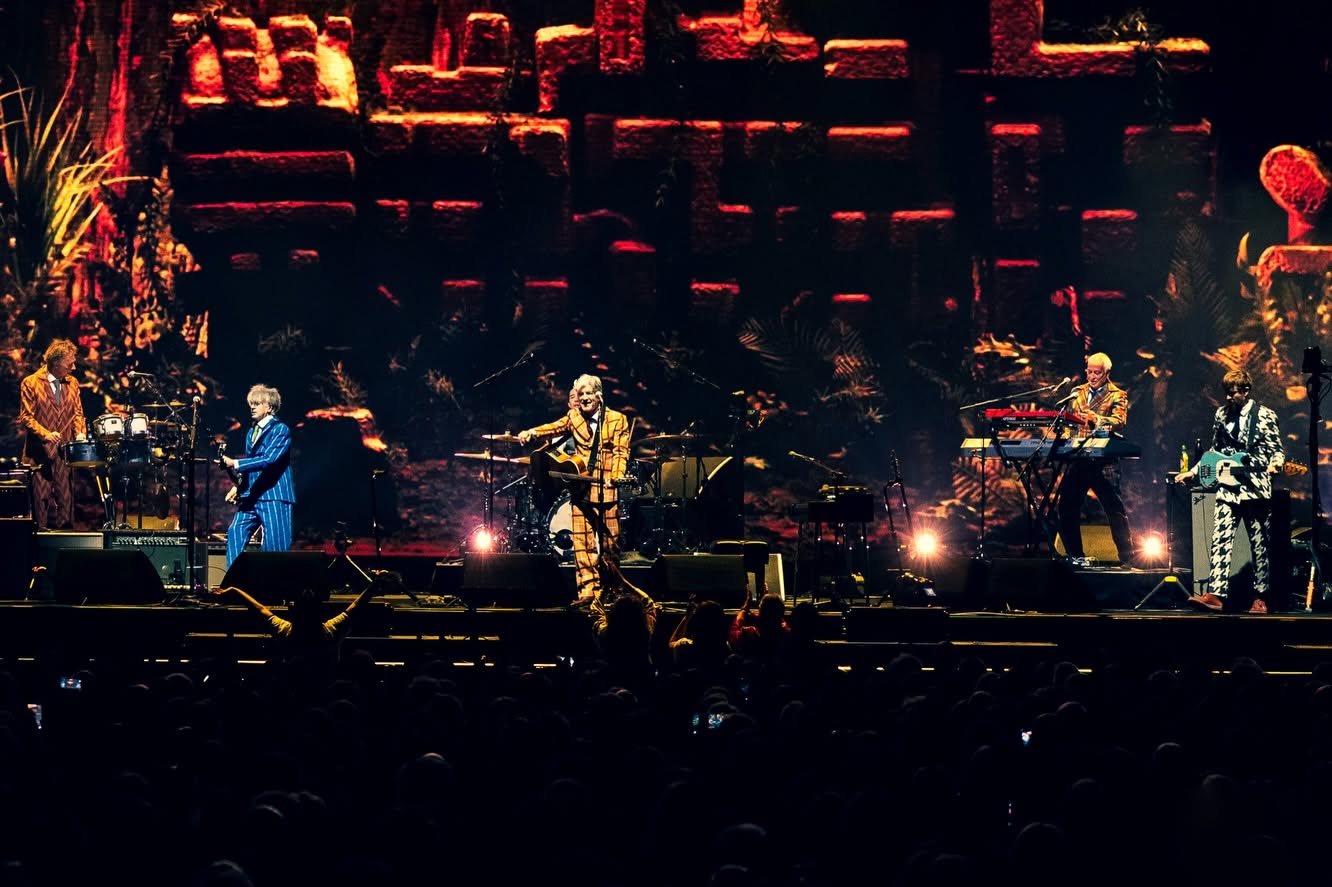
Ben Dalgleish and his team at Human Person created all the video content for the show. He worked closely with Noel Crombie and Sally-Anne Mill, and his eye across all aspects of the production was invaluable, according to Lighting Designer Dan Blak from Colourblind.
“It was a very collaborative process – we worked together throughout to make sure the lighting and video worked as one, and once we arrived at the first venue in NZ, I worked closely with the video operator Delainy Jamahl to ensure the lighting and video were closely aligned.”
The artist’s brief was to honour the band’s legacy while presenting a visually spectacular show. The video content was central to that vision, so the lighting needed to serve and support it rather than compete with it.
“The video content took centre stage, so the primary goal of the lighting was to support it without detracting from it,” commented Dan. “At the same time, the design needed to have some relation to the lighting of the 70s and 80s when the band were in their heyday — less beamy looks, gobos, washes and limited movement.
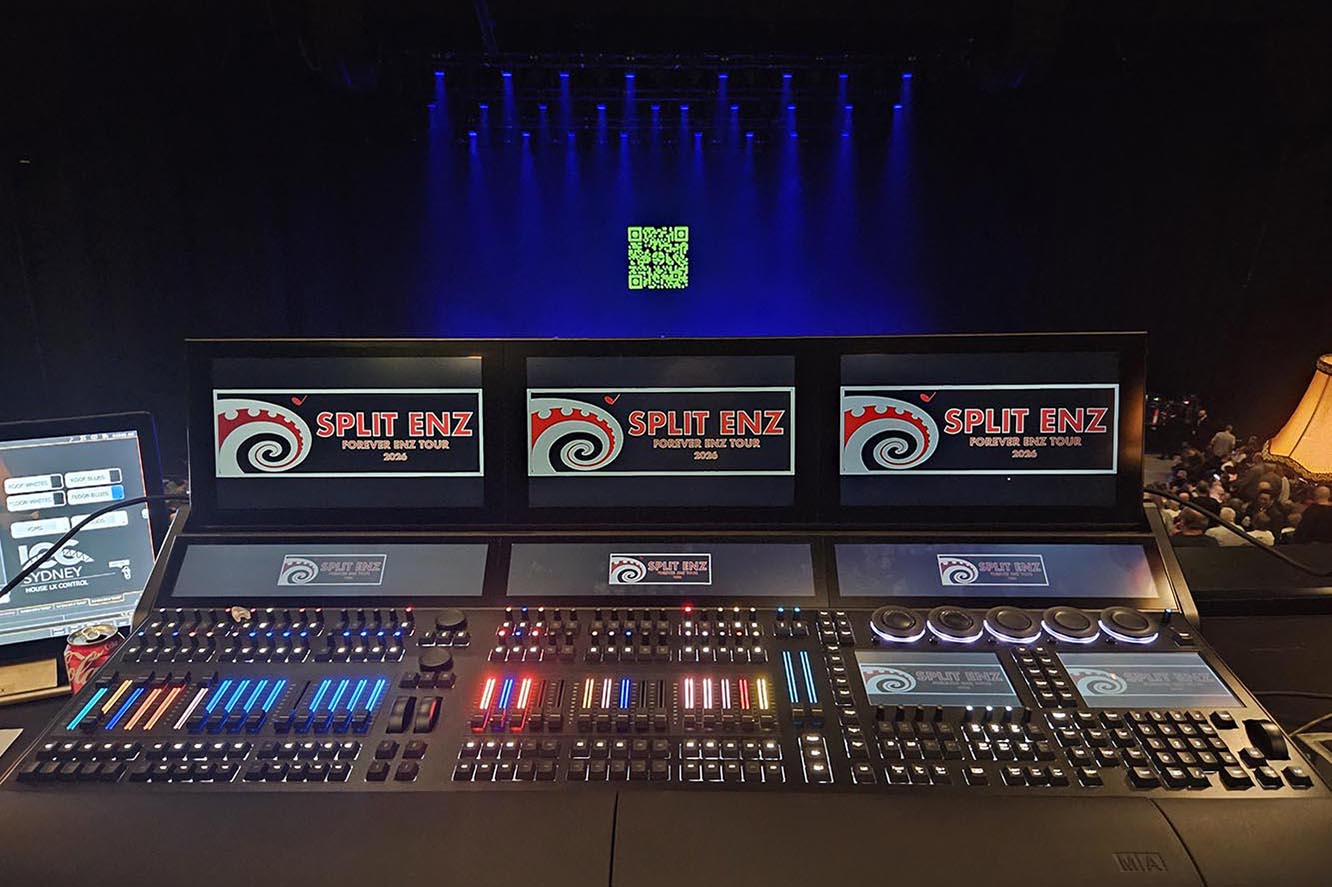
Capturing the energy on stage in the lighting without distracting from the video content was Dan’s main challenge throughout.
MJF Lighting supplied the NZ leg of the tour. In Australia, Chameleon supplied the east coast run, and Show Screens supplied the Perth show.
“All the suppliers were top-notch, and we were lucky to get the same selection of fixtures across both countries, which made transferring the wash pixel effects much easier,” added Dan.
The rig consisted of 4 x Follow Me spots covering the guys down the front of the stage, with Ayrton Perseo and Martin MAC Aura PXL in the overhead rig. On the upstage floor was a row of Perseos, plus a mirror ball for the effect in Six Months in a Leaky Boat.
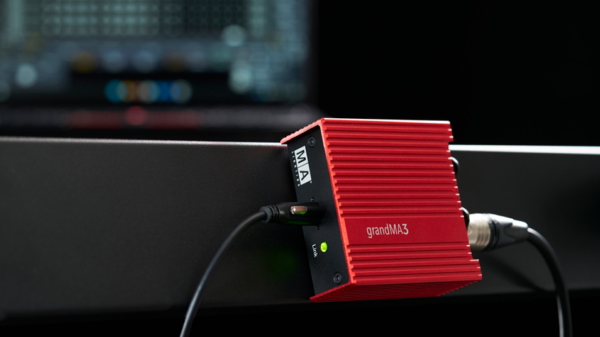
The show was programmed on an MA Lighting MA3 with several looks per song. As Dan handed it over to his colleague, Hamish Lee, for the Australian leg, he programmed it so it would be easy to pass on. Hamish picked it up in no time and absolutely nailed the execution.