






















By Richard Cadena
In the early 2000s, many people were uncertain whether LEDs could ever light a stage well enough to satisfy lighting designers. At the time, they weren’t quite bright enough, the dimming was steppy, they were expensive, and they didn’t render colours and skin tones well. One by one, all those problems were overcome, including, in my humble opinion, the colour rendition issues. Rob Gerlach was one of the first who recognised how best to achieve that.
In 2003, he wrote a paper called LEDs to Light the Theatre, laying out one of the first comprehensive studies of LED technology for stage lighting. By using spectral analysis and human perception testing, he laid out a disciplined argument that an RGB LED array supplemented by other LED wavelengths could produce a more natural, full-spectrum white light.
He specifically cited lime LEDs with a 565nm wavelength as being critical to filling the spectral gaps left by RGB or RGBA systems. The lime LED helps bridge the gulf between yellow and green peak wavelengths. At the time, if my memory serves me correctly, an emitter with that wavelength didn’t exist. But it could be predicted given the resources being poured into phosphors and phosphor-converted LEDs at the time. Gerlach’s insight proved to be foundational for modern multi-emitter systems.
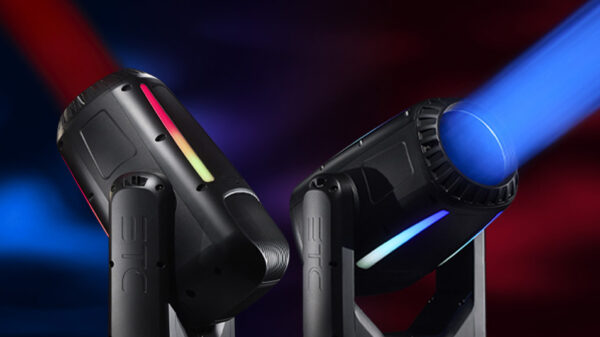
Subsequently, he, Mary Tarantino, and Novella Smith founded Selador and started manufacturing multi-emitter LED fixtures called X7, which used seven different LEDs to achieve superior colour rendering and white light. ETC bought Selador in 2009 and still uses the concept today. In fact, the new High End Systems (HES) GigaPix and MegaPix LED fixtures feature a multi-emitter LED engine that scores high in colour rendition thanks to the L in the RGBL.
GigaPix and MegaPix are small- and medium-sized moving head colour wash fixtures with a twist – they can pixel map well, although it’s not a rectangular array but a circular one. MegaPix is the smaller, lighter of the two with a 10,000lm output, and the GigaPix is larger with an output of 17,000lm. Besides pan and tilt, the features they have in common are RGBL colour mixing, tunable white light from 2,000K to 10,000K, a soft edge with remote zoom, customizable Flex effects macros, individual pixel mapping, and more.
Read the full article in Lighting & Sound International
etcconnect.com
Australian Distributor: Jands jands.com.au