

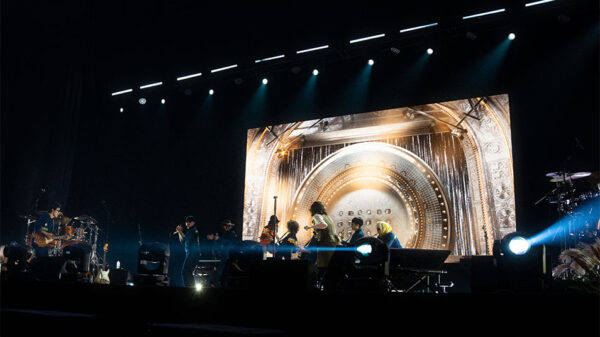
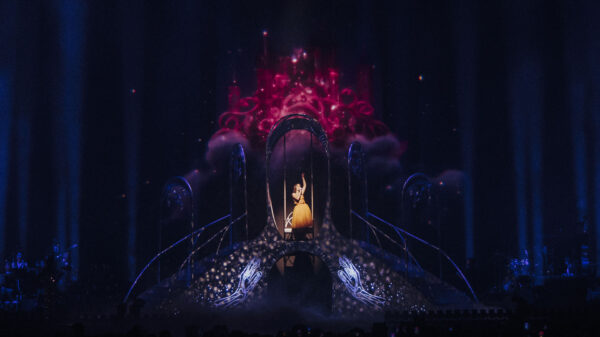
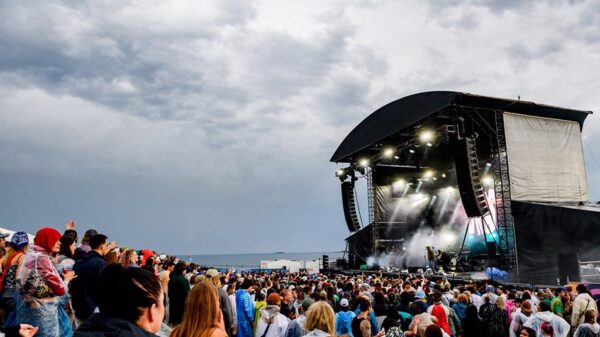
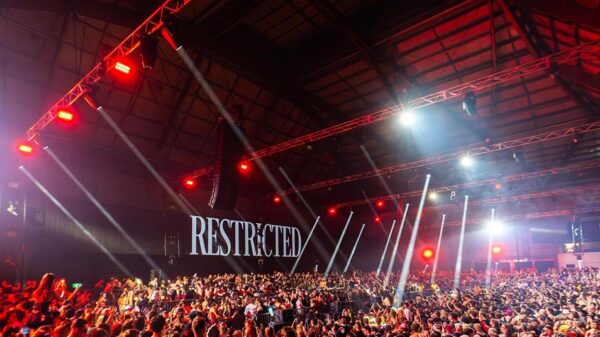





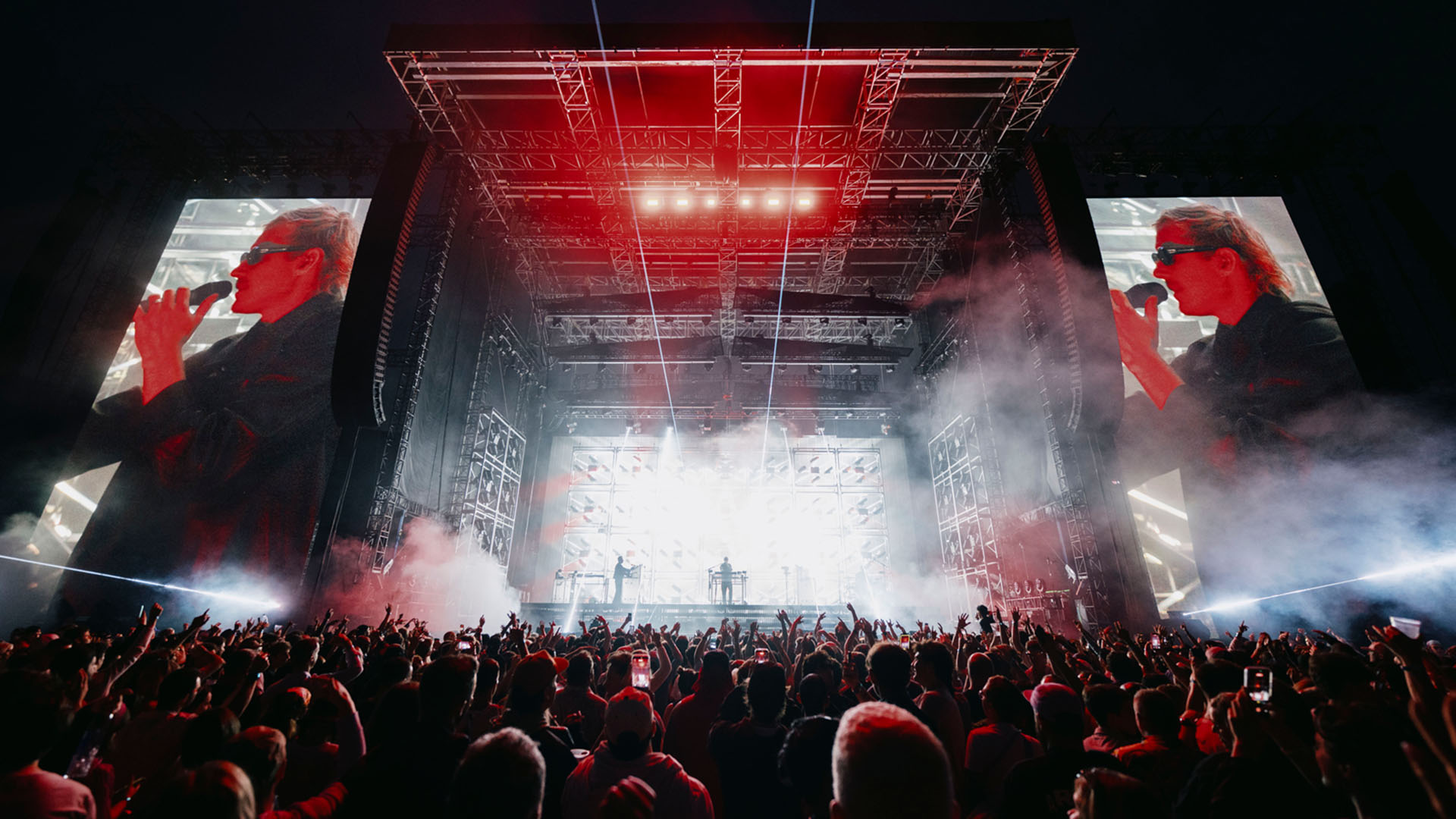
Rüfüs Du Sol’s record-breaking Inhale/Exhale production is one of the highest-selling electronic music tours of all time. The tour travels to Australia, New Zealand, Mexico, Brazil, Europe, the UK and the United States before it culminates in Canada this September.
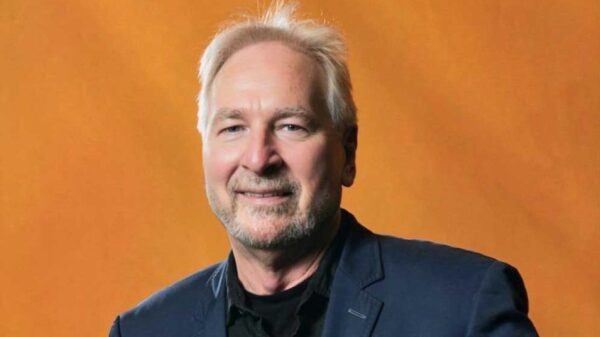
The need to create a lasting impression and level up the live sound was an artist-led vision. “The show sounds exactly how the band envisioned it; they come to FOH and work with their engineer to fine-tune the mix and session files to each venue’s acoustics,” begins production manager Joel Stanley, who has been with the LA-based Sydney natives for five years now. His tenure has spanned over two album cycles, including this, their most ambitious concept to date.
“Each tour has become more successful and moved into bigger venues,” he continues. “The band are always pushing the envelope, especially with live production, which is a great position to be in.”
Facilitating the tour’s audio design are Clair Global brands Britannia Row Productions (PA supply across the UK & Europe) and Eighth Day Sound (control packages). “The Clair brands are perfect for us because our biggest markets are The Americas, Europe and Australasia,” notes Stanley. “We’ve taken our control package with us for consistency – not having to re-prep before each leg has given the crew more time at home with their families – and for our PA and PA crew, we’ve opted to have this supplied locally in each market.”
This not only allows for freight saving and easier power implementation, but Stanley confirms that having a PA crew that know both the local venues and local crew is “hugely beneficial” to his team.
“I’m big on staffing tours with enough people to avoid burn out,” he explains. “Adding even five per cent more touring crew and stagehands allows the team to do their job safely and effectively. We try to build a schedule without very early starts and enough time at home between legs. I find that’s the most important aspect of my crew’s work / life balance.”
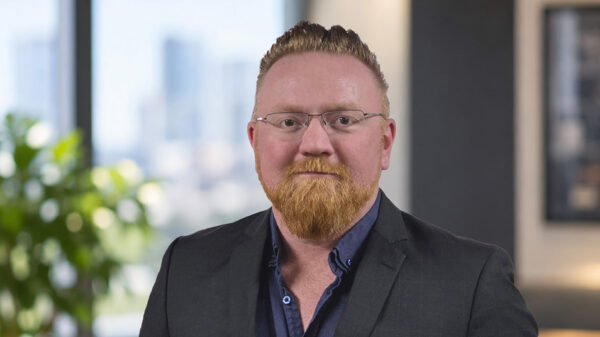
FOH engineer Cam Trewin has worked with Clair Global for some time, and for close to a decade, had mixed Rüfüs Du Sol. “The level of support has been consistently exceptional,” Trewin says. “The systems are always prepared with precision, and the technicians are world-class, highly knowledgeable and efficient. This has been our biggest and most successful tour to date, made possible by the support and care of the Clair team.
“A Rüfüs Du Sol show is a unique experience. While it sits in the electronic space, it’s very much built around live performance rather than being primarily a track-driven show. For a three-piece, the channel count is relatively high, as they aim to play as much as possible live using similar synths, pedals and controllers as they would in the studio.”
Praising them as “exceptional engineers and producers”, Trewin, who is also the band’s studio engineer, goes on to explain: “There’s a real focus on maintaining sonic integrity; the goal is for their fans to hear something that feels true to the record – consistent, detailed, and immersive – night after night, regardless of the venue size.
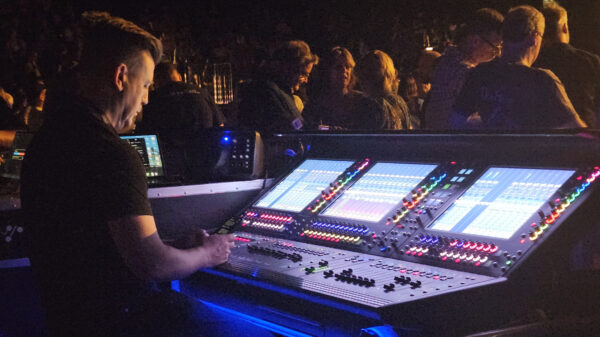
“I’ve toured with the band for over 12 years and have typically taken a fully digital approach live, despite coming from a heavily analogue studio background. The show is heavily automated and programmed and using the Yamaha Rivage PM5 gave me the ability to take that approach digitally whilst giving an analogue front to the sound.”
The FOH package is built around the PM5 with a DSP-RX-EX engine, along with Waves and UAD processing, DAD recording interfaces, Bricasti reverbs and various outboard units from Manley, API, Rupert Neve, Crane Song, Elysia, Empirical Labs and Stam Audio.
For this album cycle, Trewin moved towards a hybrid workflow: “I run a similar mix bus/mastering chain in my studio, so translating that familiar sonic footprint into the live environment was a natural step. The mix bus is sent out analogue via the Prodigy MC over MADI into a chain of Crane Song STC, Manley Massive Passive, RND MBT, and Elysia VMAX, before hitting the Crane Song Interstellar A/D converter and returning in via AES. Final limiting is handled with a Waves L4 through Waves SuperRack.”
For lead vocals, Trewin uses the RND Shelford Channel into a UA LA-2A, 1176, and Maag EQ, before returning to the desk for additional processing (PSE, dynamic EQ, and de-essing) via Waves.
Drums are treated with Distressors on kick and snare groups, alongside a Stam Audio 4K-5+ Stereo Bus Compressor with Bricasti reverbs across drums and vocals. He continues: “I also make extensive use of the console’s internal processing, which I find to be highly accurate to the original hardware sound.
Supporting Cam is FOH Tech Gabriel Martin Santana, who notes, “Working closely with Cam and touring with the same core crew for many years has been a huge advantage,” says Santana. “Everyone understands the feel of the show and the technical requirements needed to deliver it consistently every day.”
The tour’s audio infrastructure relies on both Pro Tools and Nuendo for recording, with Dante extensively integrated across the FOH, monitor and playback systems. DirectOut Prodigy units provide routing, conversion and signal distribution throughout the setup.
“At FOH, we’re also carrying L-Acoustics X8s for the near fills alongside an SB18 subwoofer,” he adds. “It’s a fairly complex system, but dependable equipment and a flexible workflow help ensure everything runs smoothly on the road.”
Santana also highlights the vital support provided by the Clair Global teams throughout the tour cycle.
“Working with Eighth Day Sound’s Meegan Holmes and the wider Clair team over the past several years has been invaluable, both during preparation and while out on tour,” he says. “Wherever we are in the world, there’s always someone available to provide assistance when issues arise or when we need equipment, repairs or technical support.”
The team has adopted a 270-degree coverage design by Johnny Keirle. Cam continues: The system is based around L-Acoustics K1 with K2 under hangs for the mains and side-fills, K2 for the 270 hang, and KS28 subs across the downstage floor. Front-fills combine A10, Kara, and A15, alongside a flown L2D in the centre to give a touch more clarity in the crowd pit. A toed-out flown KS28 sub configuration provides grandstand coverage, with L2D used for delays where required.
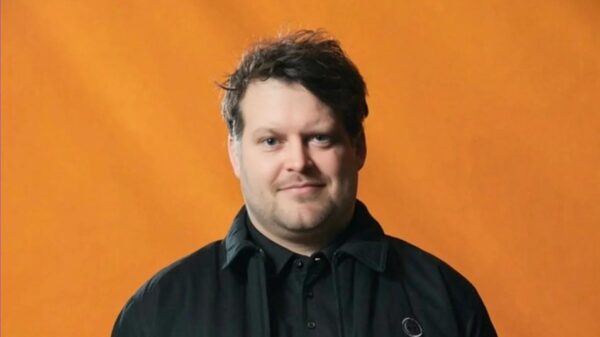
Monitor engineer James ‘Jimmy’ Gueness is responsible for generating 12 monitor mixes, including feeds for the band, technicians, and a dedicated camera mix for the history-making tour’s documentary crew.
Gueness has settled on a Yamaha PM5 set-up. He runs Waves, but only for two plug-ins; PSE and the Scheps Omni Channel for its de-esser: “I know there’s a 5045 on the console, but I really rely on the input metering in PSE. I ride the threshold aggressively to make sure none of the vocal’s front-end articulation gets missed. On the surface, I’m using the Neve 1073 EQ simply because I can, and I’m also making extensive use of dynamic EQs. Everything available onboard the PM5 has allowed me to move away from external plug-ins, which has been fantastic.”
Responsible for setting up and maintaining the tour’s global audio package, tech Benny Masterton says his role is to ensure confidence “in both the band and engineers that the gear is rock solid and should any problems arise, there’s a contingency plan for every possible scenario.”
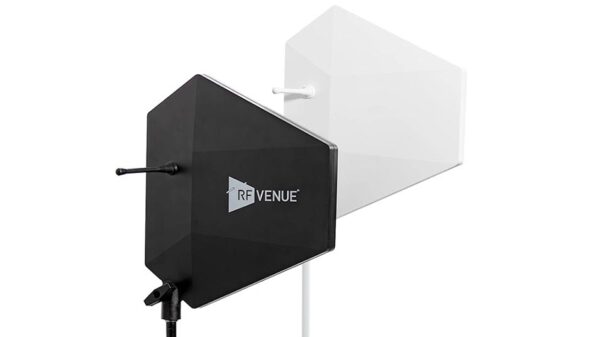
That starts at a fundamental level with backup options: “This includes Shure ADX2FD dual-frequency RF microphones, the AD PSM system and the ShowLink network. It extends all the way through to multiple antennas deployed with hot-swappable antenna combiners.
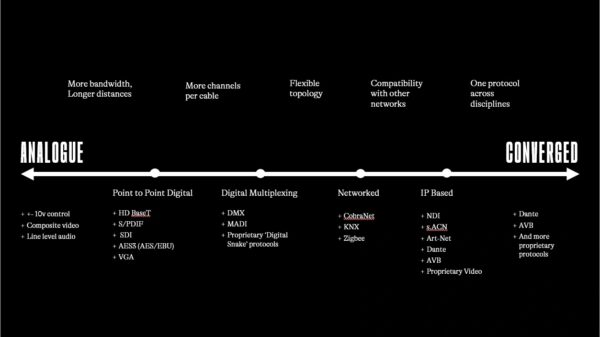
“We also run an extensive Dante network via Yamaha TWINLANe, using Dante cards in the stage racks to facilitate communication between FOH, monitors and the stage. Dante outputs from the Shure receivers are used for wireless crew talkback microphones, saving valuable analogue channels on the split and stage racks.”
Masterton concludes: “We genuinely couldn’t do without the support of Meegan, UK account executive Andy Walker, operations coordinator Tim Omel, and the wider Clair Global network. For a technician managing a global touring package, their support network is arguably the biggest asset of all. It gives us the flexibility and backing needed to adapt to the constantly changing demands of a tour cycle, which is invaluable to the band, engineers and the production management team.”