












VISION
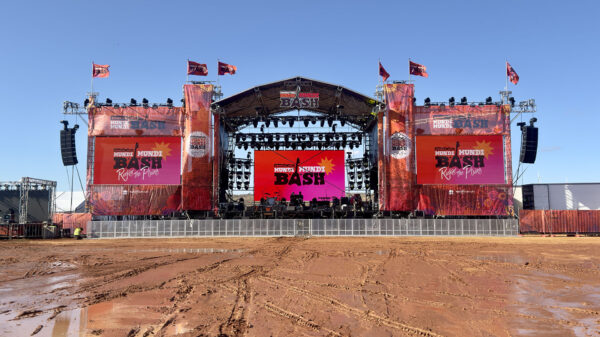
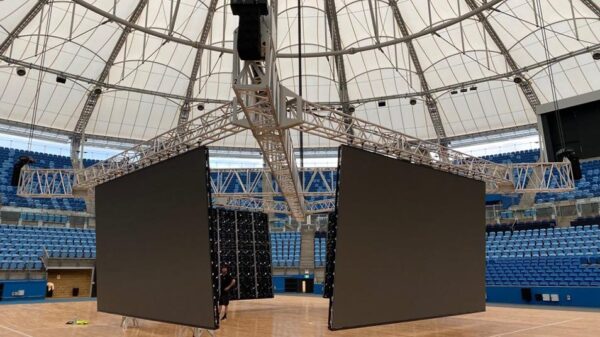
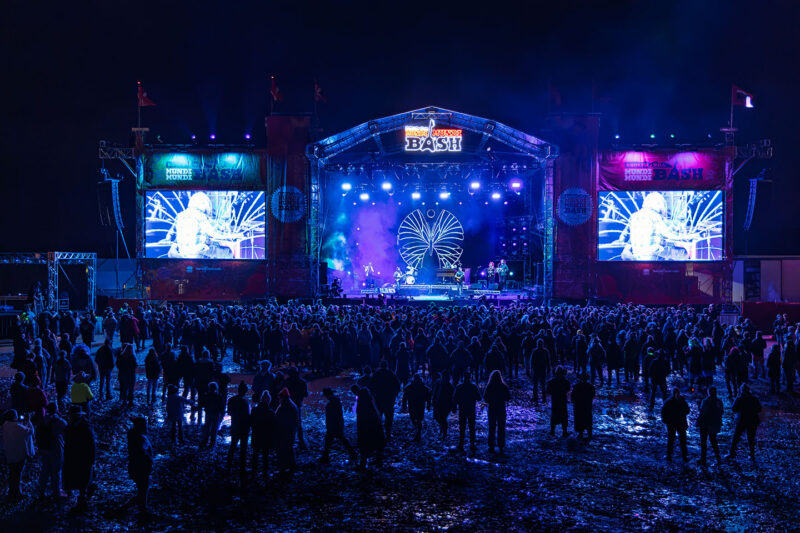
Powa has imported Gloshine LED Screens since 2015, and at Mundi Mundi they used the Gloshine LE Series LE3.91 model with black-faced LEDs to improve contrast.
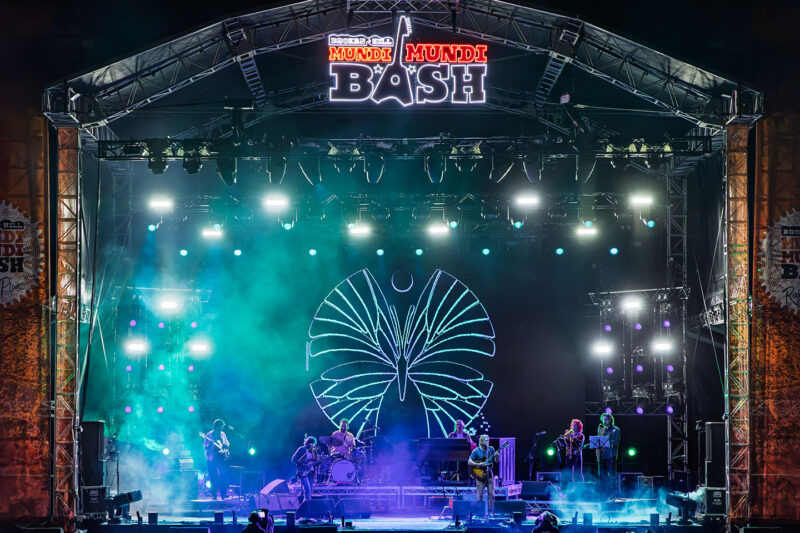
Four 7m x 4m LE3 screens are used in landscape format: one on either side of the stage and two delay screens, with the onstage LED screen measuring 9m x 6m.
“We purchased another 180m² that we received late 2024 for our 2024/2025 summer,” commented Knight. “This order included custom wind bracing, which has made a massive difference to how we can use the screens, especially in Mundi Mundi where we get wind gusts at 80 km/h plus.”
The screens use the Novastar A8S-N receiving card and the MBI5264 driver IC, enabling a 7680 Hz refresh rate @16bit.
“We have been extremely happy with these screens and have been receiving many compliments as to the image quality,” added Knight. “We recently upgraded from the VX series of Novastar processors to the MX40Pro along with the fibre breakouts.”
Blackmagic’s product range forms the backbone of the vision switching and distribution.
“We use the ATEM 2 ME Advanced Panel 20 along with the ATEM 2 M/E Constellation, and for the content on the centre screen we use the ATEM Television Studio 4K8,” Knight elaborated. “Camera-wise, we use the Blackmagic URSA Broadcast G2 with a range of lenses, including box lenses.”
Ken Western creates the festival’s video content and delivers excellent work for Mundi Mundi.
AUDIO
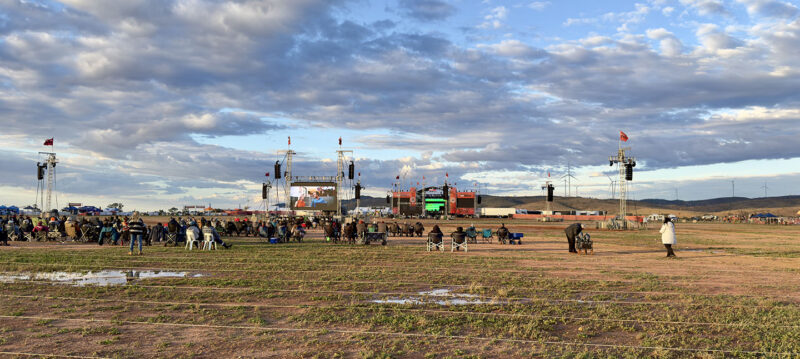
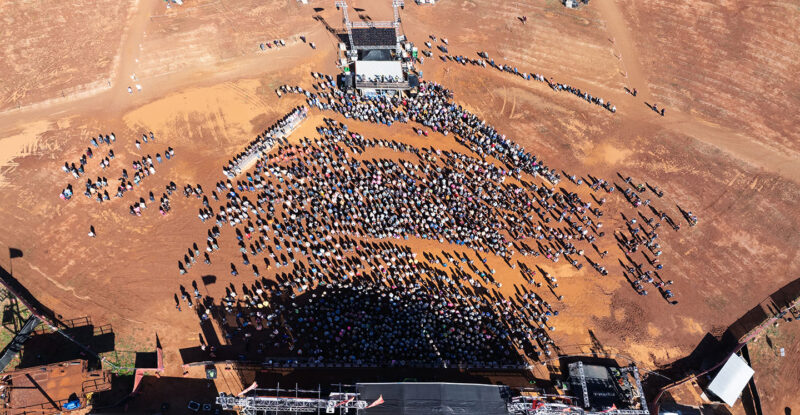
Last year Powa invested in an L-Acoustics K2 for both main PA and delay systems at the 250m x 250m Mundi Mundi site. The main PA consisted of 16 K2 per side, with extended out-hangs of eight K2 per side and out-fills of two A15 Wide per side. Eight ground stacks of three SB28 subwoofers with A15 Focus boxes provided front-fill.
Two delay rings ensured consistent coverage: four hangs of ten K2 positioned 30 metres past FOH, and four hangs of eight Kara at 150 metres back. A pair of A15 Wide boxes covered the area behind FOH. 61 LA12X and 12 LA8 amplified controllers drove the complete system.
The final system design used an all-L-Acoustics configuration engineered for the festival’s vast footprint. Its desert location near wind farms created major environmental challenges, including 50–90 km/h dust-storm winds during the build and sharp temperature swings between cold nights and warm days.
“Soundvision Autofilters gave us valuable control over the main PA and helped keep the system updated throughout the day,” said FOH System Designer Hamish McKoy. “As temperatures shifted, I mainly adjusted the timing to maintain phase alignment. The L-Acoustics ecosystem handled this exceptionally well.”
McKoy has worked with L-Acoustics gear for eight years and says it sort of just works. He adds that if you do everything the way they suggest, it works and sounds good; in fact, it’s hard not to make it sound good.
“You can just sort of put all the little finessing pieces on it to dial it in,” he said. “The high frequency in L-Acoustics just sparkles, and it’s nice and light and airy and just sort of floats through the air in a really pleasing way.”
McKoy added that the second ring of delays was relatively okay after the heavy downpours, but the first ring of delays featured a giant puddle in front of most of the towers.
At FOH, Powa had one DiGiCo Quantum 338 as the house console and another as a guest console for those who requested it. During the festival, a myriad of guest consoles appeared, including Waves LV1 and Allen& Heath SQ control.
McKoy used a Midas Heritage D as his sidecar background-music console, handling all routing between the Bash FM they set up.
“We send them a feed of what’s coming from the PA to the radio station on set, and then they send us a feed back of the radio,” explained McKoy. “So we use them as background music, and then we switch over and send them a live feed so that they can broadcast what’s happening here with the radio as well.”
MONITORS
Monitor engineer Jon Rac was working his sixth Mundi Mundi Festival, though most of his work happens in the months beforehand. Because the site is so remote, careful preparation is essential: if something is missing, you can’t just pick it up nearby. Rac reviews the equipment lists three or four times to ensure nothing is overlooked.
“In the months before the gig, there are lots of phone calls and emails as people send through their spec sheets. We tell them what we have and work within those limits,” he explained. “Our inventory covers most standard requests because we buy gear with common requirements in mind. If an act needs something else, we can hire it, or they can bring it themselves. Some bands cannot arrive until the day, so they bring their own equipment. Transport is a major consideration for us.”
Headliners usually bring a monitor engineer, although some arrive with only a front-of-house engineer. The festival therefore employs a house monitor engineer, Andy Mack, for acts without one, while Rac supports both the house and visiting engineers and manages the shared workspace.
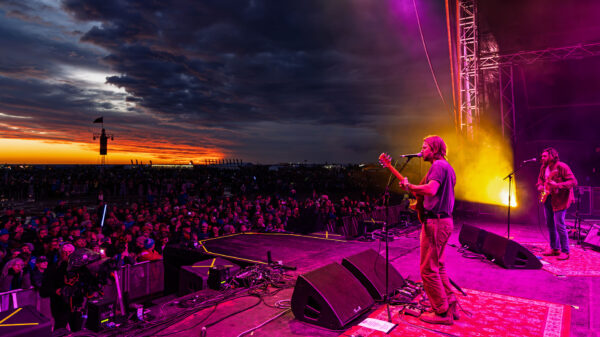
“We chose gear most people are familiar with, so the on-stage monitors were d&b M2s, one of the standard monitors in Australia,” said Rac. “The audio team works hard to deliver a festival setup that will cover most of the acts. What that means for monitors is you’ll basically have eight monitors across the front, which is off five different sends, and then we can just move the wedges wherever people need them, and that makes it easy for us.”
Across the back will generally be four sends: a drum send, drum sub send, and then two floating ones along the back. Then wedges can move around wherever needed because that’s always changing. The sidefill was two L-Acoustics SB18s and two Arcs per side. For the drum sub, there was a double stack of SB18s.
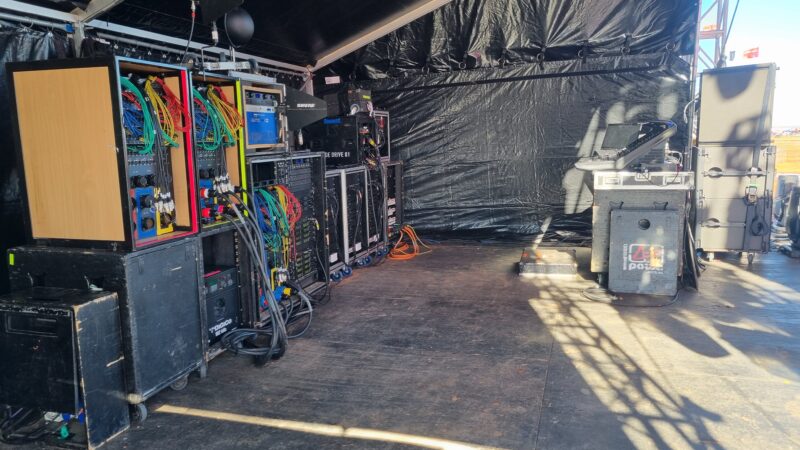
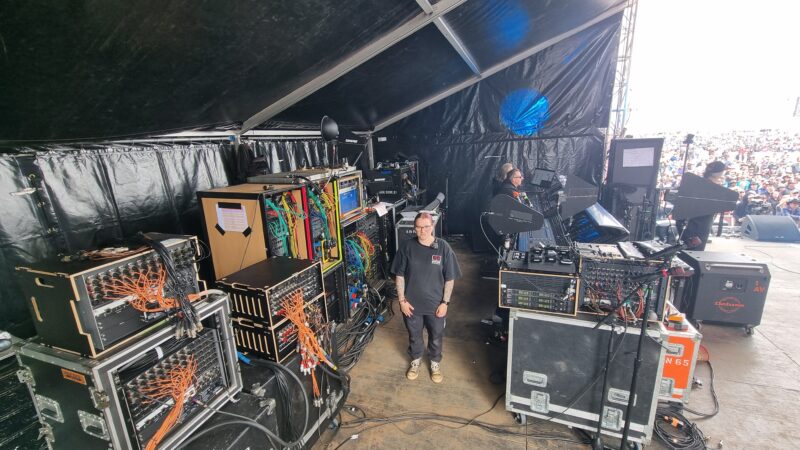
“Although most acts use IEMs, they still want backup wedges and stuff, and it’s just so much stuff going on,” commented Rac. “We run Shure PSM1000 IEMs with twelve dual receivers, so 24 channels on the gig. That usually covers most acts, or sometimes we split them between two different acts. We use combiners to make that work, and we keep them in a double-wide rack. It gets built and has all the console IOs and the stage boxes and all that sort of stuff in the double-wide rack, so it’s nice and compact.”
Fortunately, Rac didn’t receive any unusual requests this year and says the first two show days were relatively stress-free. The third day wasn’t so cruisy for him.
“There were only a couple of house bands, and the rest had engineers come in with all their own stuff, so my space that I had got filled up very, very quickly,” he commented. “It’s just the normal festival chaos off the stage, and then, as well as just trying to facilitate space and then also talking to all the engineers, and they all want your time at the same time… it can get really mind-boggling if you’re not switched on to it.”
The house monitor console is a DiGiCo Quantum 338, which others would use if they wanted to. On the last day, John Butler performed, and his monitor engineer wanted his own DiGiCo Quantum 338 console, so they had two of the same consoles at monitors.
“They wanted their own because, instead of having a stage box per console, they were using one stage box for the front of house and the monitor console,” Rac explained. “And to use the fibre or the optical that they were using, they had to do this weird looping system. Doing that in the middle of a gig would be really painful, so the night before, we brought in another console and gave them their own console for their loop stuff. It worked very well.”
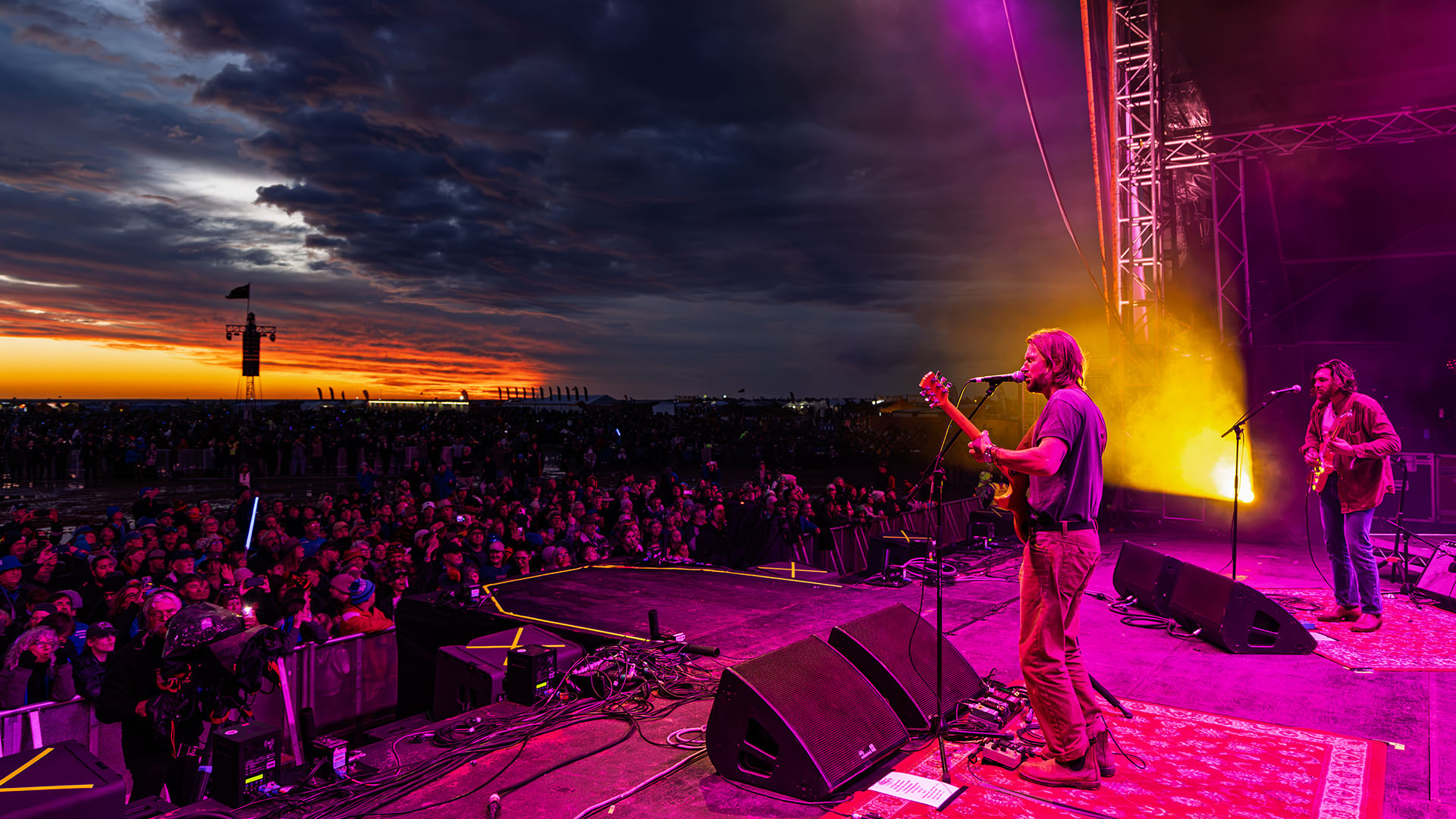
Whilst the rest of the crew complained about the wet weather and the mud, Rac says the sun was a big issue because of where the stage points; the sun shone right into the stage. So, when they were on stage left, the monitor engineers complained that the sun was shining right in, and they couldn’t see the stage. Unfortunately, Rac couldn’t turn it off.
“A lot of the challenge is just being a people person and trying to make them comfortable, because once they start stressing, it’s just not good,” he remarked. “I am confident all the gear is working, and everything’s good; it’s about making everyone else be confident in myself.
“You must try to manage people’s moods and just have that happy energy all the time. Even if things are going wrong, just be like, “No, it’s all good. We got it sorted. We’ll take care of it. Luckily, there wasn’t really too much of that. Everything ran smoothly. My patch tech, Kaelah Heidenreich, is very good and is great at handling people as well, so it was helpful to have her on stage.”
The lineup for Mundi Mundi 2027 has just been announced and features a host of popular Australian acts. Unfortunately, the 2027 Big Red Bash will be the last, due to severe weather disruptions, rising operational costs, and the extreme logistical challenges of staging a massive event in the Simpson Desert.
Show photos: Matt Williams
This article first appeared in the November issue of Lighting & Sound International