

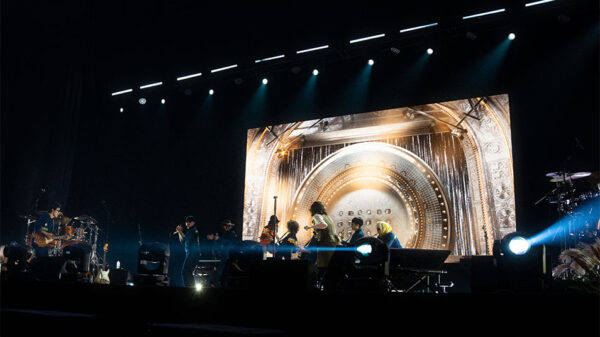
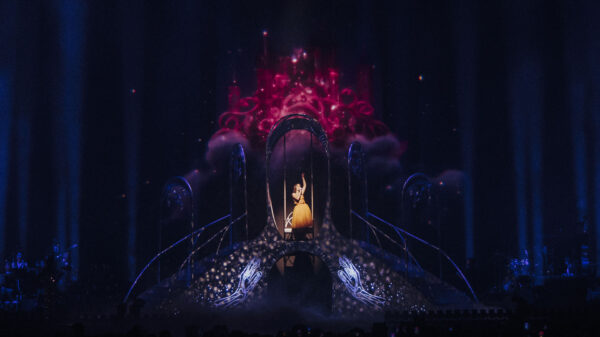












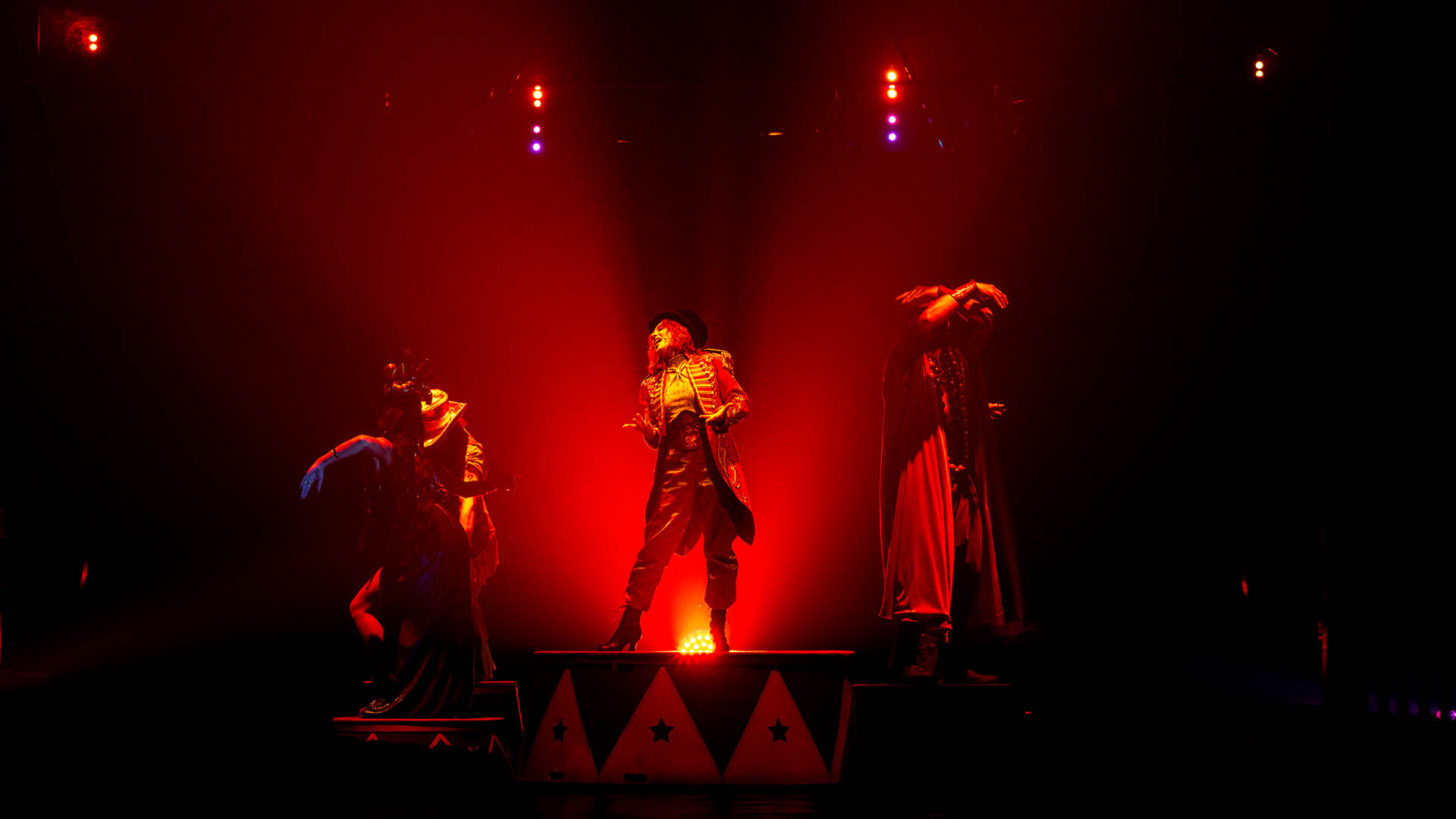
After a three-month season in Sydney, ‘COME ALIVE!’ The Greatest Showman Circus Spectacular will open in Perth on August 27, the next stop on its year-long national tour, which also visits Adelaide, Brisbane and Melbourne.
Performed inside a purpose-built Hippodrome, the production features lighting by Emmy Award-nominated designer Adam Bassett of Woodroffe Bassett Design, with support from associate Alex Forey and Australian associate lighting designer Matthew Tunchon. Chameleon Touring Systems supplied the gear for this large-scale project.
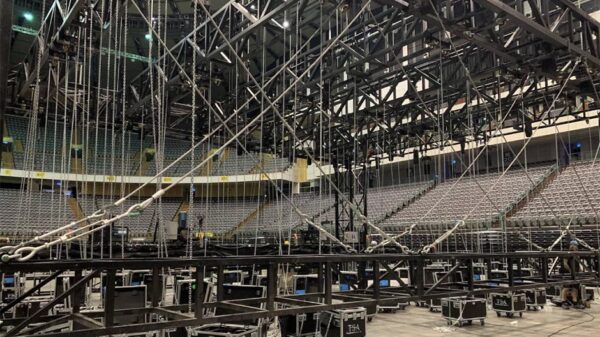
While the Australian production closely mirrors the UK version, staging it in a stand-alone tent created several challenges, particularly around rigging. In the UK, the show was presented in a tent within a soundstage.
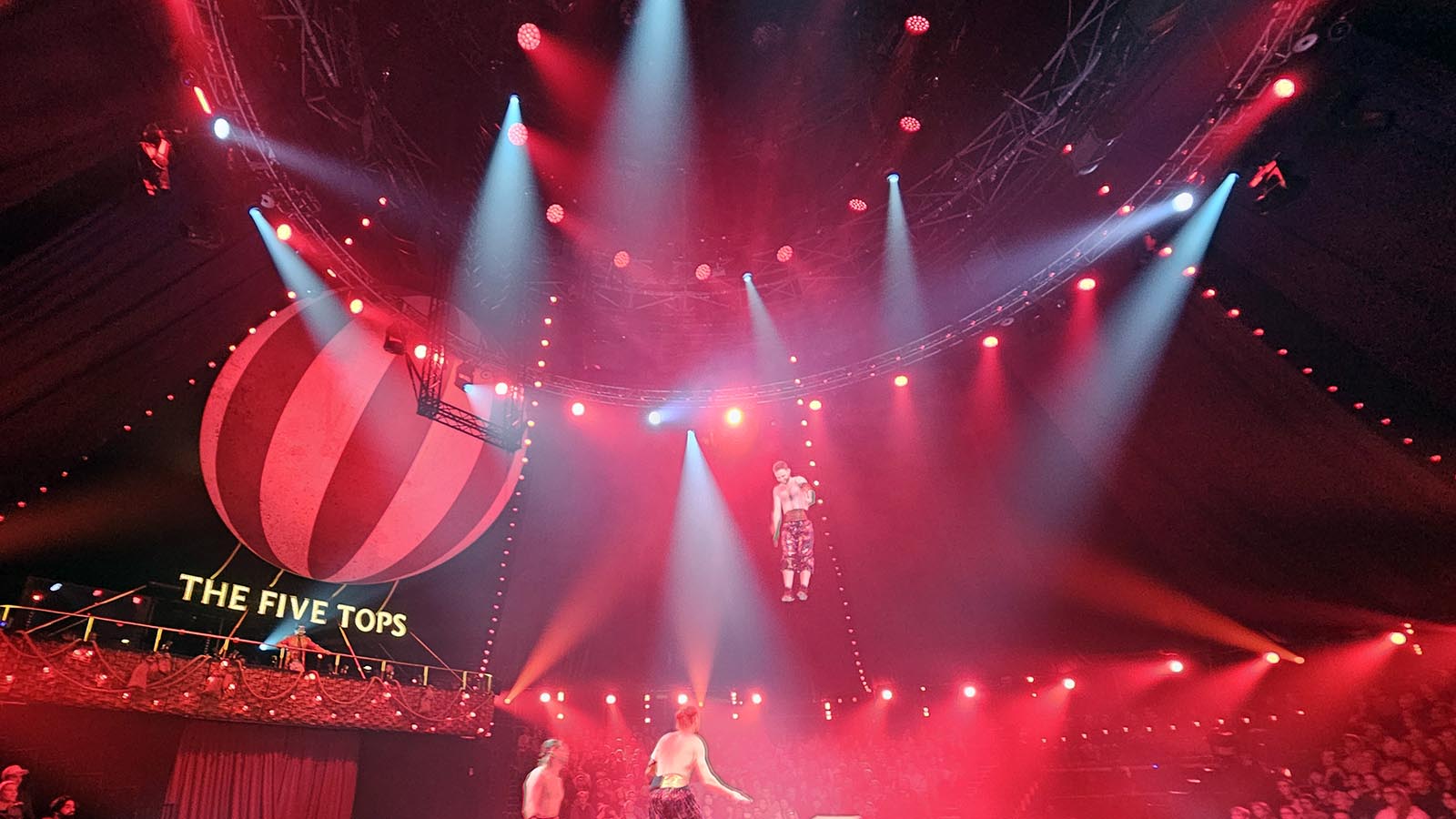
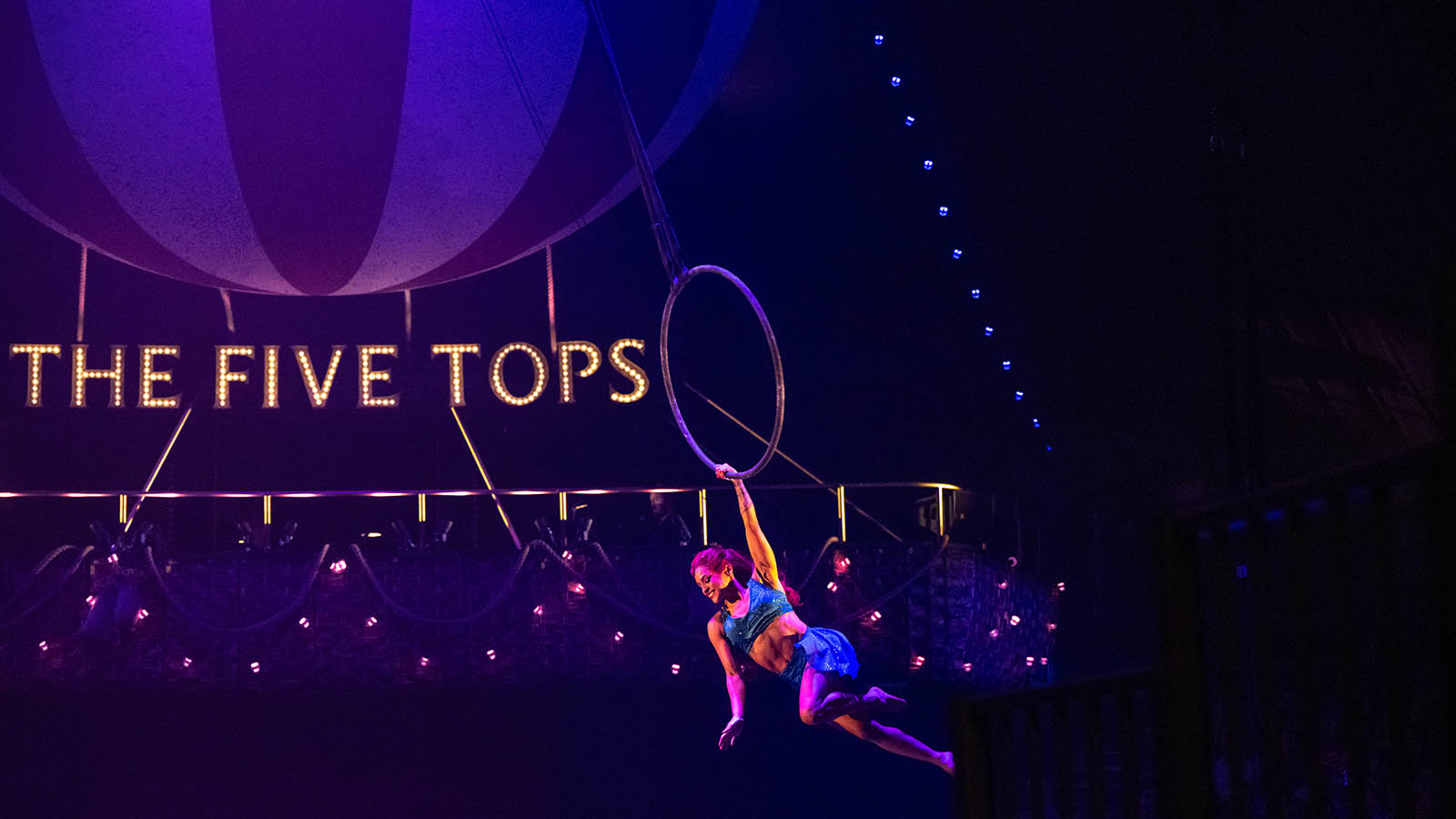
Guests first enter a pre-show area lit primarily with ETC fixtures, including 93 ColourSource units of various types, 18 Source Four Mini Profiles and five Source Four PARs. The rig also includes 70 PAR 16 Birdies, 13 ADJ Saber Spot RGBW fixtures and 14 Chroma-Q Color Force II 72 battens.
“The Chroma-Q Color Force units just keep going, and they’re still appearing on specifications for other shows,” remarked Matt. “They’re hard-working fixtures that are very reliable. We used them as cyc units for the show’s VIP area.”
“We also used 10 ShowPRO LED Blinders inside a central rotating piece, which shoots light outward. The ADJ Saber Spots lit the suspended jacket, the first thing guests notice when they enter.”
The atmosphere in the pre-show area was set by seven Look Solutions Unique 2.1 and a couple of Viper 2.6 foggers.
In the main performance tent, rigging capacity and weight were key considerations for the Australian production, creating some constraints on the lighting design. Despite this, Adam Bassett and associate Alex developed a versatile design that made effective use of every fixture and delivered a broad range of dynamic looks.
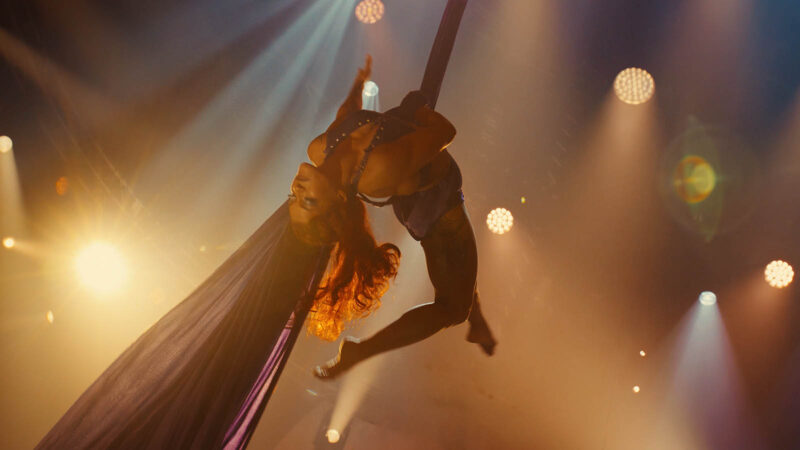
“Despite the challenges, they created some highly intricate looks and achieved the level of light needed in the space,” added Matt. “There’s also ongoing work with the artists to keep them comfortable while ensuring they remain clearly visible.
“Each act also needed its own distinct look and atmosphere. Fixture-wise, that meant choosing profiles that had great output while also keeping size and weight to a minimum.”
The main profile fixtures were 40 Ayrton Rivales, supported by 14 Ayrton Stradales and 14 compact Ayrton Diablo S units, whose size allowed them to fit into tight spaces near the audience. Wash fixtures comprised 70 Martin MAC Aura XBs and 14 MAC Aura PXLs.
“The Rivales and Auras were the show’s workhorse fixtures,” said Matt. “We also had 23 MAC Viper XIPs, which handled a significant amount of work.”
The Rivales were positioned mainly in the structure’s outer, middle and inner truss rings, while the Stradales and Diablos were distributed around the outer rings and the ring behind the audience.
The MAC Auras were positioned around the outer perimeter behind the audience, with one ring of Robe Spiiders incorporated as well. Twelve Martin MAC Ones were placed in each entryway to the ring and on the floor around it, where they could uplight artists performing overhead.
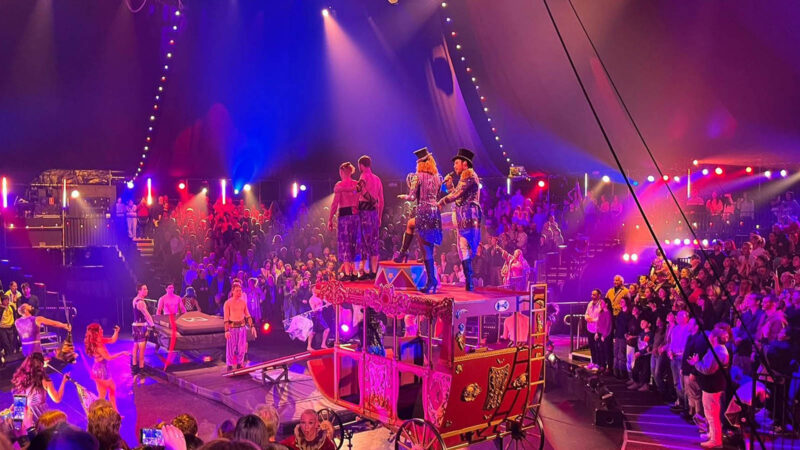
Four Martin Macula base stations controlled six MAC Viper XIPs; two stations controlled two Viper XIPs each, while dedicated stations controlled the floor-based fixtures positioned in the voms.
“The Macula system enabled us to change our working height, which is very important for this show,” explained Matt. “We’ve got a lot of artists working at varying heights. It was important that the followspot system let us do this in a way we could replicate each night consistently. It was a great system to use, and the crew found it easy to work with, especially with the MAC Viper XIP.
“Playing in the round, being able to control both a front and a rear fixture from one controller added a lot of flexibility and gave Adam and Alex more options when creating the looks for the show.”
The rest of the MAC Viper XIPs were all in the air, where they did a significant amount of work, primarily providing key light
Ten GLP impression X5 fixtures were mounted high in the truss above the performance area to provide primary downlight, with additional units in the voms creating a striking backlight as artists entered. Fourteen GLP impression X4 Bar 10s were placed on the floor alongside the MAC Ones for uplighting and audience-blinder effects.
Matt’s standout fixtures were the 200 Glasson Electronics Calesco W+RGB digital LED filament lamps, which are individually addressable and DMX-controllable.
“They shape the show in many scenes,” he said. “They offer RGB as well as a tungsten-style white. The versatility of having full colour or a warm tungsten look gives us a lot of flexibility throughout the show.”
Effects fixtures included 10 original Martin Atomic 3000DMX Strobes and 16 SGM P-3 Washes for audience lighting. Additional ADJ Saber Spots lit the band, while 48 Miltec MTC Battens were rigged behind the audience.
“They do a lot of work around the venue,” Matt explained. “Rigged around the outside behind the audience, they run in pixel mode and are in use for the majority of the show, creating powerful effects.”
A total of 70 additional ETC ColourSource PARs and Source Four ColourSource spots provide key lighting for the band.
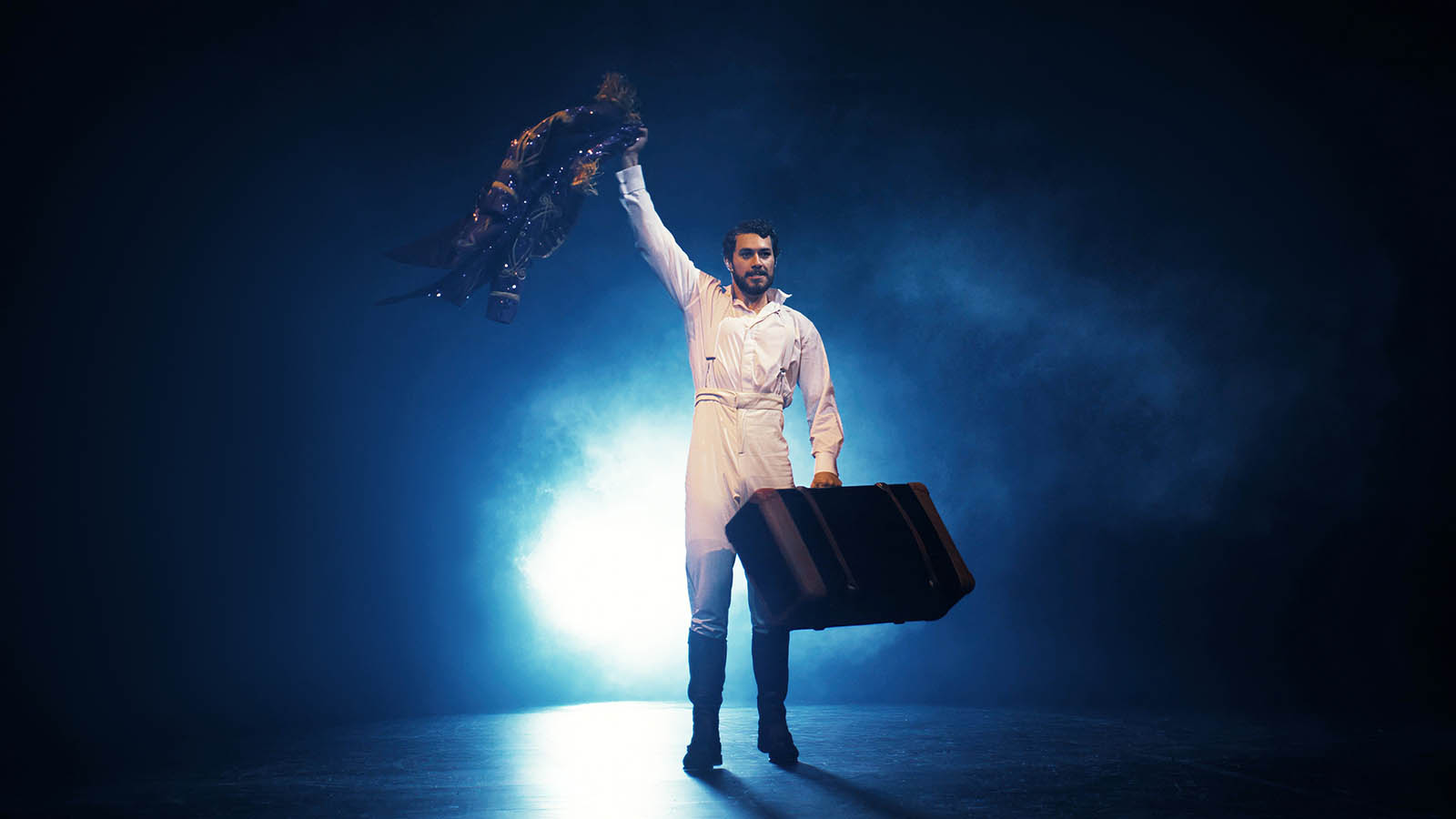
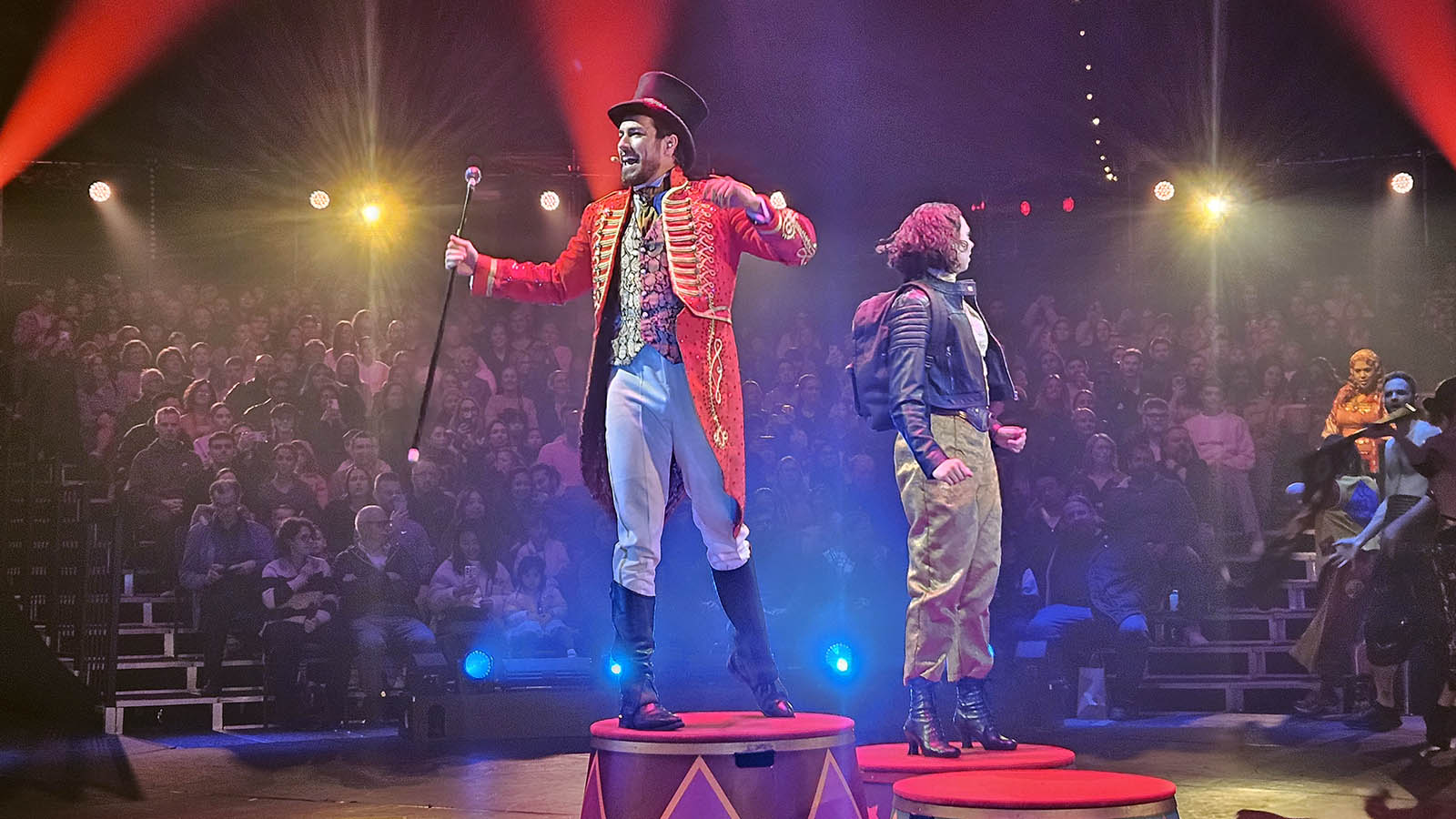
Smoke effects play a key role in the show, with six Look Solutions Viper 2.6 foggers positioned mainly in the voms so performers can move through clouds of smoke.
Three Look Solutions Unique 2.1 hazers provide general atmosphere throughout the venue, while five Chauvet Cloud 9 foggers create the essential low fog across the performance area. Five Jem Fans MkII help move the Viper smoke onto the stage at the right moment.
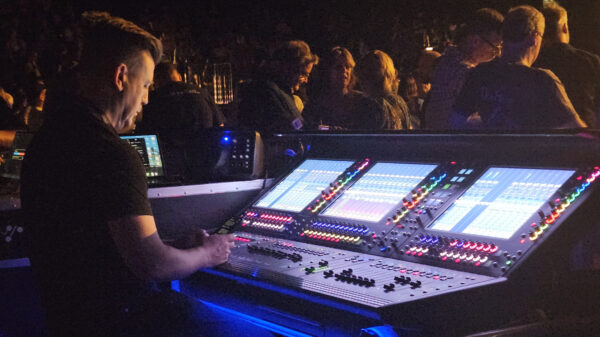
The original UK production used an ETC APEX 10 console, and it was decided to retain the same control platform for the Australian production.
“The show is highly complex with over 3,500 lighting cues,” he commented. “There are multiple time-code events playing. It’s quite a substantial system, and we’ve got the first ETC Apex Expansion Processors in the country on this production.”
Eight Luminex Luminodes and eight GigaCore switches supported extensive signal distribution across the large venue.