

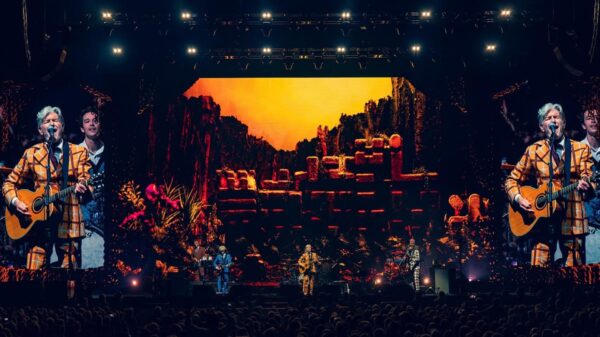















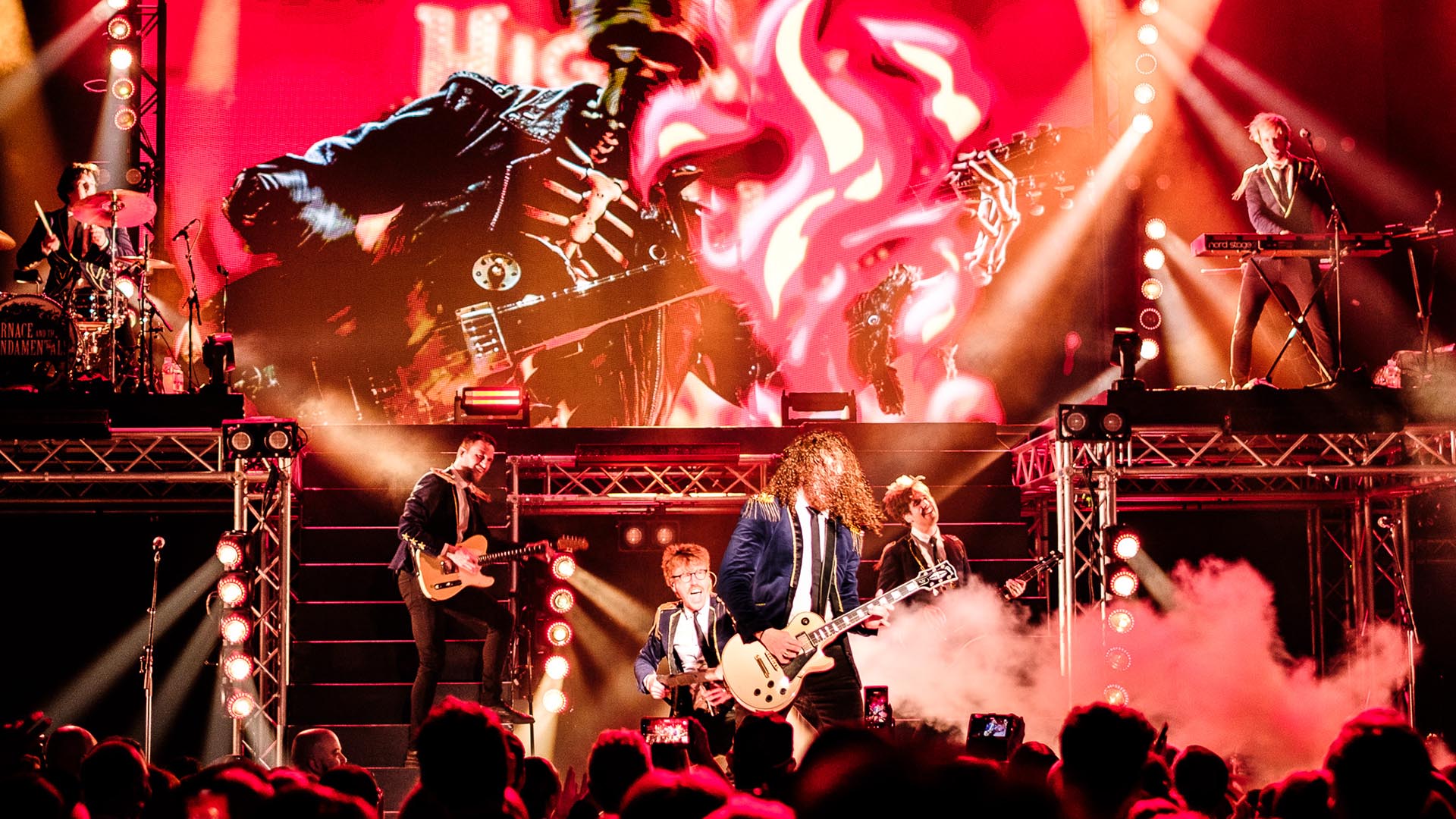
Australian band Furnace and the Fundamentals is an internationally acclaimed, high-energy party and cover band. Renowned for their raucous live shows, they blend exceptional musicianship, playful choreography, huge pop and rock anthems, and tongue-in-cheek humour.
Lighting designer Peter Rubie began working with the band in 2024. Tech-savvy and deeply hands-on with their own production, including all the video content, the band had been exploring ways to be more involved in their lighting. They were looking for a system that could deliver detailed time-coded programming while still being accessible enough for them to understand and engage with directly. The band had seen Vista (by Chroma Q) in action on some of the corporate shows that their monitor engineer Matt Allcock operates, and they were drawn to its intuitive approach, as it is one of the few consoles that doesn’t need an extensive lighting background or training in the syntax to use. The band reached out to Peter, who specialises in the platform, and asked him to program a demo of one of their sets. Peter was able to give them a copy of the showfile along with a Capture visualiser previz file, so they could experiment on their own computers with colours and effects while concurrently building all the video content. The freedom to dive in themselves was an immediate hit with the band.
For the larger shows, Peter takes care of all the programming. The plan is to continue building the showfile so that they can eventually utilise the catalogue of programmed and fully timecoded songs at some of their corporate events or festival shows, with very little effort in swapping fixture types, updating the programming, and scaling the rig up or down.
Pluto (the keyboard player) takes care of all the show’s playback/click and backing tracks. Since they do a lot of shows without an LD, they pre-record an in-ear cue track with standbys and instructions for key lighting moments. There are separate cue tracks for the stage crew, the SFX operator, the lighting operator and the followspot operator.
“I then take this track and import it (along with the LTC timecode) into Cuepoints where I stamp out all the band’s wishes in a dedicated colour marker,” said Peter. “Some of the guide track cue terminology gets used regularly throughout the show, so I have a Streamdeck with keyboard macros to insert cue labels like Strobe, Silhouette, Frontlight, Blinders, Upbeat, Hit, Ethereal, Spotlight, etc. Once that base is in, I take a second pass through and layer in a different colour marker all the extra detail I want to add, whilst still respecting the band’s desires.”
Peter’s setup on the road is a dual-PC system (for redundancy), with an EX wing licensed for up to 32 universes. The setup also includes a Doremidi MTC-20, which converts incoming LTC timecode to MIDI timecode for use with a variety of software-based consoles. “It also gives me the benefit of seeing a readout of the incoming timecode so I can make sure the source is good,” Peter said. “I’ve been touring with this system built into a modified pedalboard frame for a few years now, prototyping and tweaking the exact layout of screen configuration and control surfaces that suit my style, and, after working through the design in CAD, this tour is the first one where I was using the fit-out test build made by Naut Cases before the final version is built.”
Furnace, the band’s frontman, designs all the video content. It’s an impressive mix of animations and lyrical videos, and occasional snippets of music videos that provide a great backdrop and help aid the crowd’s sing-alongs.
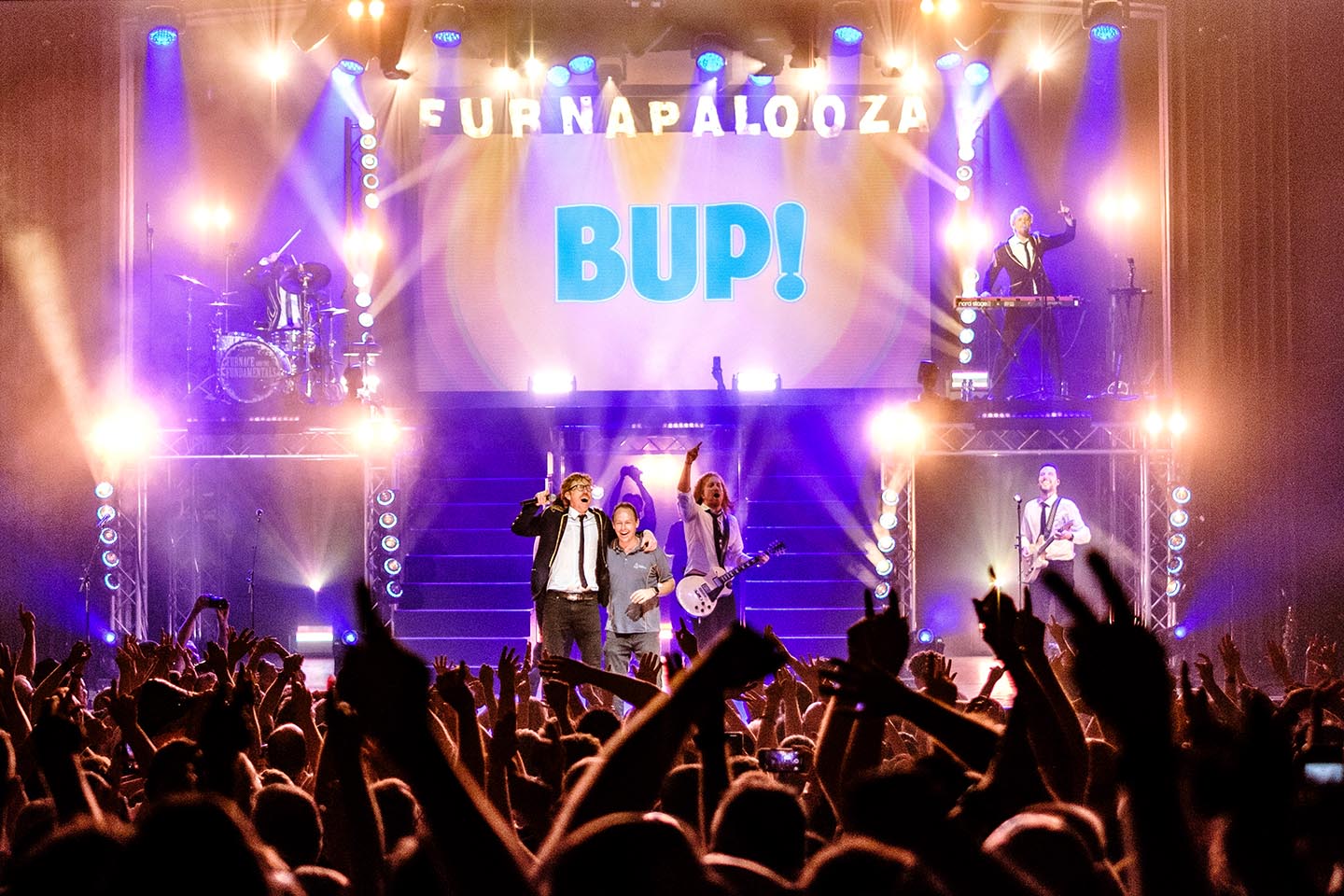
“Pluto has a laptop running Ableton for audio/click /LTC timecode and Resolume for their video feed to the LED wall,” Peter elaborated. “The video wall often changes from venue to venue, and they can very quickly scale and crop the output to suit the screen.”
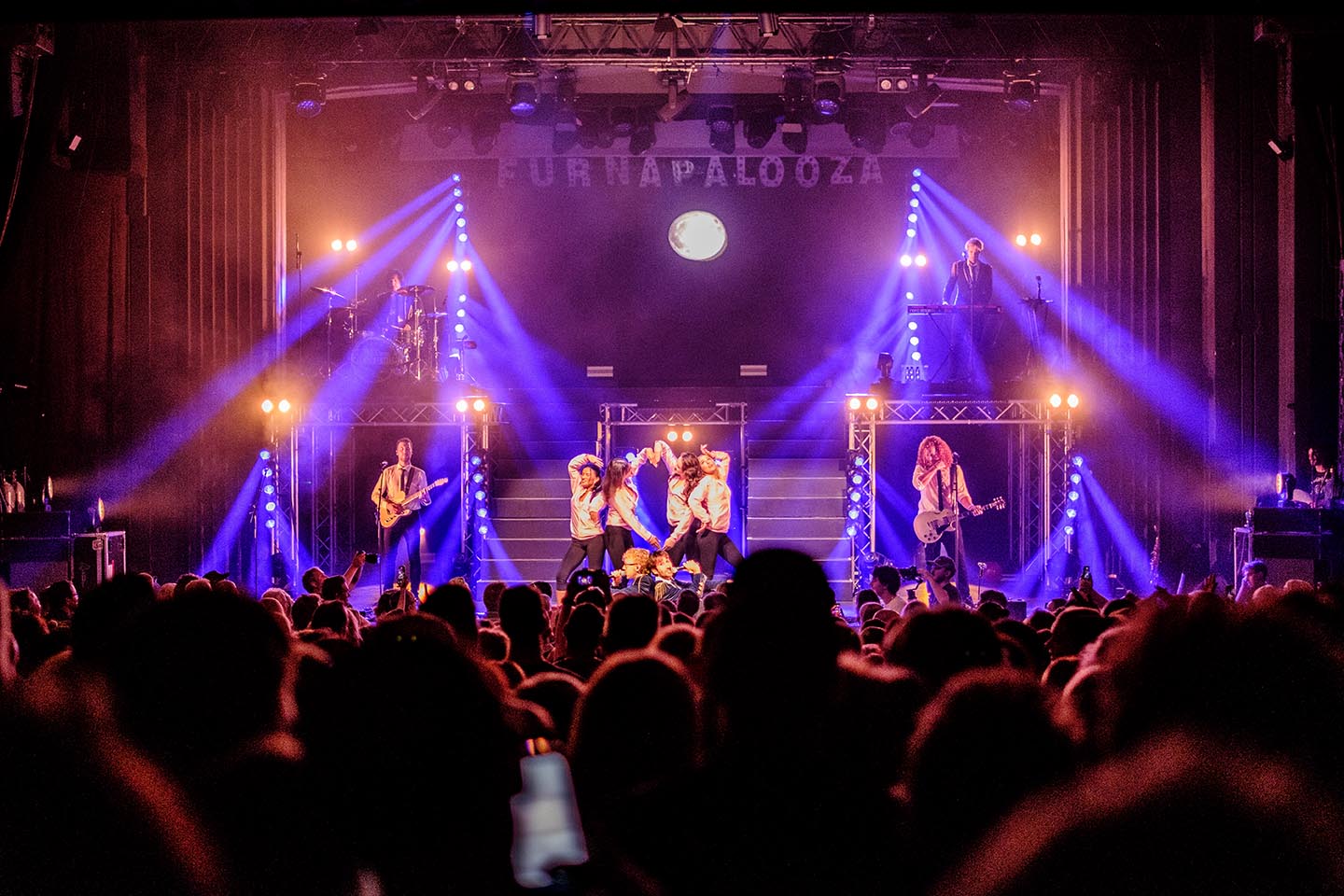
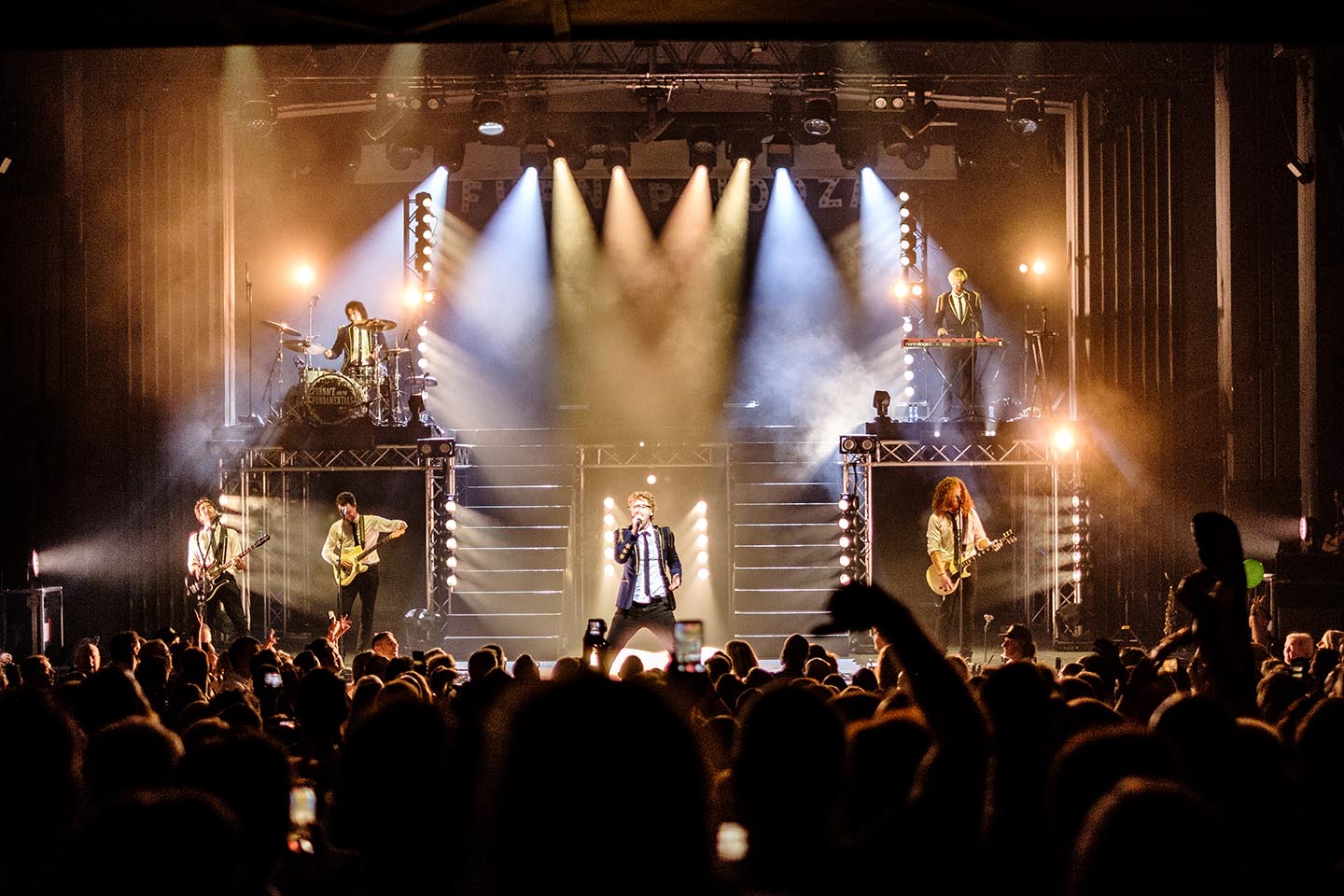
House rigs were used for overhead lighting, typically with 8-12 moving spots and an equal number of moving washes. A minimum of 7 front spots/washes is required, with one for each band member and 2 to catch group/dancer’s moments on the catwalk/staircases and hero positions. All 5 of the 7 units (leaving the keys and drums locked the whole show) are on a temp fader to crossfade out of their specials into a stage wash for group choreography moments. Added to that are 4 – 8 crowd blinders.
The touring LX package consisted of:
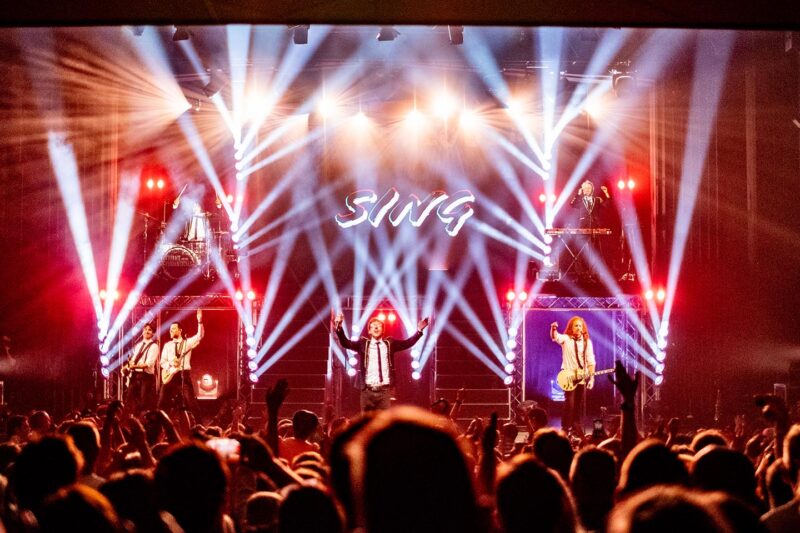
10 x ACME Tornado (6 on the ground level stage legs, 4 on either side of the screen)
9 x Roxx Cluster B2 FC Blinders, which are often used in colour and for big wipes and hits, along with the 7x Colorstrike M Strobes.
6 x GLP impression X4 Bar 20s (as footlights around the Catwalk).
3 x GLP impression X4 Bar 20s (one above each entryway).
8 x Martin MAC Aura (as sidelight, which is super important to Peter on any show to shape the performers and still light them so they are seen without being washed out by frontlight. Also, in some venues, the front truss/front light from the advance truss is ridiculously steep, so these help fill.
7 x Martin MAC Quantum Profiles on the deck for aerial and crowd textures.
1 x Robe 400ft hazer,
2 x Look Solutions Unique hazer
It was important for Peter to deliver a similar high-impact light show without losing key important elements. As he was using the same stage design as the previous Furnapalooza show, Peter wanted to step things up a notch and fill more of the vertical space so it looked just as impressive as the tall stage structure itself, without costing significantly more or adding time to the build.
“This is where the ACME Tornado came into play,” Peter began. “I had seen some impressive looks from that product on social media, and whilst I don’t typically just base my designs around the ‘flavour of the month’, in this instance it was the right choice for the show. The previous tour had 39 x Martin MAC101s, a handful of strobes and blinders spread across three floor ‘pods’ and hung either side of the screen. Whilst this delivered some big rock looks, the pods had to be rebuilt each show due to truck space limitations, and they took a lengthy amount of time to assemble and get the alignment right from fixture to fixture, both in terms of their clamping to the pod grid and the focusing time to update that many fixtures across the show’s presets on an outrigged fixtures.
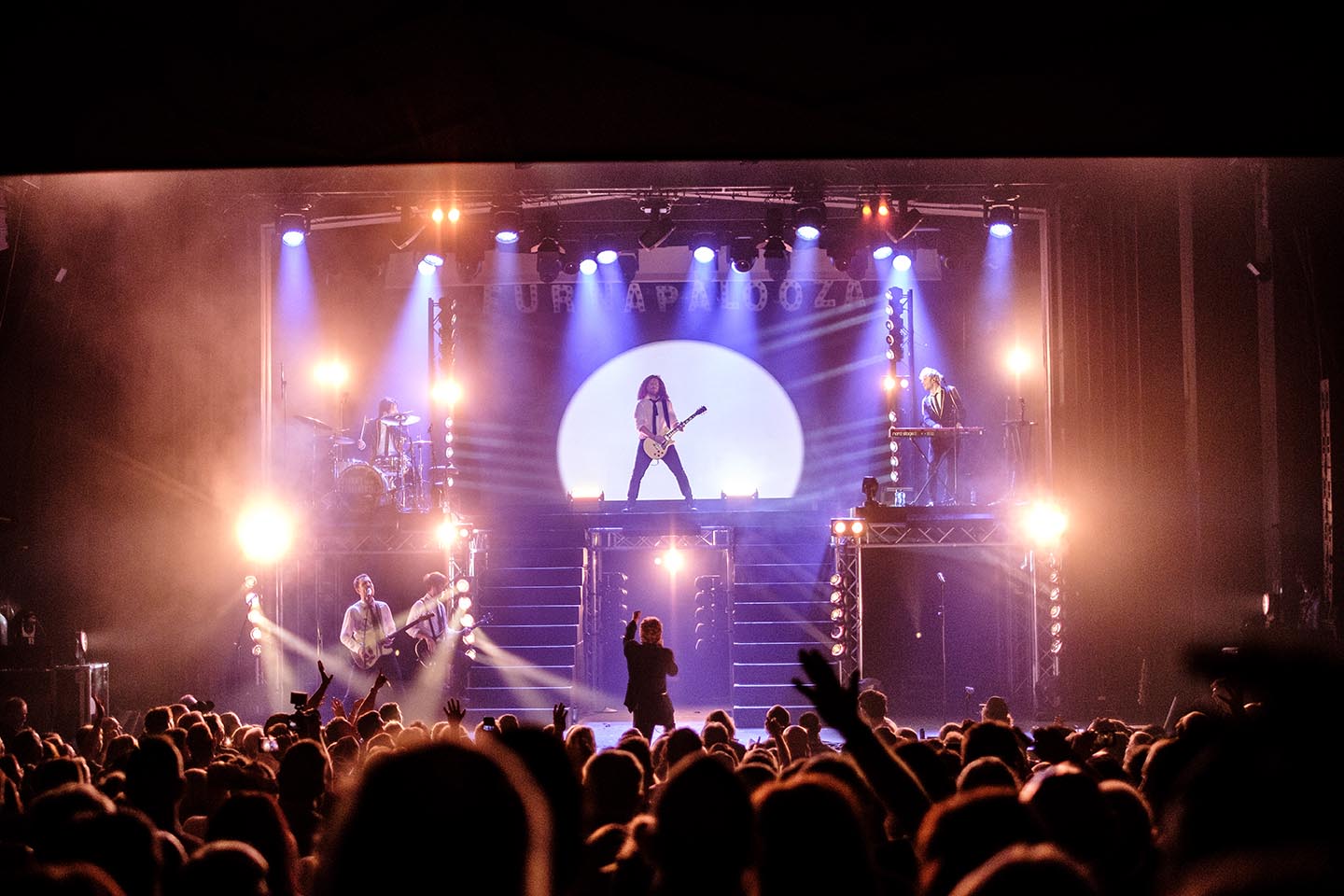
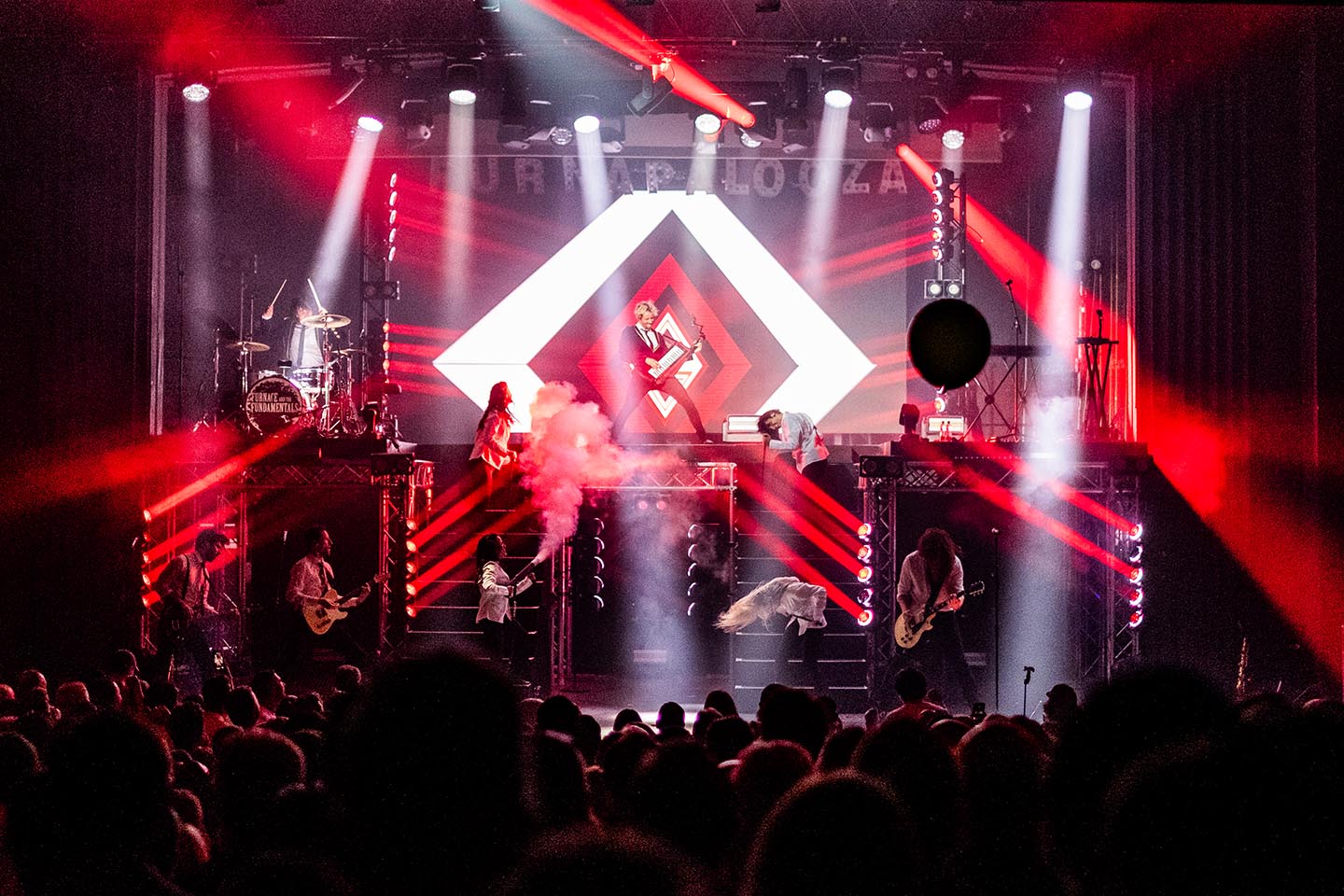
“This year, we replaced all 39 units with just 10 Tornados, which gave a bigger look (50 beams) and satisfied my desire for the greater reach height as they were just rigged off the stage structure truss legs rather than being a bulky pod that had to fit under the stage deck and therefore have some of its aerial shots obstructed. It also allowed much clearer pathways for entrances. The focusing time was also slashed by more than half and a number of the prevized focus palettes didn’t even need updating, which is great for tight setups or festival-type environments with no dark focus time.
“As the Tornado has five heads locked into a single unit calibrated on startup, there was no need to worry about the deviation you get when you have multiple fixtures, each with its own clamp.”
Peter’s other goal was to make the video screen part of the show and cohesive with the lighting rather than dominating. He used ground-supported poles off the back of the structure (so they weren’t limited by overhead rigging or complicating the LED wall build), which allowed him to flank and frame the screen with some of the tornados and blinders. These were often programmed to work with the screen content, as an extension of it, and to fill the negative space around the screen.
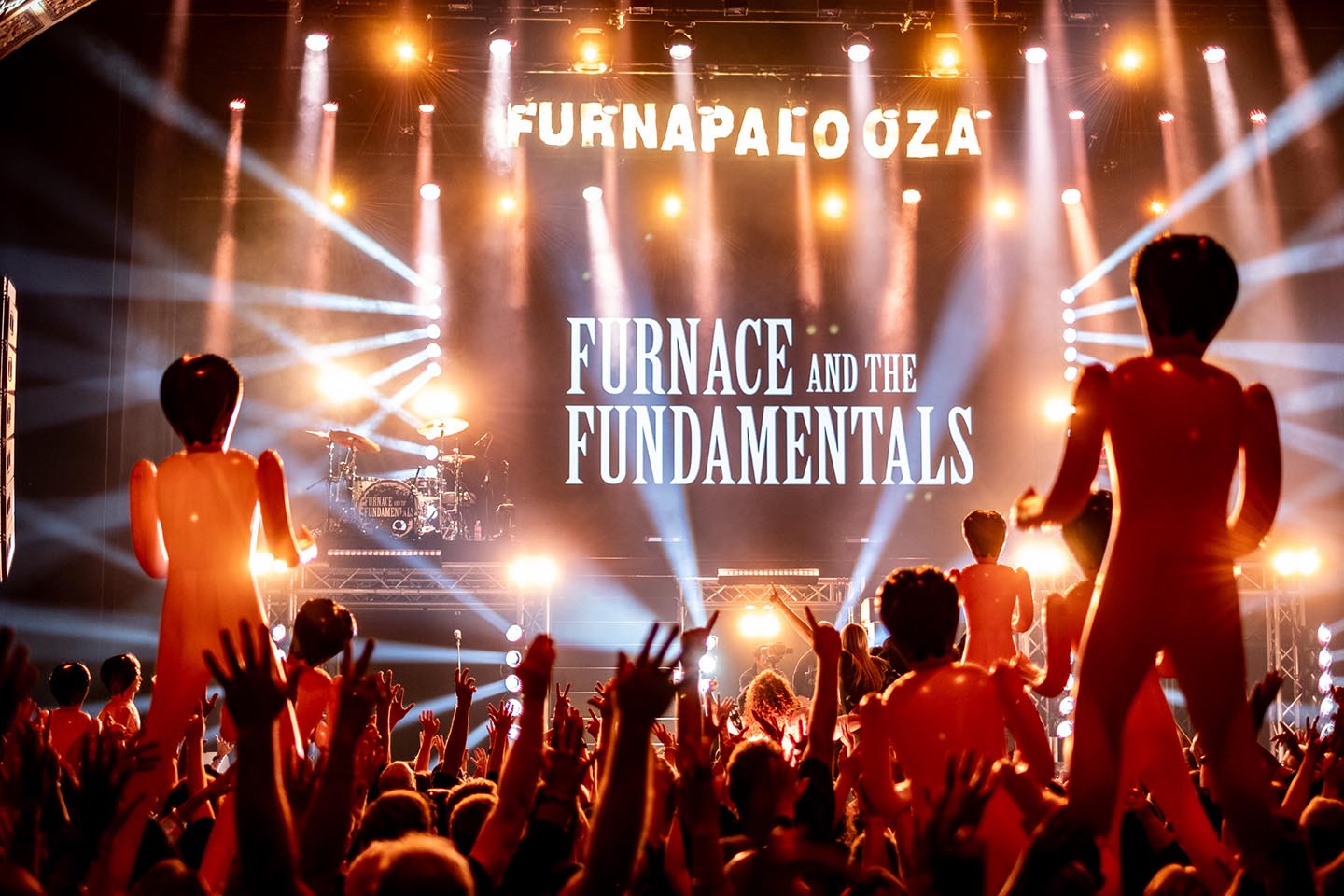
David Thomas of Crystal Productions, in collaboration with the band, designed the impressive stage setup, which certainly fills every inch of the stage and height. The downstage edge has a healthy dose of cold spark, geyser smoke, and CO2 jets, with additional cold spark hung from the downstage truss to create the waterfall effect. There is also a handheld CO2 gun that the band have fun with throughout the show. The band also put a lot of effort into various props/inflatables and other themed items to elevate the show’s production values and give the audience a great experience, which is always praised in the crowd feedback.