


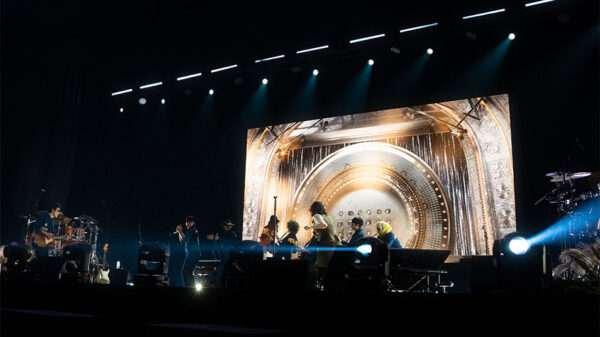
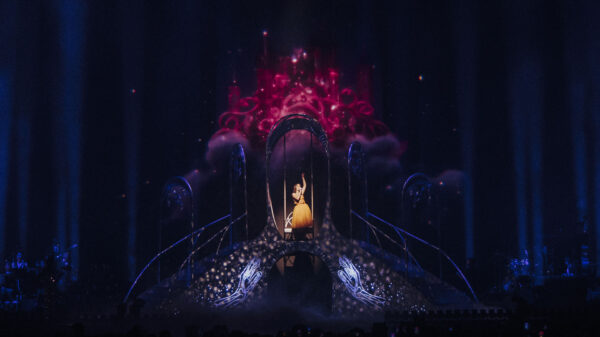
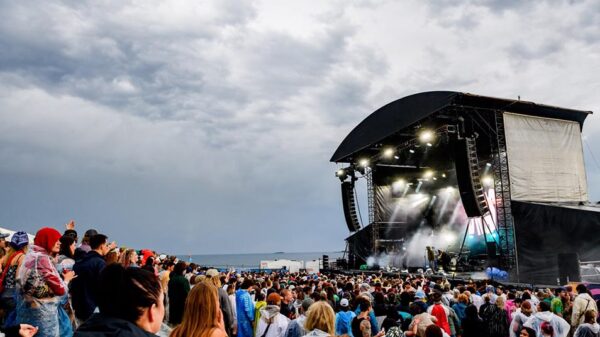
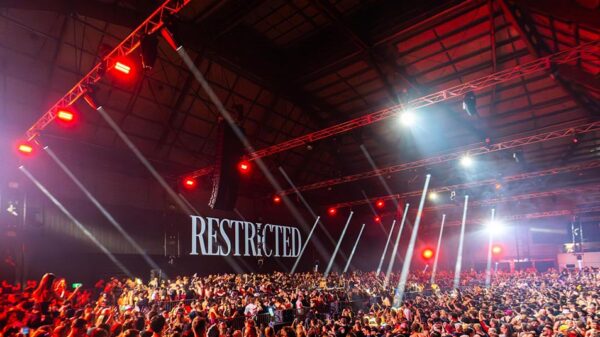










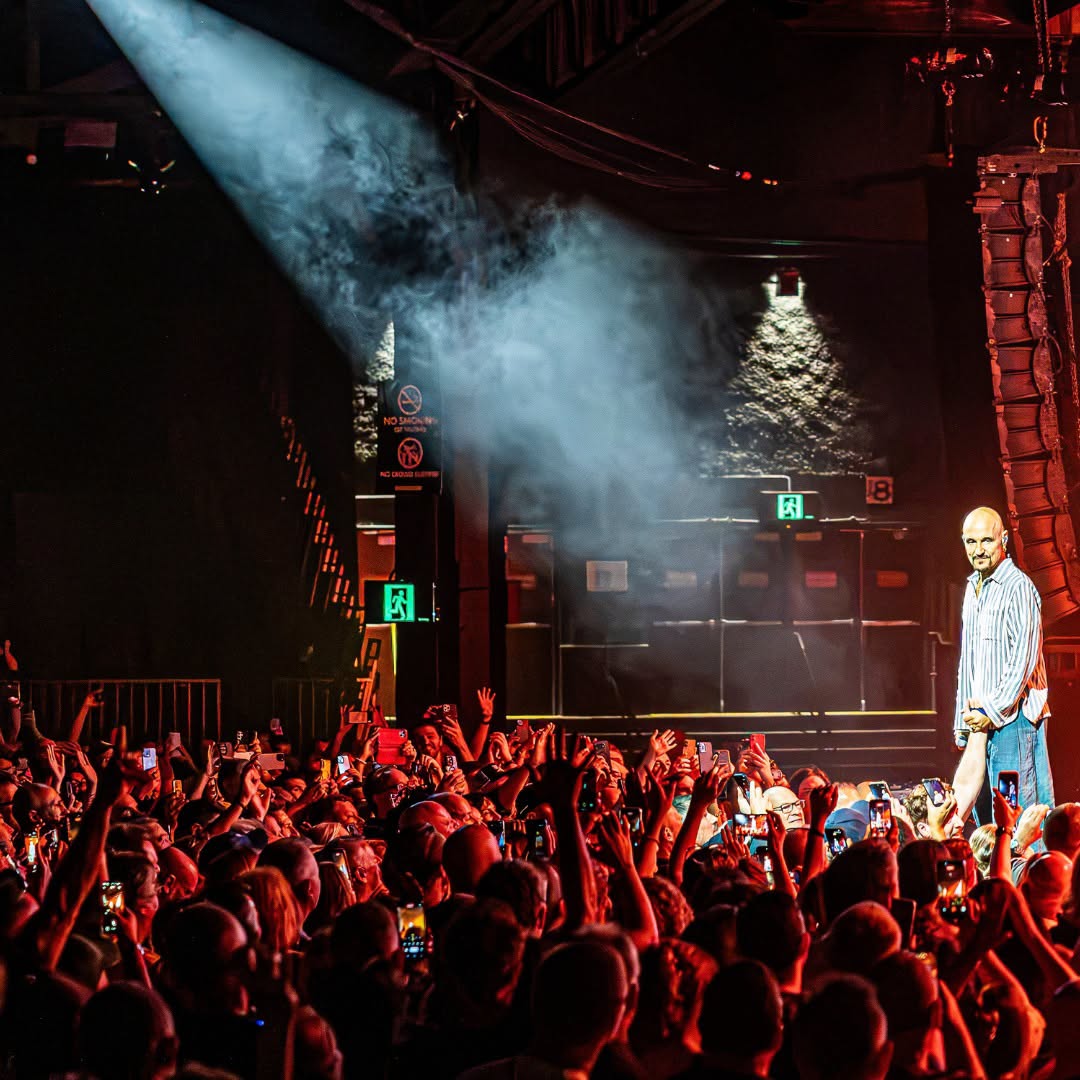
Manchester rockers James returned to Australia and New Zealand in October, and the shows marked their first regional performances since 2018; this time, the band commemorated their seminal 1993 record, Laid, by performing it in full.
Like many, FOH engineer Chris Lynch started off as a musician, playing guitar in a band. Realising he wasn’t going to make a living from the band, he switched to mixing sound.
“I’ve always mixed sound, and I did music technology at school, and then when I was at university, I did design engineering, and my final year project was about designing speaker enclosures,” he said. “I did lots of venue work right at the start of my career. I helped design music venues in the UK, including the music venue where I lived; I worked there as a sound engineer. And then I got involved with a bigger music venue, which kind of headhunted me.”

At the venue, Chris met several bands and ended up mixing for several, including The Selecter. He also handled entertainment for Formula E. Today, Chris works mainly for James and Ronnie Wood of The Stones.
The Australian shows came late in James’ run for the year, which started with arena shows in April and several large festivals.
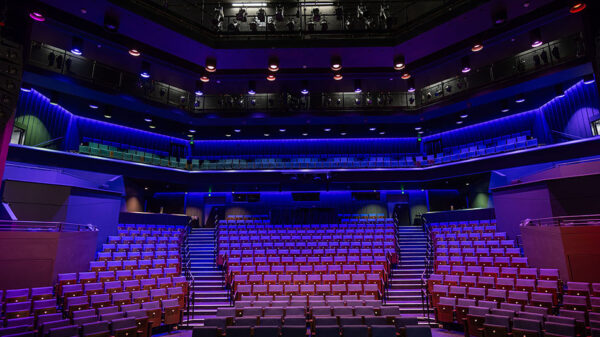
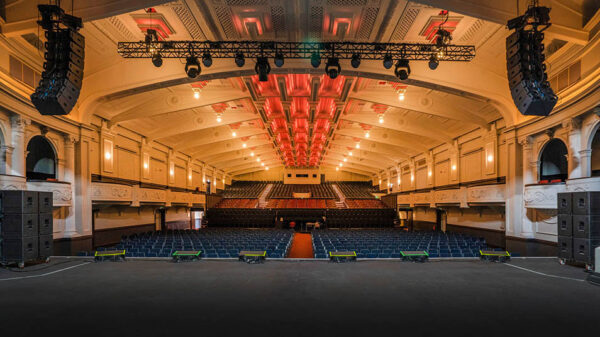
Fortunately, the Hordern’s L-Acoustics K2 PA is one of Chris’ favourites, and he said it works very well in this venue.
“This is what I would call a medium-sized venue,” he added. “It’s not as big as an arena, but it’s bigger than a club. The K2 coverage it gives in here is probably the ideal box. This is probably exactly what K2 was designed for.”
Chris utilised the normal hang in The Hordern, saying he’s a big believer, from having worked in venues himself, that they know what’s best.
“I let the system guys do their thing,” he commented. “Let them put the system up, design it, timeline it, and then I’ll have a listen to it. If I hear anything when I’m listening, I might ask for changes. I’ve not asked for any changes here. Literally turned it up, sounded great, and I did a little bit of personal EQ for my taste, and that’s all I’ve done. Should be a great sound gig tonight.”
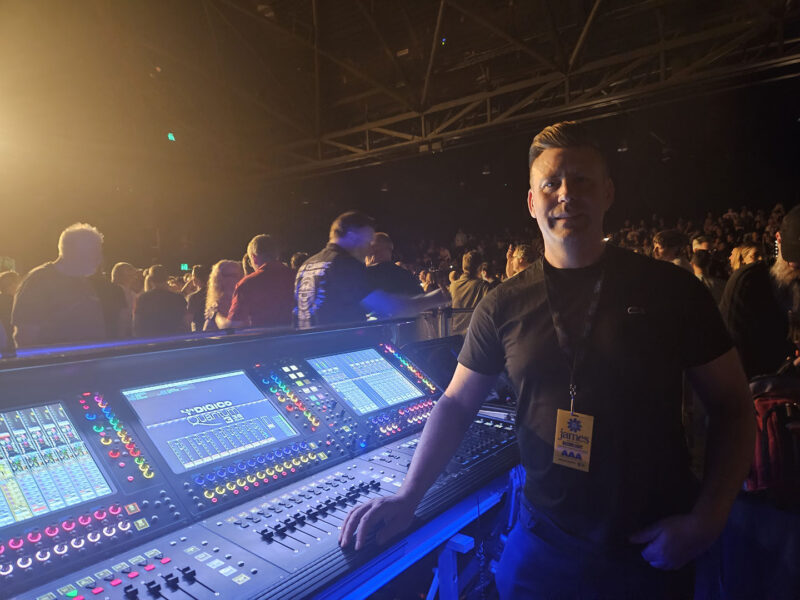
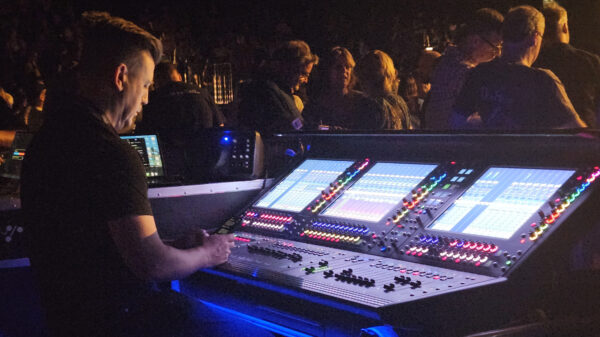
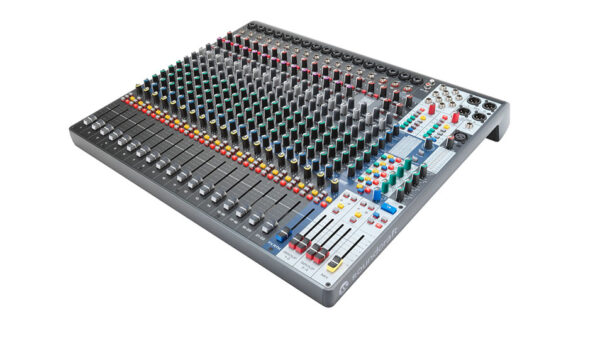
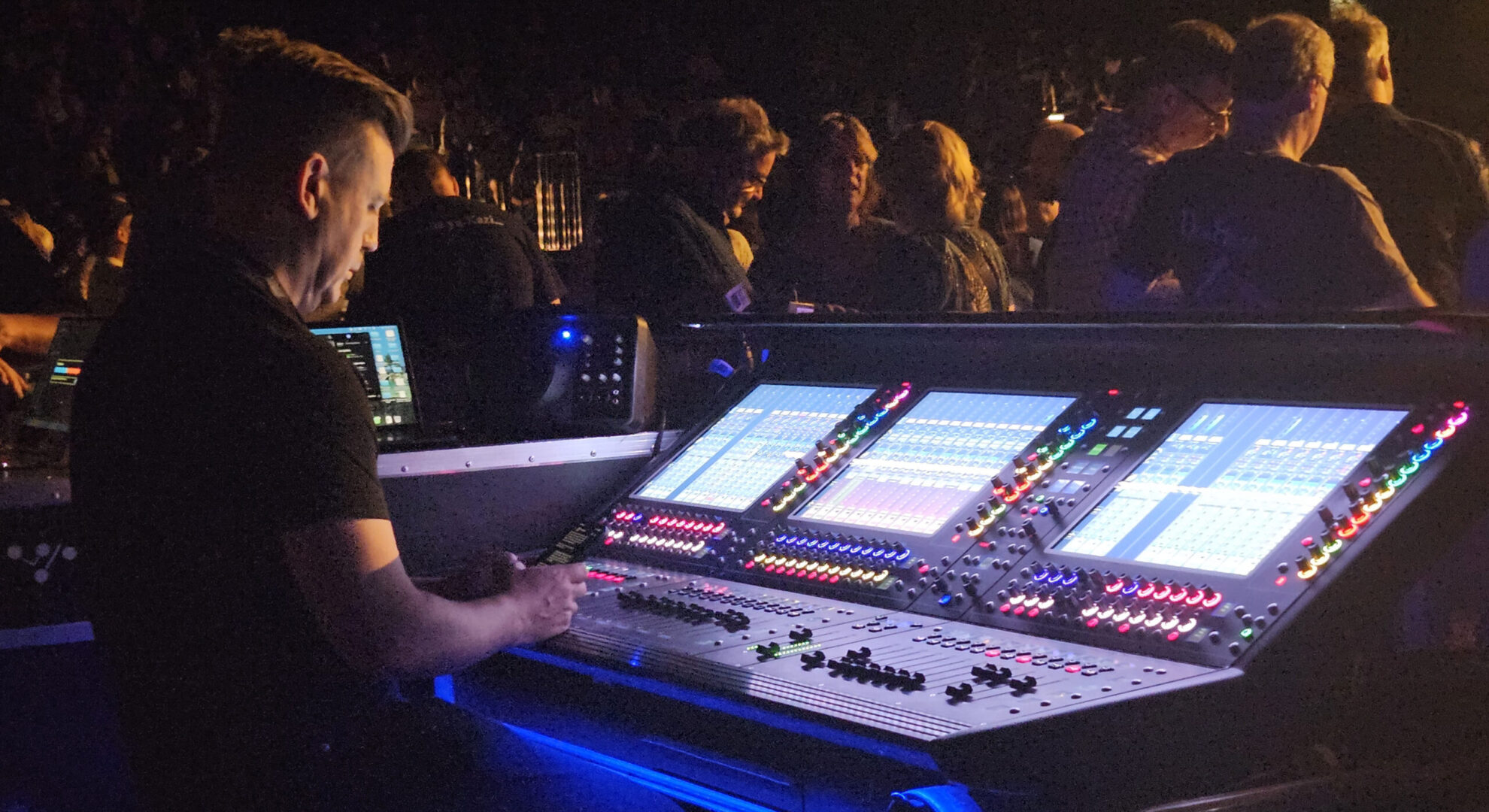
Chris mixed on his preferred DiGiCo Quantum 338 console, though he previously mixed on Yamaha PM series consoles.
“Our monitor engineer Aled Ifan bought a Quantum 338, and offered it to me to try,” said Chris. “I was familiar with DiGiCo before that but never toured a DiGiCo console before, but I’ve really enjoyed it. The support’s been good and the console’s really good.”
Chris likes that the console offers so much and you don’t need to add lots of external hardware. When he’s in the UK, he utilises a Fourier server and runs Waves on that for a few select plugins.
“I do have some analogue outboard, but in reality, I don’t really need it, and I don’t have it here,” he admitted. “That’s a testament to the desk, as there’s enough great effects and dynamics in the desk out of the box that you don’t really need the extras if you’re doing what I’m doing, which is flying around and getting stuff locally. It works great.”
With the onboard effects, Chris uses reverbs, delays, and dynamics. He uses Mustard Racks, saying he uses the Mustard Source Expander to control some of the spill on stage.
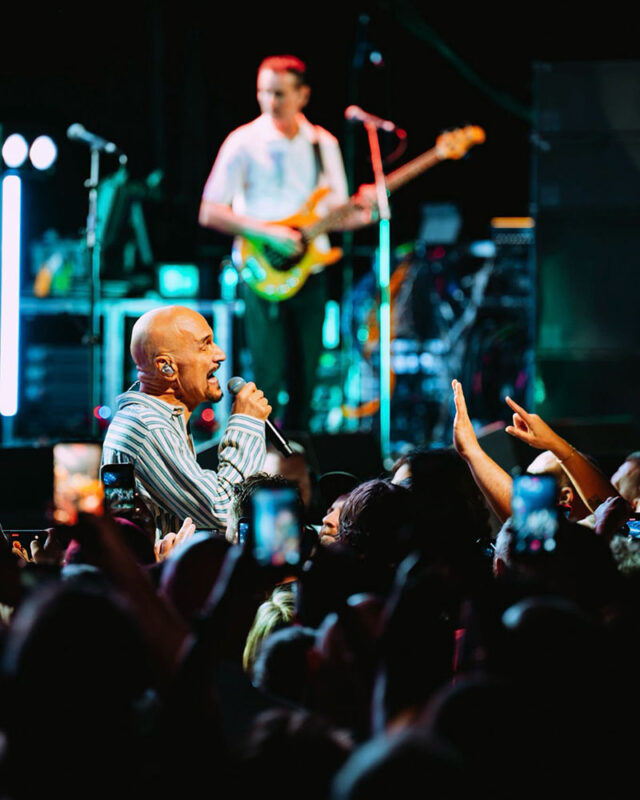
“We’ve got a lot of microphones on stage, so I have an MSE on most of the microphones on stage just to bring the noise floor of the stage down a little bit,” he elaborated. “That’s a useful tool in DiGiCo. Our singer, Tim, likes to be in the audience, too. So again, it’s very useful for stopping feedback, having the MSE. I also use the Spice Rack, so I use the multiband compressor on some groups. I use it on some of the drum groups, the keyboard group, Tim’s vocal, Chloe’s vocal. Without my hardware compressors, that’s a great tool.”
Chris says he doesn’t use much reverb, using one main room reverb for everything. The aim is to keep it so that the reverb sounds like everybody’s in the same room. However, he also uses reverb as an effect.
“You’ll hear as part of the show where I’ll turn the reverb time right up to bring some big atmospheric parts,” he said. “The latest album is quite a delicate album and some of the songs are quite soft. I use the effects to create atmosphere in those songs.”
James likes experimenting and regularly changes the arrangements. They have 300 songs, and they can play any of them at any time. If they feel the crowd isn’t into something, they change it and play something else. It keeps Chris on his toes and is the reason why he doesn’t use Snapshots.
“I’d struggle to quickly find a snapshot from a song or load a song out of 300,” he remarked. “I’ve done it the old-fashioned way by learning the music! I like the band, I listen to their music, and I know the songs. I know what’s coming, usually.”
In microphone world, Chris says they don’t use anything that’s particularly weird and wonderful. It’s standard Shure 58s and 57s, Sennheiser e906s and AKG 414s for the overheads.
“Everything is pretty standard issue that you can source anywhere,” added Chris. “I think the thing is with microphones, if what you’re putting into it is good quality in, you get good quality out. The great thing about these bands who’ve been doing it a long time is they’re great musicians. They’re well-polished.”
JPJ Audio supplied the audio and crew, and Chris said he was very happy they provided the audio and did a sterling job.